
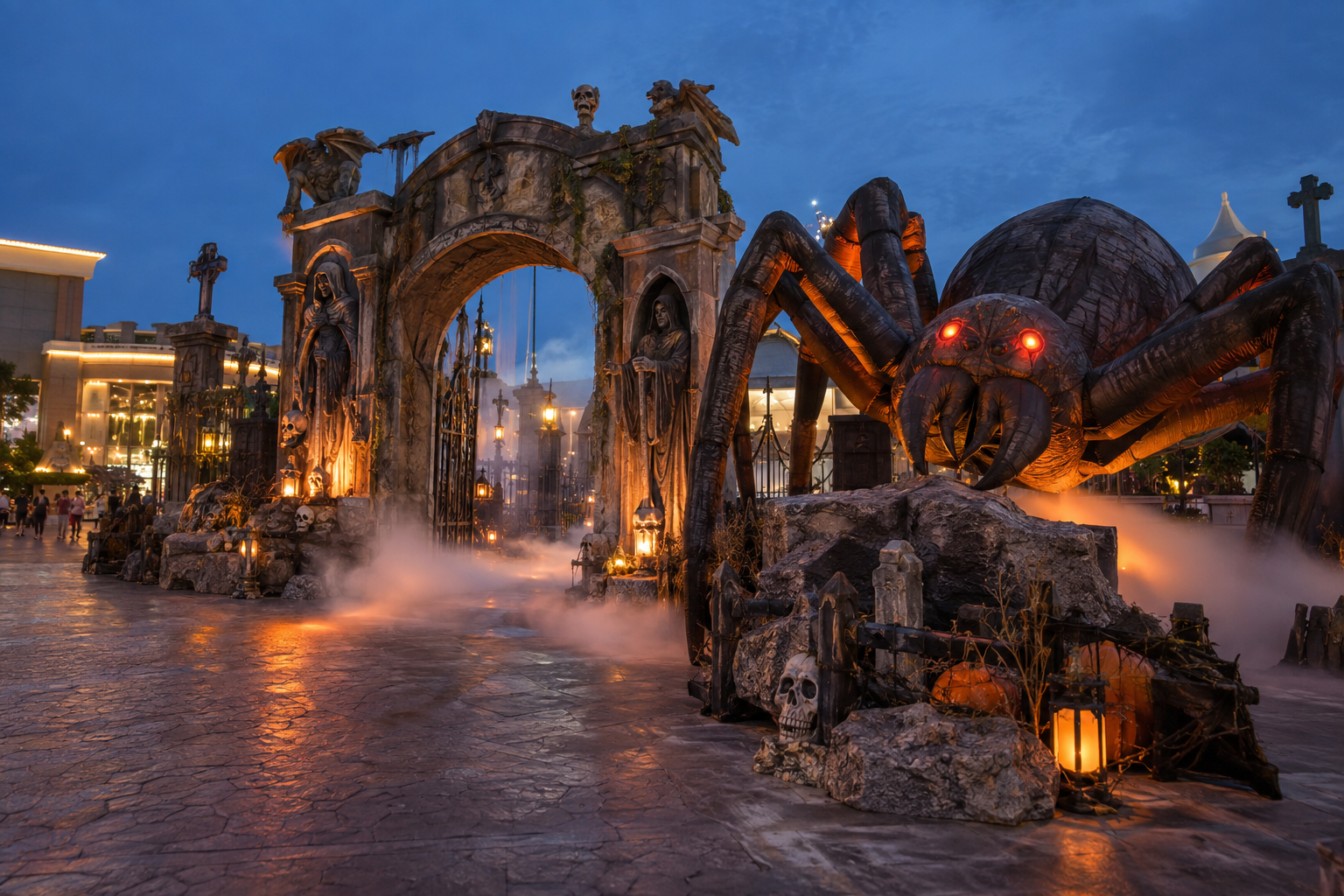
Commercial Halloween lighting should support a visitor experience, not simply add brightness to every prop. An illuminated entrance, photo backdrop, queue-line scene and animated focal point each need different visual emphasis. By defining that role first, a buyer can select lighted props and supporting scene pieces that work together.
This guide explains how event operators, retailers and attraction teams can plan a lighted Halloween display with practical attention to product application, power preparation, installation access and factory inspection.
1. Define the visual job of each lighted prop
Decide whether the light is intended to guide visitors, create atmosphere, support photography or highlight an animated moment. A lighted pumpkin near an entrance has a different role from an illuminated focal character inside an attraction route. The purpose should shape the selected brightness, position and supporting decorations.
Use static scene props to frame the effect. Gates, skeletons, graveyard pieces or fabric elements can give lighting a context, while the main illuminated item retains the visual priority. This approach often creates a more coherent display than adding separate light sources without a scene plan.
2. Include power and access in the project brief
A commercial lighting plan begins with site information. Record where power is available, how cables can be managed, which sections need staff access and whether the display is indoors, covered or exposed. Local electrical work and applicable requirements should be reviewed by qualified professionals for the actual destination and venue.
Share this information before the product build is finalised. It can affect the preferred function, placement and installation sequence. A supplier can review product configuration, but the final site connection and operation remain a venue responsibility.
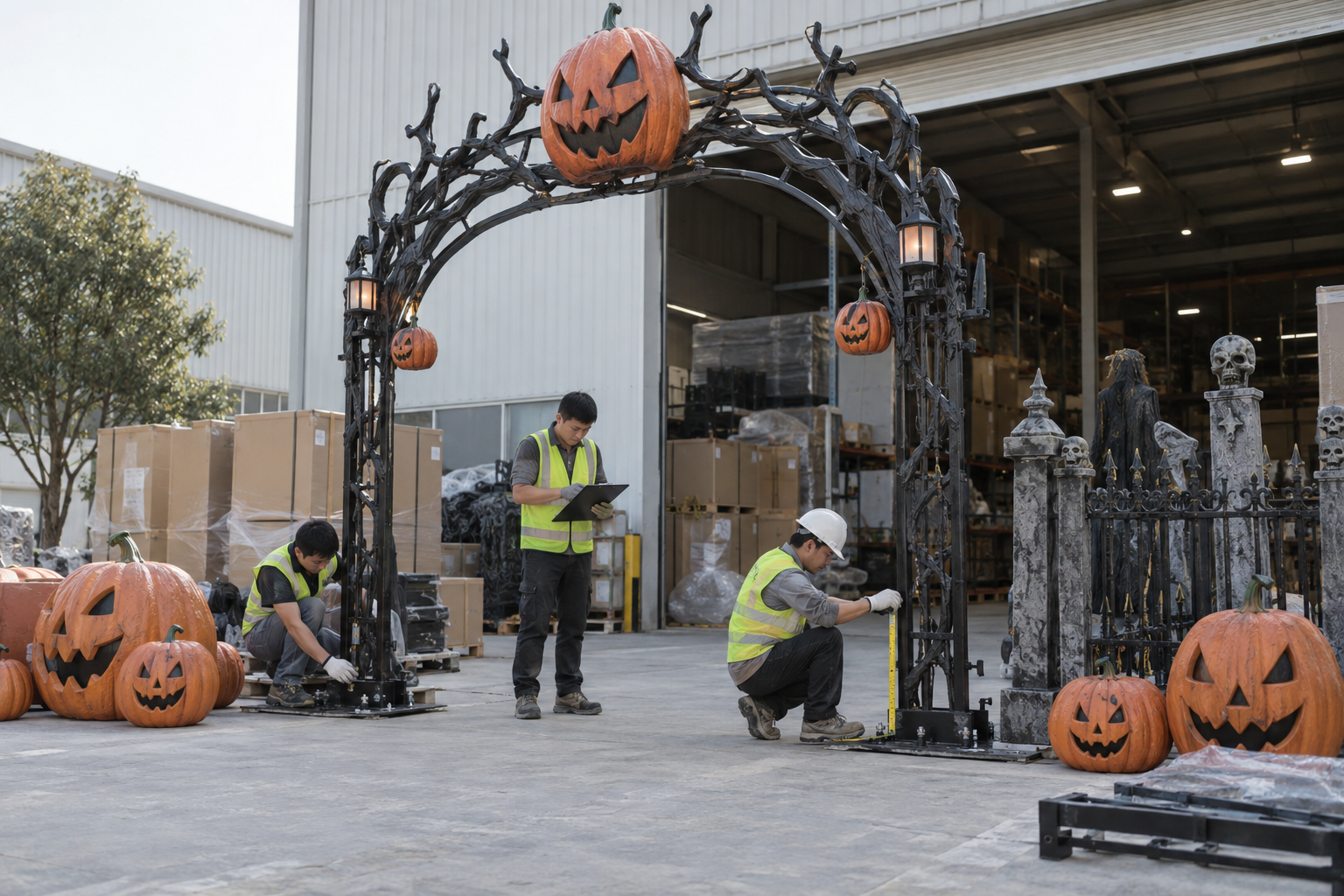
For related product directions, explore BooAri's Halloween prop collection, discuss a custom project or review the factory workflow.
3. Plan around visitor flow after dark
People perceive a night display through approach routes and contrast, not through product photographs. Map the point where guests first see the display, where they pause and what areas must remain clear. This helps avoid an illuminated prop being hidden, pointed away from the route or placed where maintenance becomes difficult.
For a photo zone, consider how visitors will stand and where staff can reset the scene. For an attraction, consider whether a lighted animated item needs a clear reveal point. The planned visitor route is more useful than a general request for an eye-catching effect.
4. Confirm visible functions at factory testing
For lighted props, factory testing can demonstrate the agreed visible illumination and any associated motion, sound or control action. Confirm what should be shown and which accessories form part of the shipment. The test record should identify the approved product direction rather than make broad performance claims.
At shipment inspection, review visible condition, included components and packing that protects lighting elements. The buyer can then use the record when the installation team receives the goods and begins its own site checks.
5. Prepare for daily operation and seasonal storage
A display team should know who performs opening checks, how visible elements are reset and where spare accessories are stored. These operating details are as important as the creative concept for a commercial programme that runs over multiple dates.
For reuse, keep the approved images, packing record and setup notes together. This supports faster installation in the next season and helps the buyer decide which lighted props should be retained, refreshed or expanded.
Conclusion
Send your event layout, display objective and required dates for a commercial Halloween lighting direction. Clear customer requirements, a documented product direction and a planned inspection sequence give the buying team a stronger basis for the next step.
Frequently asked questions
What should a commercial Halloween lighting brief include?
Include the display purpose, site photos, power availability, route plan, quantity, target market, event dates and desired visitor experience.
Can static props be combined with lighted items?
Yes. Static props often create the scene framework that makes illuminated focal products more visible and coherent.
What should be checked before lighted props ship?
Confirm the agreed visible functions, component count, accessories, visible condition and protective packing.
Are all lighted props suitable for outdoor use?
No. Suitability depends on the product configuration and actual site conditions. Share the installation context before approving a product.
Further reading
Use these external resources alongside your local market, venue and professional safety requirements:
READY TO START A PROJECT?