
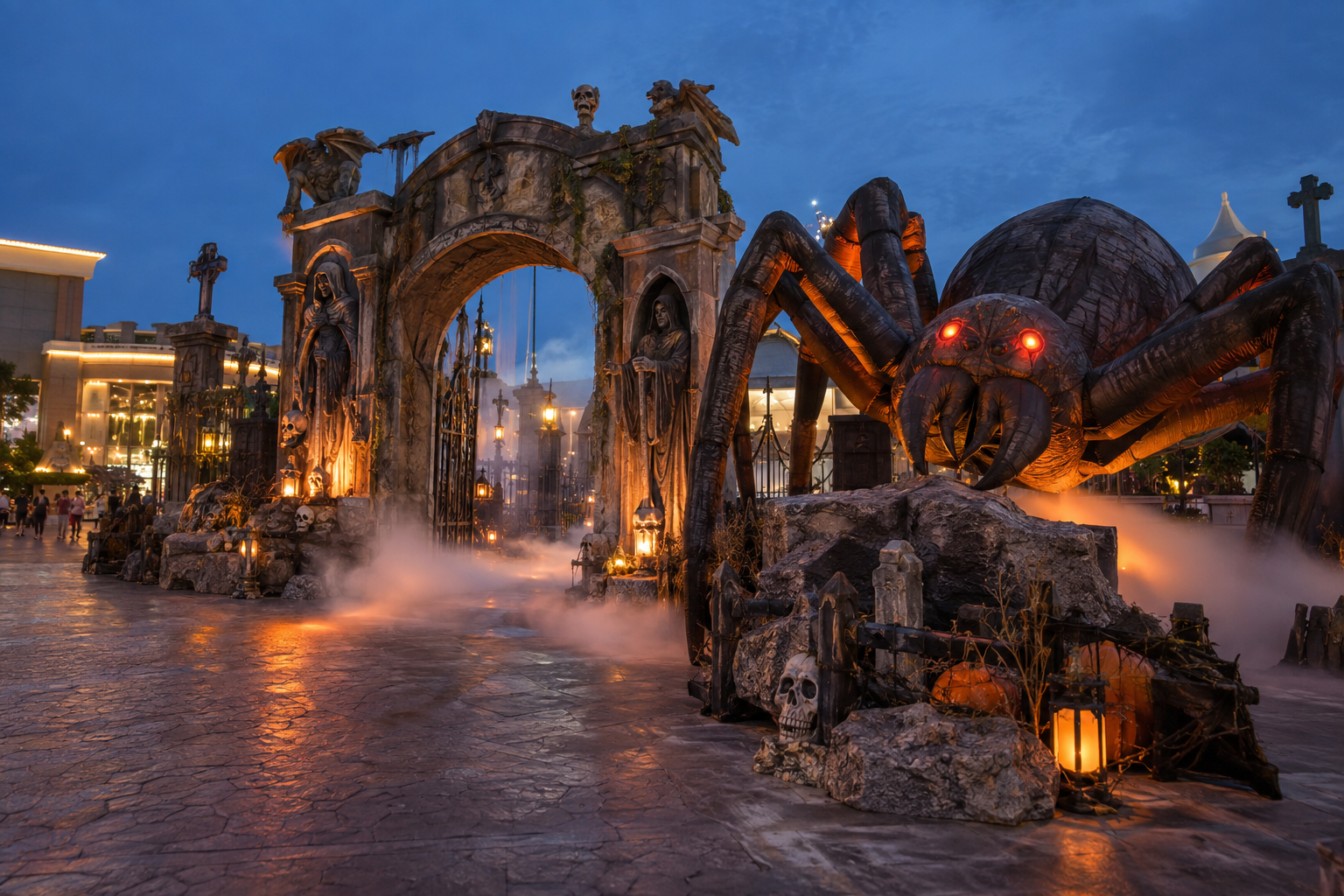
A giant Halloween spider is usually purchased to create an immediate visual landmark: over an entrance, across a retail display, in a photo zone or as part of an attraction scene. The product must therefore work at the intended viewing distance and within the site footprint, not merely look dramatic in a product photograph.
This guide helps commercial buyers compare giant spider props by scale, structure, display application, packing and installation preparation. It is designed for retailers, event teams and attractions sourcing a seasonal display with a defined operating context.
1. Start with the viewing distance and display role
Define whether the spider is a long-distance landmark, an entrance element, a photo-zone feature or scene dressing. A landmark needs silhouette and scale; a close-up photo piece needs a finish that works at short range. The right choice comes from the visitor experience rather than a generic request for the biggest available model.
Share a simple site photo or layout with the supplier. Include the intended height, available width, access route and nearby display elements. This gives the product discussion a practical starting point before details such as finish, colour or packaging are selected.
2. Consider structure, base and installation assumptions
A large spider prop needs a stable, site-appropriate arrangement. Buyers should ask about the main body, leg configuration, connection points and the intended base or support direction. The final fixing method depends on the venue surface and local installation decisions, so those details should not be assumed from a catalogue image.
If the item is part of an outdoor or semi-covered project, describe the actual exposure, duration and visitor access. A supplier can review the product configuration against that brief, while the venue team remains responsible for final site conditions and installation practice.
For related product directions, explore BooAri's Halloween prop collection, discuss a custom project or review the factory workflow.
3. Build the spider into a complete scene
A single giant spider has greater visual impact when it is framed by complementary props such as web elements, graveyard pieces, pumpkins, gates or lighted details. Define which item is the hero and which pieces create the surrounding scale. This also helps procurement teams allocate budget without overloading the scene.
For retail use, consider how the scene directs shoppers through the display. For an attraction, consider sightlines, the reveal point and staff access. These operational details determine whether an impressive hero prop produces a coherent visitor moment.
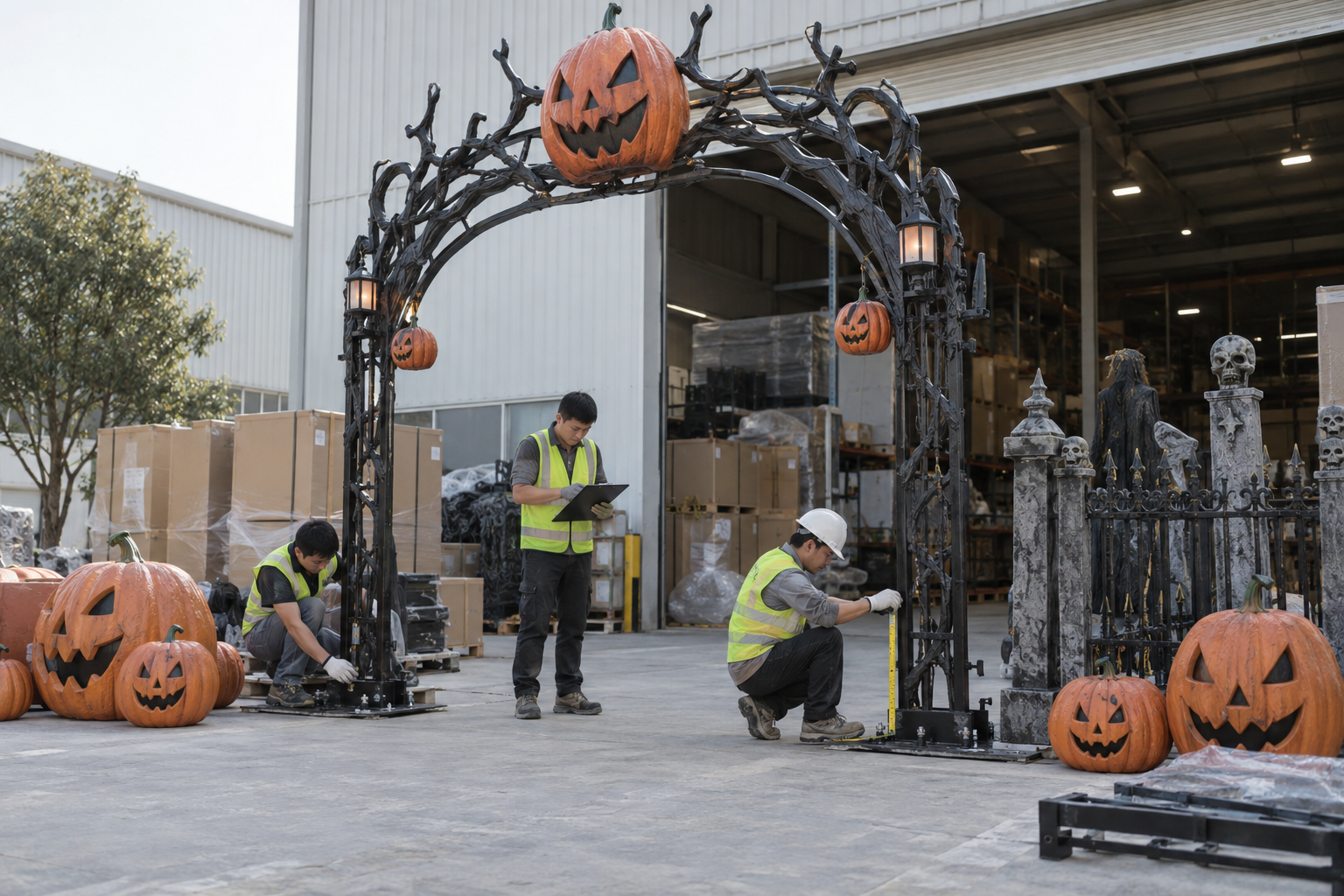
4. Plan packing and inspection for a large prop
Large display props may be separated into components for export packing and transport. Confirm how major parts, legs, bases and accessories are grouped, protected and identified. This helps the receiving team understand what must be assembled and which carton belongs to each display zone.
Inspection should reference the approved visual direction, main components, included accessories and packing approach. If the prop includes lighting or movement, agree the visible function that should be demonstrated during factory testing before dispatch.
5. Prepare for storage and reuse
Seasonal props are easier to reuse when the buyer retains the approved images, packing record and a basic installation reference. Ask how delicate surfaces are protected and whether components can be grouped for the next seasonal setup.
A reusable packing plan does not need to be complicated. Clear carton identification and component grouping can reduce time spent identifying parts months after the original display was removed.
Conclusion
Send your site image, preferred spider scale and event date for a commercial display recommendation. Clear customer requirements, a documented product direction and a planned inspection sequence give the buying team a stronger basis for the next step.
Frequently asked questions
What should I provide for a giant spider prop quotation?
Provide site photos, intended use, target dimensions, quantity, exposure conditions, target market and required delivery date.
Can giant spider props be used in an outdoor display?
Suitability depends on the exact product configuration and site conditions. Share the exposure and installation context before approval.
How are large spider props packed?
Confirm whether the body, legs, base and accessories are separated and how each section is protected and identified.
Can a giant spider be part of a custom Halloween scene?
Yes. It can be used as a hero piece alongside complementary props, scale changes, finishes or lighting direction subject to the project brief.
Further reading
Use these external resources alongside your local market, venue and professional safety requirements:
READY TO START A PROJECT?