

Halloween Prop Durability, Setup, Anchoring, Maintenance and Logistics Guide is not a catalogue-only decision. For project managers, venue operations teams and repeat buyers, the useful starting point is the product application: commercial Halloween props that require installation, seasonal operation, storage and transport planning. A purchasing brief should make the visible objective, operating context and shipment constraints clear enough for a supplier to respond with a defined product direction instead of a broad promise. That is how a buyer can compare quotations on a like-for-like basis.
In practical factory conversations, the key question is which lifecycle information must be documented before an order is shipped and installed. The answer depends on material use context, setup responsibility, local anchoring review, maintenance routine, air-freight constraints, quality checkpoints and storage conditions. The following guide focuses on the decisions that should be resolved before production: customer requirements, visual approval, factory testing, shipment inspection, protective packing and installation preparation. It does not replace destination-market rules, venue procedures or professional site advice.
1. Start with a direct commercial brief
A productive brief describes commercial Halloween props that require installation, seasonal operation, storage and transport planning in operational terms. State who will see the display, where it will sit, the period it will be used and the result the buyer expects visitors to notice. This gives the supplier enough context to propose a relevant product path rather than making assumptions from a keyword, a single image or a competitor reference.
Include material use context, setup responsibility, local anchoring review, maintenance routine, air-freight constraints, quality checkpoints and storage conditions. If the order is part of a wider program, say which pieces are focal items and which are supporting elements. A defined hierarchy helps protect the budget for the pieces that actually carry the visitor experience, while preventing an assortment from becoming visually crowded or difficult to install.
The main early risk is approving a product without connecting factory quality evidence to the real installation and maintenance workflow. Put the known limits in writing before a quotation is finalised. A supplier can then identify missing information, suggest an existing product starting point, or explain where a custom configuration needs a separate approval step.
Project checklist
- Describe the intended venue and visitor journey
- Provide target quantity, delivery date and destination market
- Share reference images with notes on what must and must not change
- Confirm whether the product is indoor, covered or exposed
- List the site constraints that the local team will review
2. Define the display role before selecting features
Every item should have a job in the display. A hero character creates a pause point; a gate, marker or backdrop frames an approach; smaller accents add texture at closer range. For commercial Halloween props that require installation, seasonal operation, storage and transport planning, decide whether the product must be noticed from a distance, reward a close look, guide a route or simply support a larger scene.
This choice changes the useful specification. A distant landmark may need scale and silhouette. A close-up retail or attraction moment may need finish detail, safe clearance and practical reset access. An animated item may need a demonstrated visible sequence. The product description should make these priorities clear instead of implying that every feature is equally valuable.
For project managers, venue operations teams and repeat buyers, the best commercial result is usually a controlled mix: one or two strong focal elements supported by complementary items. This makes the assortment easier to quote, pack, install and explain to venue staff after delivery.
For related product directions, explore BooAri's Halloween prop collection, discuss a custom project or review the factory workflow.
3. Turn the visual direction into a checkable specification
A product image is a visual reference, not a complete manufacturing instruction. Convert the reference into checkable choices: overall scale, pose or silhouette, colour and finish direction, visible functions, included accessories, base or hanging approach, and carton grouping. The supplier should be able to identify which details are fixed and which remain open for review.
When a project includes multiple pieces, use names or reference codes that remain consistent from quotation through shipment inspection. This helps the buyer compare the approved scope with factory images, carton labels and the receiving list. It also reduces avoidable uncertainty when components are unpacked weeks or months after the final approval.
Ask for clarity about material use context, setup responsibility, local anchoring review, maintenance routine, air-freight constraints, quality checkpoints and storage conditions. The goal is not to over-specify a concept at the first email. The goal is to create a shared record that can become more precise as the commercial order, sample direction and packing plan are confirmed.
4. Compare suppliers by evidence, not promises
When comparing a factory, exporter or wholesale partner, ask how the proposed item will be reviewed before it leaves the production floor. Relevant evidence can include approved reference images, progress updates, visible function checks where applicable, item identification, accessory confirmation and shipment-inspection records. The right evidence depends on the actual order and should be agreed rather than assumed.
A responsible supplier conversation also separates what can be checked in the factory from what must be verified locally. Product appearance, agreed components and a visible operating sequence can be reviewed before dispatch. Final site fixing, electrical connection, public-access controls and destination-specific obligations need the buyer's venue or market review.
This distinction matters particularly for commercial Halloween props that require installation, seasonal operation, storage and transport planning. It keeps the factory testing process useful and prevents broad claims about performance in conditions that are not visible during production.
5. Plan factory testing around the approved requirement
Factory testing should follow the approved product revision. For a static item, the review may focus on overall appearance, component count, finish and included accessories. For an animated or lighted item, the buyer can agree which visible movement, light, sound or trigger sequence needs to be demonstrated. The record should identify the item clearly enough to support the shipment decision.
Testing is not a substitute for installation preparation. It is a pre-shipment handoff between the agreed product scope and the buyer's receiving plan. If an issue is found, the shared reference helps both teams discuss the affected detail without relying on vague descriptions.
Use the test stage to check the information most relevant to which lifecycle information must be documented before an order is shipped and installed. Avoid requesting a generic video with no stated acceptance point; agree the evidence needed for the product and its intended use.
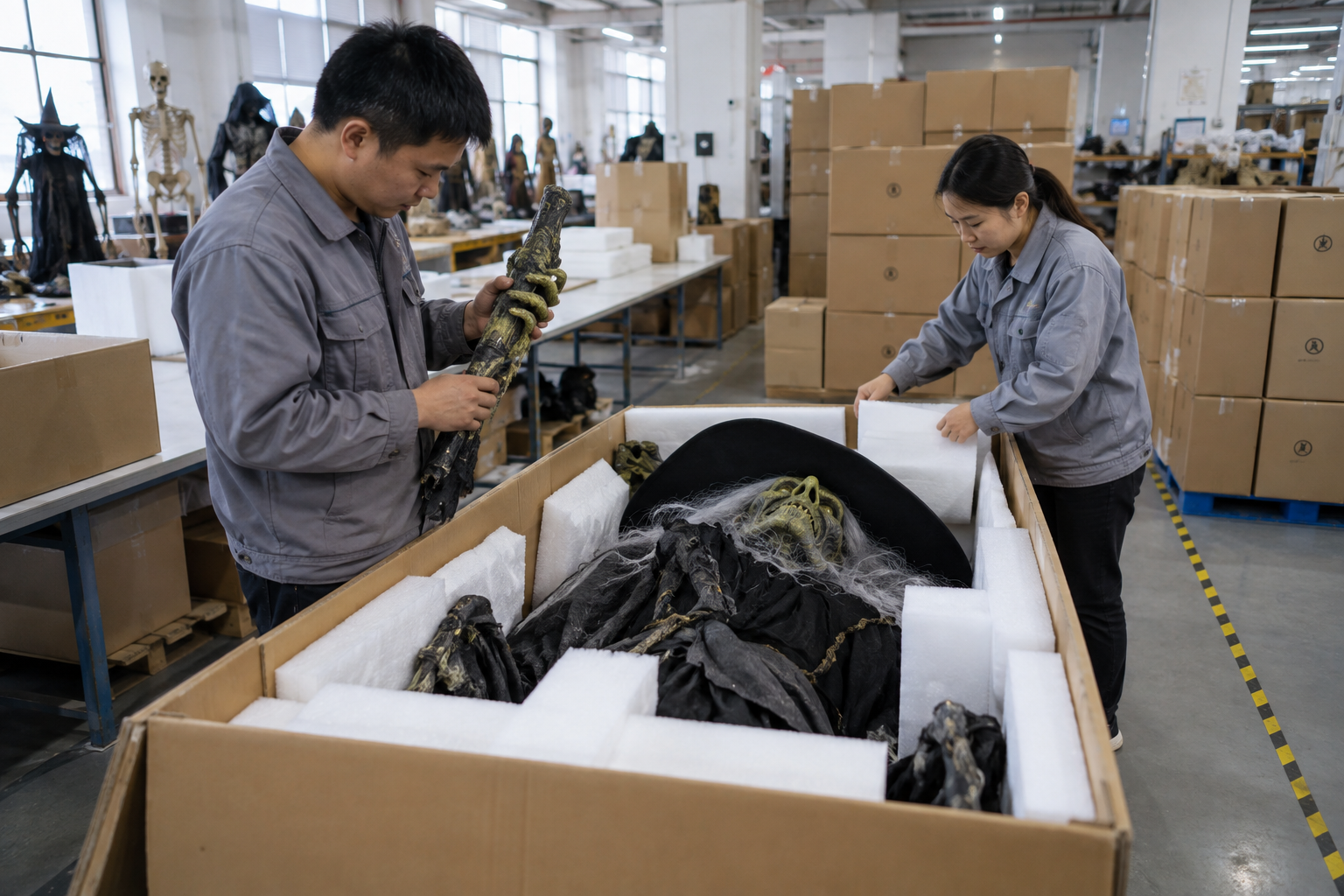
6. Treat packing as part of the product decision
Packing should protect the finished product and support a practical receiving sequence. Confirm which components travel together, how visible surfaces are protected, whether accessories are identified separately and which cartons relate to each display zone. Large, irregular or mixed-material items often need more deliberate grouping than a standard retail carton.
The packing conversation should start before production is complete, especially where commercial Halloween props that require installation, seasonal operation, storage and transport planning involves a multi-piece display. A clear carton list and simple component reference can reduce delays during installation preparation and can make later storage or reuse more manageable.
At shipment inspection, compare the carton plan to the approved scope: main items, accessories, visible condition and agreed packing direction. This is a practical evidence step, not a claim that every downstream handling condition can be controlled by the factory.
7. Prepare the receiving and installation handoff
Receiving teams need more than a delivery date. Before dispatch, identify the access route, unloading limitations, temporary storage location, staff roles and sequence for opening cartons. For commercial Halloween props that require installation, seasonal operation, storage and transport planning, a simple layout or component checklist can be more valuable than a long generic setup document.
Confirm the boundary between supplier scope and local venue scope. The supplier can describe the approved product configuration and packing; the buyer or installer must confirm final placement, fixing methods, power connection, local safety review and public-access management. This boundary protects both the project and the accuracy of the product information.
Installation preparation should also account for future removal. Retaining carton labels, protective materials and approved reference images creates a more efficient starting point if the display is reused, expanded or replenished next season.
8. Use a quote comparison that protects the project
A comparable quote identifies the product direction, quantity, visible configuration, inclusions, packing assumption and commercial timing. If a price differs sharply, ask whether the specification, accessories, inspection scope or shipment preparation is also different. The most useful quote is the one that makes those differences visible.
For project managers, venue operations teams and repeat buyers, a low price without a stable scope can create more work later: changed visual expectations, missing accessories, incompatible cartons or unclear responsibility at installation. A clear quote does not eliminate commercial risk, but it gives procurement and creative teams a common document to review.
Record any approved change in writing. This is especially important when the order moves from a catalogue direction to a custom finish, revised scale, additional function or new packing requirement.
9. Keep destination and venue obligations visible
Commercial Halloween props may be subject to different requirements depending on the product category, electrical configuration, destination and venue. Buyers should raise the target market and required standards early, then obtain the relevant professional, testing or regulatory guidance for the finished product. A generic web claim is not a substitute for this review.
The factory can use the information in the brief to discuss the proposed product path and available order documentation. The buyer should still verify the final market-specific obligations, installation procedures and any requirements imposed by the venue, insurer, event organizer or local authority.
This is a trust-building part of the process: state what is known, identify what needs confirmation, and avoid presenting an unreviewed configuration as universally suitable.
10. Capture learning for the next seasonal order
After the display is installed, record what was effective in the real application: visitor response, sightlines, operating practicality, setup time, carton usability and any component issues. These notes are more useful for a repeat order than a generic request to make the next program "better."
Keep the approved product reference, shipment inspection evidence and packing notes together. This gives the next buyer, merchandiser or venue manager a reliable baseline when planning an expansion, replacement or fresh seasonal theme.
BooAri can review a clear commercial brief for commercial Halloween props that require installation, seasonal operation, storage and transport planning, recommend a relevant product direction and identify the information needed before production. Final product, shipment and commercial details are confirmed for each order.
Conclusion
Send your commercial Halloween props that require installation, seasonal operation, storage and transport planning brief, target quantity, destination and delivery window to BooAri. We can help identify a relevant product starting point and the decisions to confirm before production. Clear customer requirements, a documented product direction and a planned inspection sequence give the buying team a stronger basis for the next step.
Frequently asked questions
What should a halloween prop material durability enquiry include?
Include the intended application, target quantity, destination market, display footprint, visual reference, delivery date and any required operating or packing priorities.
How should a buyer compare two Halloween-prop quotations?
Compare the approved product scope: visible configuration, included accessories, quantity, packing direction, inspection evidence, timing and commercial terms. Do not compare unit prices without confirming the same scope.
What should factory testing demonstrate?
Testing should demonstrate the agreed visible condition, components and applicable functions of the approved product revision. The required evidence should be agreed before production is complete.
Who confirms final installation and destination requirements?
The buyer, venue and relevant local professionals confirm final installation, site conditions and destination-market obligations. The supplier's pre-shipment evidence supports, but does not replace, that local review.
Further reading
Use these external resources alongside your local market, venue and professional safety requirements:
READY TO START A PROJECT?