
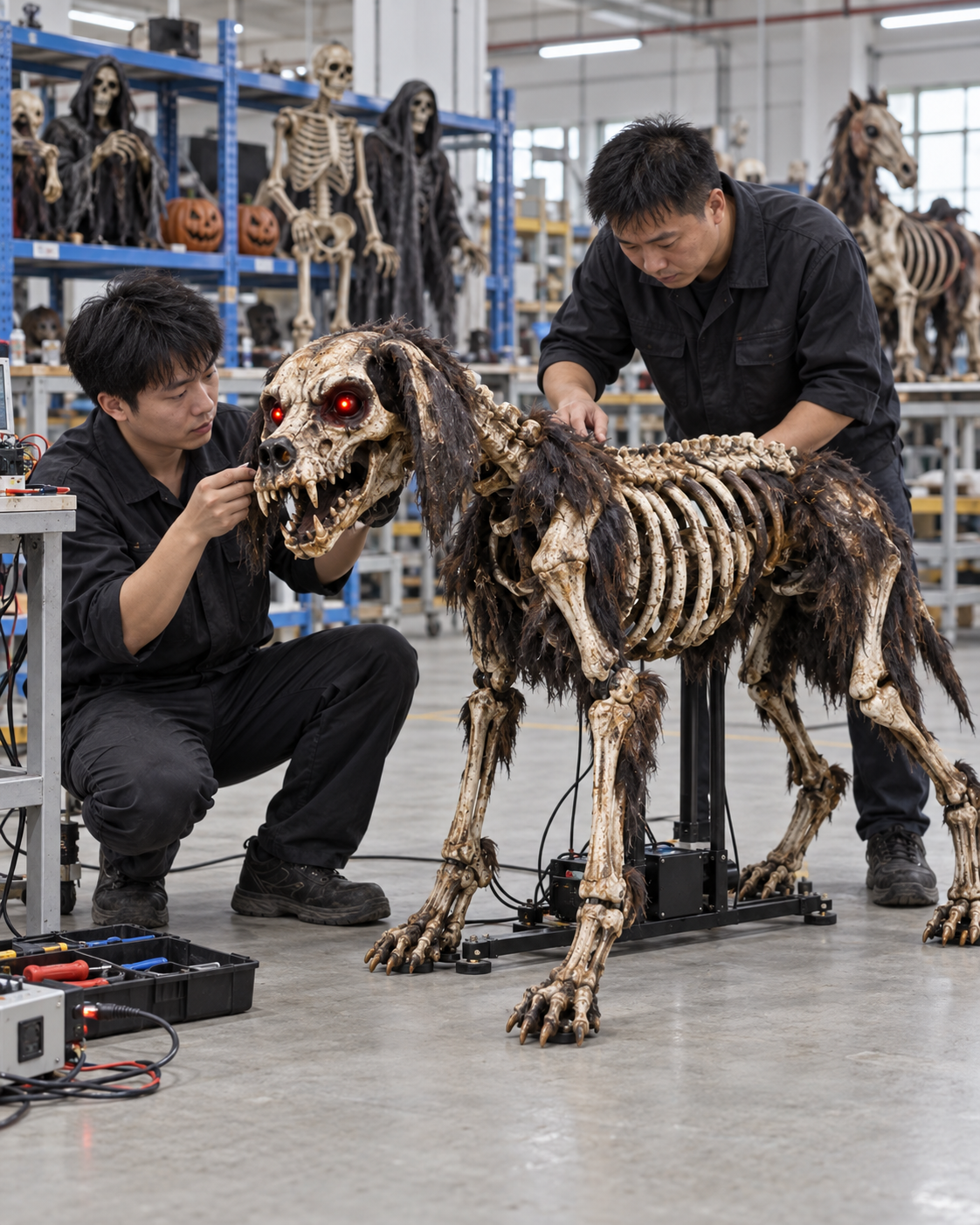
Factory testing and shipment inspection are most useful when they answer the buyer's agreed questions. A generic production video or a single carton photograph is not enough for a commercial Halloween prop order with visible finishes, accessories, functions and mixed packing. The inspection plan should be created from the approved product scope.
This guide sets out a practical buyer checklist for static props, animated figures and multi-piece display orders. It does not promise that an inspection can recreate every destination condition; instead, it explains how to establish a reliable reference before goods leave the factory.
1. Turn the approved product into inspection points
Start from the approved photos, dimensions, component list and functional requirements. Identify the visible features that matter to the product application: finish, silhouette, connections, lighting, sound, movement, accessories and packing. The right list differs between a static tombstone set and a moving animatronic.
Keep the checklist specific enough to be useful but not so broad that it becomes an unverified promise. If a requirement matters for the buyer's installation or retail display, record it before final production rather than adding it during dispatch week.
2. Agree what factory testing should demonstrate
For an animatronic, factory testing can show the agreed movement cycle, light function, sound output or trigger response. For a static prop, it can show assembly fit, modular connections or visual condition. Link the demonstration to the current approved revision so the buyer knows what product was tested.
Factory testing does not remove the need for correct installation, suitable power arrangements or local compliance review at destination. It gives the buyer an evidence point before shipment and helps the supplier identify an obvious function issue while the product is still accessible.
For related product directions, explore BooAri's Halloween prop collection, discuss a custom project or review the factory workflow.
3. Inspect a mixed order as a system
A mixed Halloween display order should be inspected as more than individual items. Confirm item count, carton grouping, included hardware, accessories and labels that support receiving. A missing small component can delay an otherwise complete installation, particularly when an event team is working to a fixed opening date.
For display sets, ask whether cartons can be grouped by scene, zone or main component. This can reduce unpacking time and helps the buyer compare the shipment to the installation plan when it arrives.
4. Review export packing before dispatch
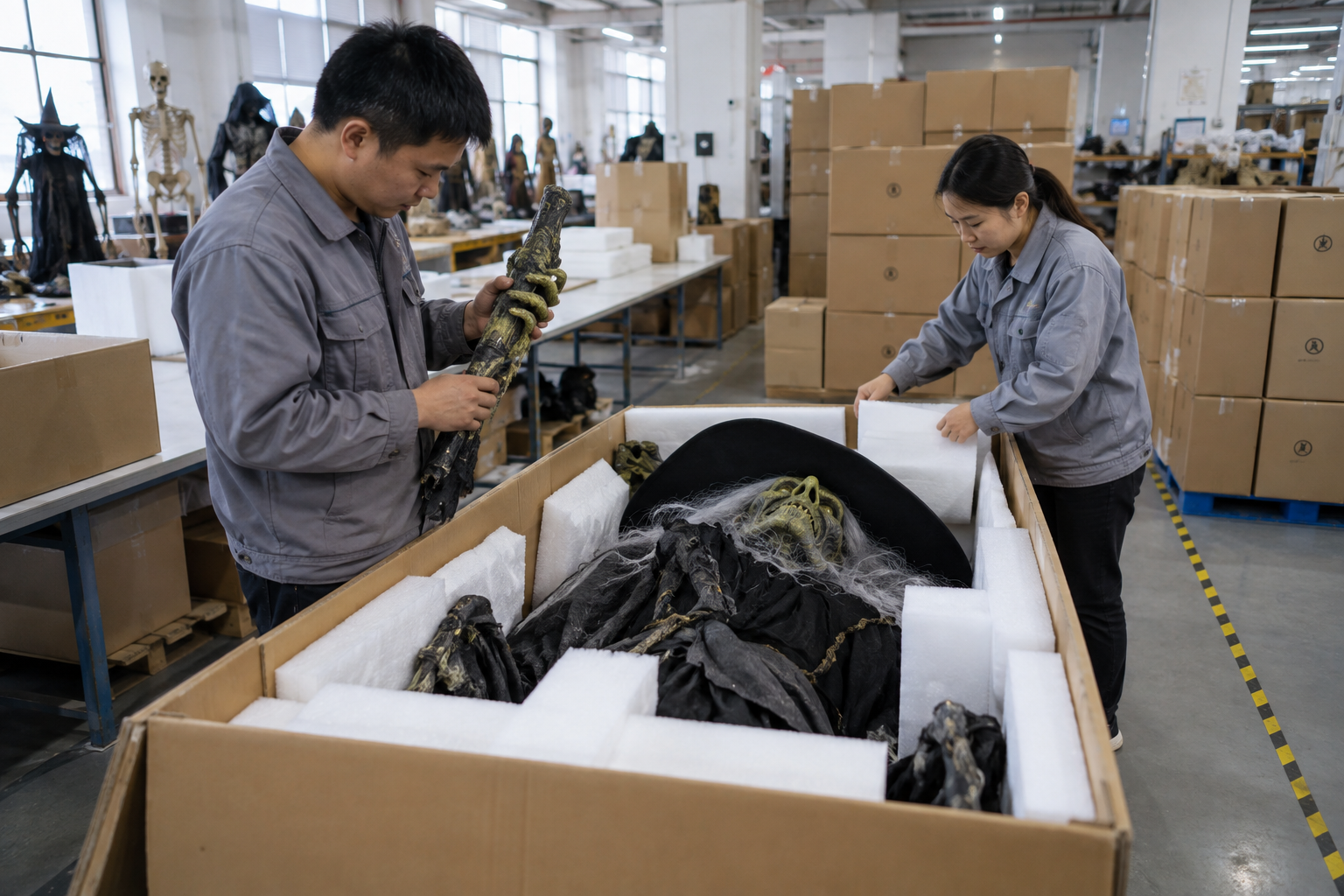
Packing should protect the approved surface and make the order practical to receive. Confirm protective materials, separation of delicate components, carton condition and how each main item is identified. If a product needs partial assembly after delivery, include the relevant parts in the same packing logic.
A shipment inspection record can include the visible carton condition, item grouping and a final packing-list check. It is useful for the buyer's receiving process, not a substitute for transport insurance, commercial terms or any destination-market procedure.
5. Build a receiving checklist for the destination team
The buyer should prepare a simple arrival checklist that compares cartons and components with the packing list before installation begins. Photograph concerns promptly and record which carton and product reference are involved. This makes communication clearer if a shipment question is found.
For reusable seasonal displays, retain the inspection record alongside approved images and setup notes. The same information can support storage, maintenance and a later reorder or expansion project.
Conclusion
Send your product list and inspection priorities to discuss a factory-testing and shipment-inspection plan. Clear customer requirements, a documented product direction and a planned inspection sequence give the buying team a stronger basis for the next step.
Frequently asked questions
What is factory testing for a Halloween animatronic?
It is an agreed demonstration of the visible functions such as movement, lighting, sound or triggering before the product is dispatched.
What should shipment inspection include?
It should reference the approved product scope: visible condition, item count, applicable functions, accessories and packing direction.
Can inspection prevent every shipping issue?
No. It provides a pre-dispatch reference, while transit, receiving and installation conditions still need their own procedures.
Why inspect packing for a mixed display order?
Packing affects whether the receiving team can identify components, protect finishes and install the display efficiently.
Further reading
Use these external resources alongside your local market, venue and professional safety requirements:
READY TO START A PROJECT?