
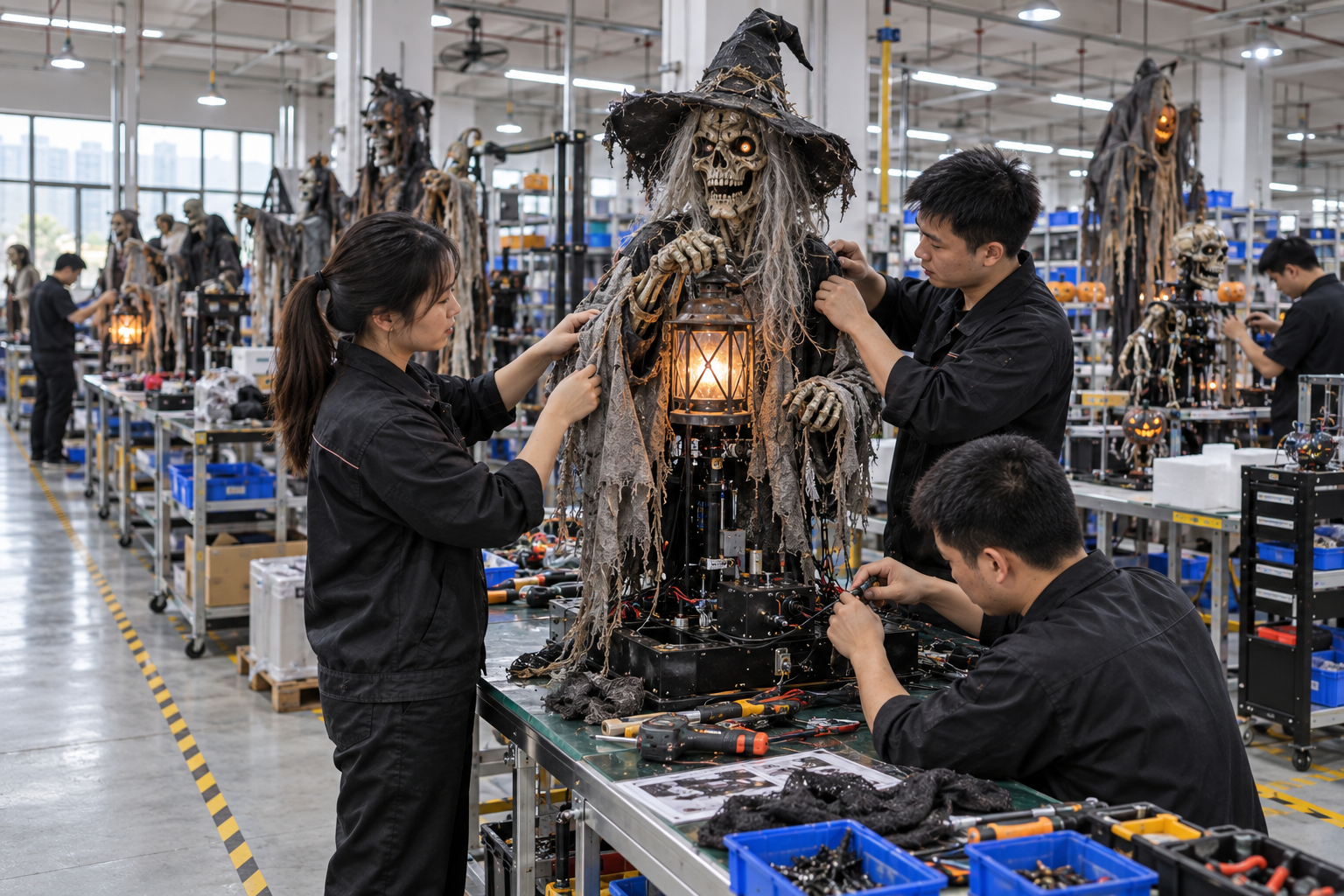
Commercial Halloween prop sourcing is a project-planning exercise, not simply a catalogue purchase. The right decision depends on where the prop will be used, how visitors will encounter it, what functions it needs, how it will be packed and which approvals must happen before shipment.
1. Define the project brief before requesting a quote
A useful inquiry gives a supplier enough context to recommend a build direction without guessing. Start with the visitor experience: is the prop a visual landmark, a photo opportunity, a queue-line detail, or a functioning character within an attraction? That purpose determines the scale, durability, operating features and finish you should discuss.
For example, a seasonal retail display usually needs immediate visual recognition, stable placement and a clear packing approach. A haunted-attraction character may need a more considered motion, sound or lighting specification. A mall atrium focal point often needs to be evaluated against public access, sightlines, installation timing and the space available for the finished footprint.
Buyer checklist
- Reference image or product category
- Quantity and required delivery window
- Target market and destination
- Indoor, covered or outdoor application
- Installation footprint, access and power considerations
- Required functions, finishes or branding details
At BooAri, the first factory conversation is used to translate these requirements into a practical starting point. You can begin with an existing Halloween prop collection or send a custom reference through the custom projects page.
2. Choose a prop type that fits the visitor environment
The strongest Halloween installations combine different prop roles rather than relying on one item to do everything. A gateway creates arrival; a large display creates recognition from distance; character props create a focal moment; scene pieces extend the story around them. Selecting the role first keeps the buying conversation practical.
| Prop type | Best used for | Questions to confirm |
|---|---|---|
| Animatronic characters | Story-led attraction scenes and visitor moments | Motion, sound, lighting, control and maintenance access |
| Large display props | Atriums, entrances and retail focal points | Overall scale, base footprint, installation method and packing |
| Themed décor sets | Photo zones, restaurants, seasonal retail and event routes | Set composition, repeated pieces, finish direction and setup time |
| Entrance arches and gates | Event arrival, queue lines and branded photo settings | Opening width, modular assembly, site access and stability |
Use product pages as a visual reference, not as a substitute for specification review. A witch animatronic, giant spider display or haunted gate arch can be a useful direction, but final dimensions, materials, functions and packing should be agreed for the actual project.
3. Evaluate materials, functions and durability in context
Materials should be considered against how the prop will be handled and displayed. A static indoor photo-zone piece faces a different set of demands from an exterior installation or a moving animatronic used through a busy attraction schedule. Rather than asking for a generic “best material,” describe the environment, expected use and operational constraints.
For an animated product, ask how the mechanical components, costume elements, lighting and access points are arranged. For a large decorative piece, ask how its finish, base and break-down approach suit the venue and shipment method. For a multi-item display, ask how the set is identified, packed and prepared for installation.
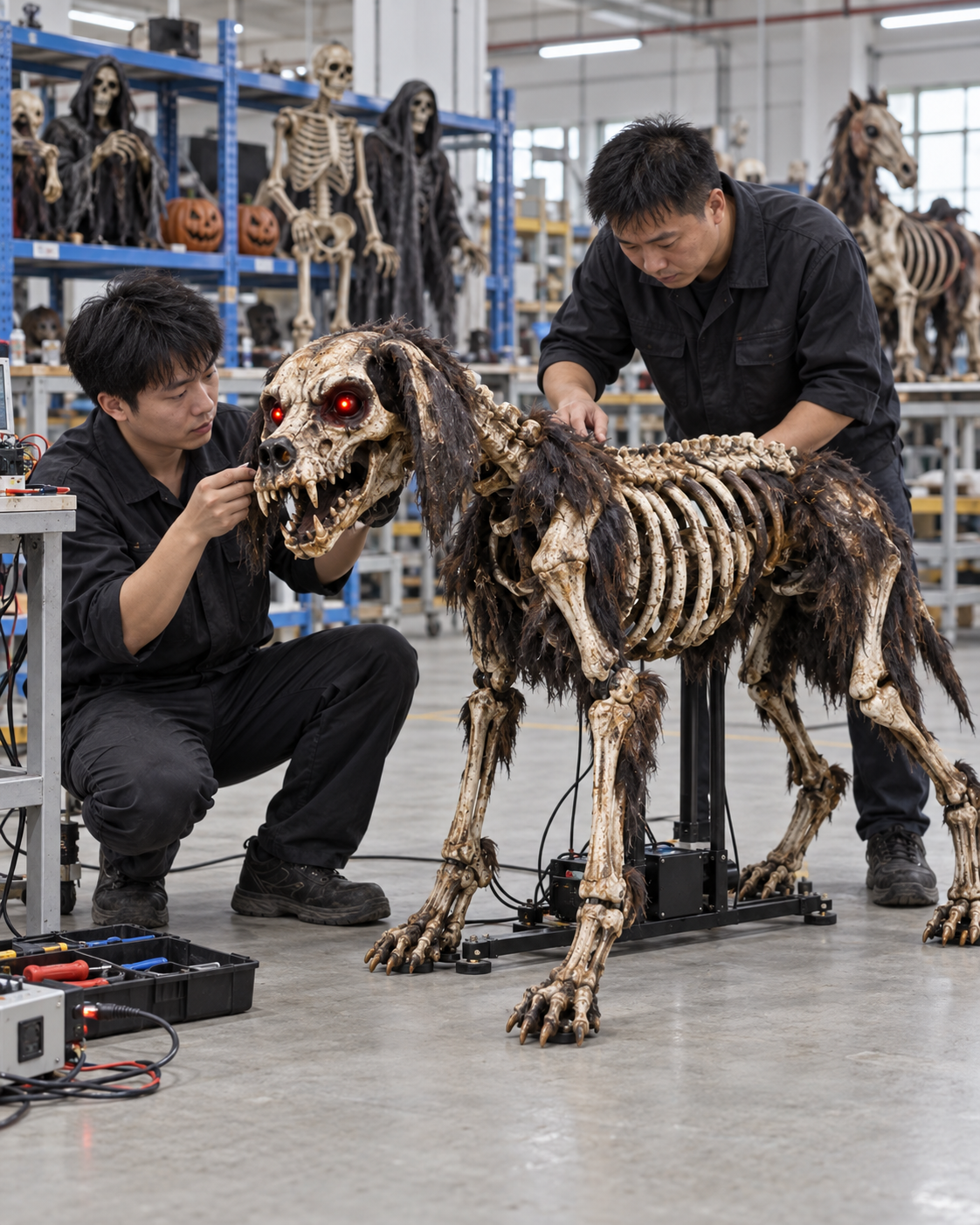
Compliance and safety requirements must be reviewed for the target market and product category. The U.S. Consumer Product Safety Commission's business and manufacturing guidance is one official starting point for businesses evaluating consumer-product obligations in the United States. It does not replace product-specific professional advice, testing or market review.
4. Plan inspection, packing and shipment before production finishes
Inspection is more useful when the buyer and factory agree on what will be checked before production is complete. This can include appearance against an approved reference, operation of agreed functions, item count, accessory inclusion and the condition of packing materials. The right evidence depends on the product and purchase agreement, so it should be stated clearly rather than assumed.
Packing deserves the same early attention. A tall character, a wide spider or a modular gate may require very different protective materials and carton layouts. The destination, handling method, storage plan and installation workflow can all affect how a commercial prop should be prepared for transit.
“The most useful approval is one that connects the visible product, the required function and the shipment plan. It gives both buying and factory teams a clearer reference point before dispatch.”
BooAri Product TeamFor a clearer handoff, align the final requirements with the sequence on our How We Work page. Buyers who need a closer view of production and inspection can also review our Shenzhen factory overview.
5. Build a supplier conversation around decisions, not assumptions
A good commercial Halloween prop supplier conversation should result in decisions that can be checked: which visual reference is being followed, what the finished item must do, how it will be installed, which documents are relevant and what will be reviewed before shipment. This avoids vague “similar to photo” requests that create risk later in the process.
Keep a written record of the final scope. For repeat programs, include the item name, revision details, agreed functions, accessories, packaging direction and any market-specific requirements. That record makes future replenishment or related seasonal projects easier to manage.
When the brief is ready, send it by email or use the form on this page. BooAri can help you identify a relevant product starting point, then confirm which details need to be resolved before production.
Frequently asked questions
What information should I send when requesting a Halloween prop quote?
Send the product type or reference, quantity, target market, intended indoor or outdoor use, desired functions, delivery date and destination port or country. A floor plan or installation photo also helps confirm scale and access.
How early should commercial Halloween props be sourced?
Start the discussion as early as practical, especially for custom pieces or programs with sample approval, movement, lighting or special packing requirements. The workable schedule depends on the final scope, approval process and destination.
Can one supplier provide both product development and shipment preparation?
A supplier may support both, but buyers should confirm the exact division of responsibilities. For each order, clarify approval milestones, inspection evidence, packing information and the handoff to the nominated freight partner.
Which Halloween props need the most planning?
Large entrance structures, motorised characters, illuminated displays and multi-piece installations typically need the most planning because scale, power, access, packing and visitor interaction all influence the final build.
READY TO START A PROJECT?