
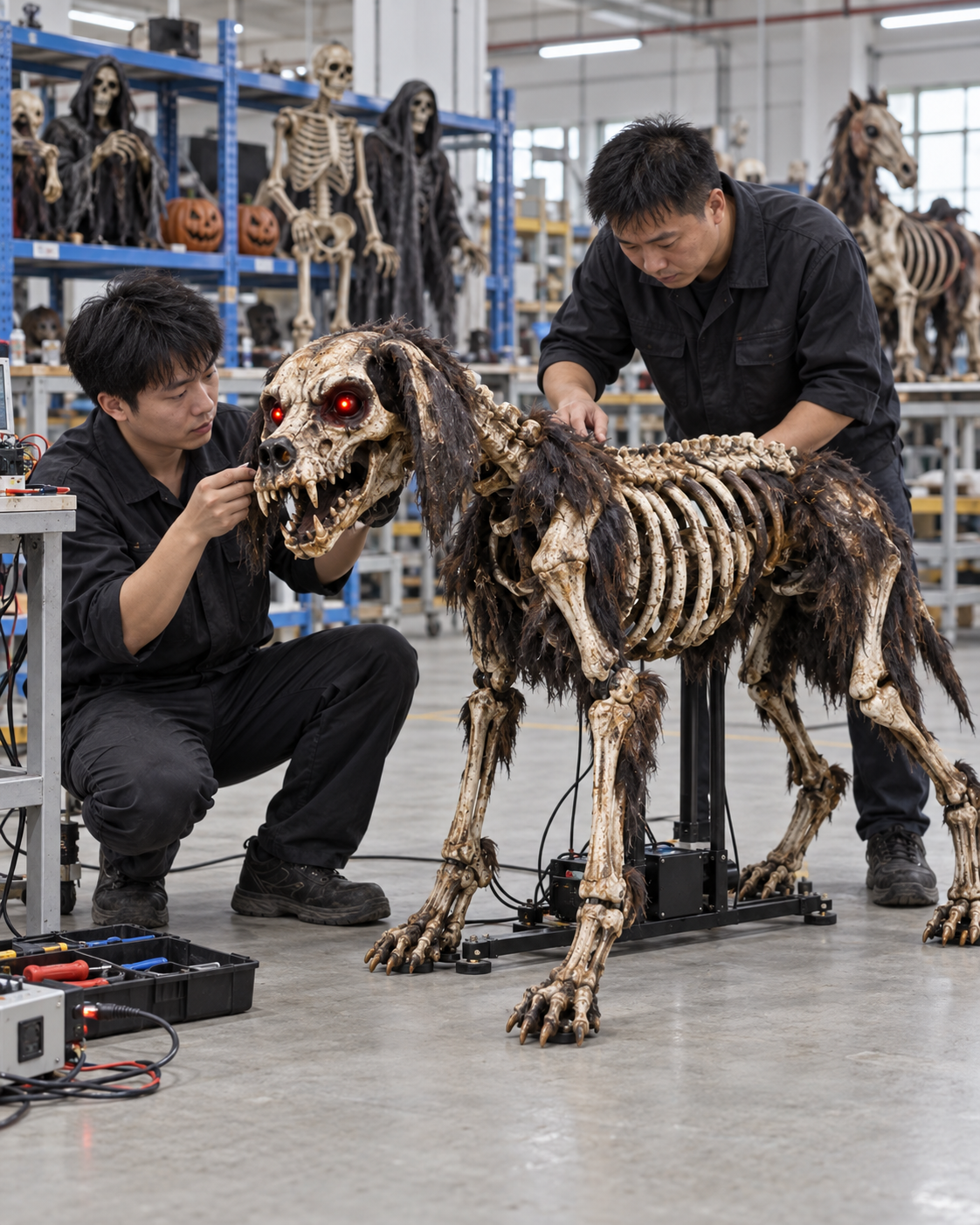
A Halloween prop supplier audit should help a buyer decide whether the supplier can support the actual order, not simply whether a website presents attractive product photos. The audit needs to connect product application, sample process, production communication, inspection evidence, packing and export preparation.
This checklist gives importers, retailers and event buyers a practical starting point for supplier evaluation. It does not replace a buyer's own commercial, legal, compliance or third-party verification process.
1. Confirm the supplier understands the product application
Start with the products you intend to buy and where they will be used. Ask how the supplier handles static props, animated items, mixed display sets, retail packaging or project-specific dimensions. The answers should relate to the customer requirements rather than generic production claims.
A capable supplier should ask clarifying questions about site, quantity, market, delivery date, functions and packing. These questions show whether the quotation process is grounded in the practical order scope.
2. Review sample and approval communication
Ask how reference images, changes and sample approvals are recorded. A clear process should identify the current product revision and the details that have been approved for production. This is especially important for a custom finish, function or packaging requirement.
The aim is not to create unnecessary paperwork. It is to ensure that buyer and factory have one traceable basis for the final product and inspection plan.
For related product directions, explore BooAri's Halloween prop collection, discuss a custom project or review the factory workflow.
3. Ask what factory testing can demonstrate
For animatronic or lighted products, ask what visible functions can be tested before shipment. For static props, ask how the factory checks condition, components, assembly fit and accessories. The response should be tied to the actual product category.
A testing record is valuable when it shows the agreed function or product condition for the approved order. It should not be interpreted as a broad guarantee for every site or operating condition after delivery.
4. Review packing and shipment inspection
Ask how products are protected, grouped and identified for export. For a mixed display order, packing must support the receiving and installation team, not just fit into cartons. Clarify how accessories and fragile components are handled.
Before dispatch, shipment inspection can review item count, visible condition, required functions and packing. Buyers should keep this evidence with the packing list and use it in their own receiving process.

5. Make the audit part of an ongoing sourcing record
Document the supplier's responses, approved samples, inspection outcomes and delivery observations. This gives purchasing teams a factual way to compare future suppliers or expand a successful product range.
A good audit process grows more useful with each seasonal order because it records the operational details that affect future planning: lead time, packing, installation preparation and product feedback.
Conclusion
Send your product requirements and supplier-evaluation questions for a practical BooAri factory-workflow discussion. Clear customer requirements, a documented product direction and a planned inspection sequence give the buying team a stronger basis for the next step.
Frequently asked questions
What should I ask a Halloween prop supplier before ordering?
Ask about product application, sample process, production lead time, factory testing, shipment inspection, packing and the information required for a quotation.
Is a factory audit the same as shipment inspection?
No. An audit evaluates process and capability; shipment inspection reviews the completed order against the approved scope before dispatch.
Can a supplier test animated Halloween props?
Ask what agreed visible functions, such as movement, lighting or sound, can be demonstrated for the relevant product revision.
What records should a buyer retain?
Keep the approved product reference, quotation scope, sample approval, test or inspection evidence, packing list and receiving notes.
Further reading
Use these external resources alongside your local market, venue and professional safety requirements:
READY TO START A PROJECT?