
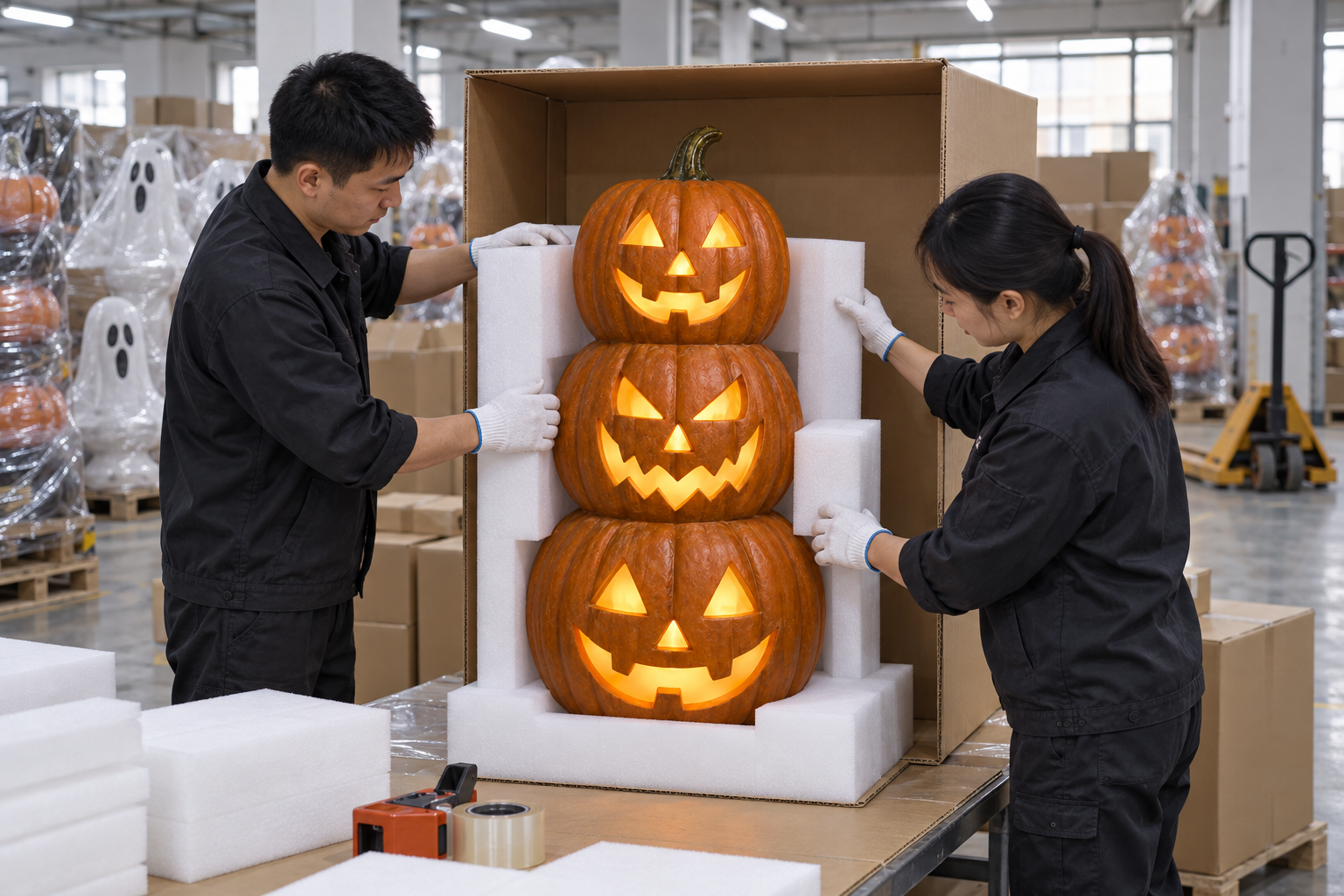
Export packaging is part of the product plan for commercial Halloween props. It affects how a delicate finish is protected, how modular components arrive, how a receiving team finds related accessories and how the display can be stored for the next season.
This guide gives importers, retailers and event teams a practical framework for discussing carton packing, container loading, shipment inspection and receiving preparation with a Halloween prop supplier.
1. Begin with the finished display and its components
List the main prop, base, accessories, light or control parts, supporting scene pieces and any assembly items. This gives the supplier a clear view of what needs to travel together and what requires separate protection.
For a mixed project, group items by display zone or main component where practical. This can help the receiving team avoid opening unrelated cartons when it is preparing an entrance, photo zone or attraction scene.
2. Protect surfaces and structural elements
Discuss delicate finishes, protruding components, costume layers, lighting parts and assembly connections. The packing method should reflect the approved product design rather than rely on a one-size-fits-all carton approach.
For larger modular props, clarify whether parts arrive assembled or separated. This affects carton dimensions, handling, receiving labour and the installation sequence at destination.
For related product directions, explore BooAri's Halloween prop collection, discuss a custom project or review the factory workflow.
3. Make carton identification useful
A carton label or packing-list reference should help the buyer identify which main item or scene section is inside. For seasonal displays, this information is valuable both at first delivery and during the following year's setup.
Keep the carton list with approved product images and basic installation notes. It creates a practical handoff between factory, logistics, receiving and the eventual display team.
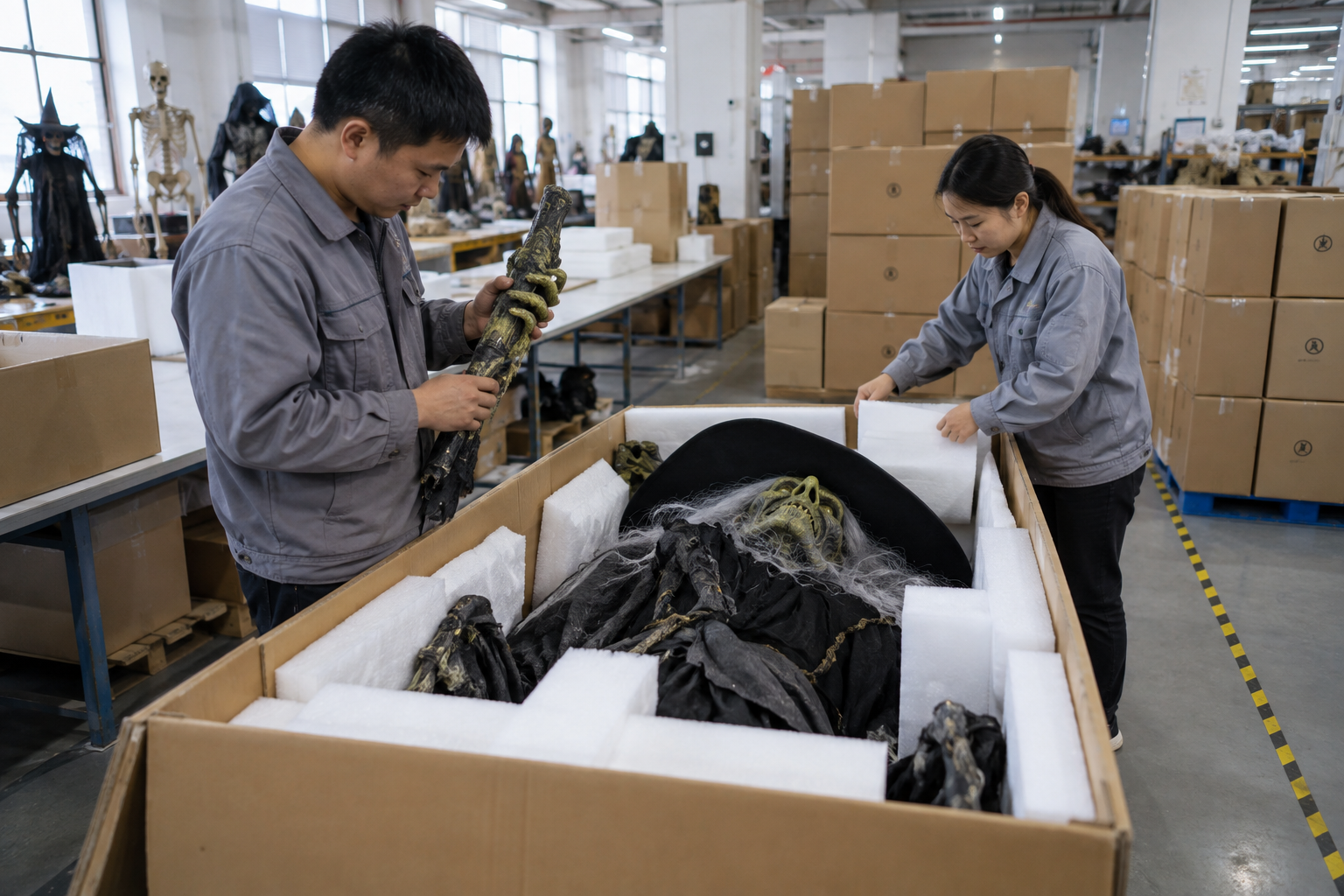
4. Use shipment inspection to review the handoff
Before dispatch, review the visible product condition, component count, accessories and protective packing. The inspection should reference the approved scope so a buyer can compare the evidence to the actual order rather than to generic production images.
For a container or pallet shipment, the buyer can also discuss how the packing list and loading information will support receiving. Transport terms, insurance and destination procedures should be handled through the buyer's relevant logistics process.
5. Plan storage before the products arrive
A seasonal display becomes easier to reuse when cartons, inserts and product references are retained. Confirm whether the original packaging should be kept and how major components will be grouped after removal.
Post-season notes about damaged surfaces, hard-to-handle cartons or missing accessories can improve the next export-packing plan. This turns logistics feedback into a practical sourcing advantage.
Conclusion
Send your product list, destination and packing priorities for an export-packaging discussion. Clear customer requirements, a documented product direction and a planned inspection sequence give the buying team a stronger basis for the next step.
Frequently asked questions
Why is export packaging important for Halloween props?
It protects the approved product, keeps related components identifiable and supports receiving, installation and later seasonal storage.
What should a mixed display packing plan include?
Include main items, accessories, fragile parts, carton grouping, packing-list references and any relevant installation sequence.
What should shipment inspection check?
Check visible condition, item count, accessories, packing protection and the connection between cartons and the approved order scope.
Can packaging support next-season reuse?
Yes. Retained cartons, protective inserts, labels and setup notes can significantly simplify storage and reinstallation.
Further reading
Use these external resources alongside your local market, venue and professional safety requirements:
READY TO START A PROJECT?