

Pumpkin props can anchor a commercial Halloween display without making the scene feel overly narrow or theme-specific. Small pumpkins support retail merchandising, while giant or lighted pumpkins can define a storefront entrance, mall activation or event photo zone.
This guide helps buyers compare wholesale pumpkin props by product role, scale, lighting, packing and installation preparation. It is intended for retailers, event planners and attractions preparing a seasonal display.
1. Match pumpkin scale to the display zone
Small pumpkin decorations can create repetition across shelves, tables and windows. Larger pumpkins work best as an entrance landmark, photo opportunity or scene anchor. Identify the first viewing distance and available footprint before selecting the main size.
A mixed scale can create visual depth: use a hero pumpkin or stack at the front, then smaller supporting pieces to extend the seasonal story. This approach helps the display feel intentional rather than simply crowded.
2. Decide when lighting adds value
Lighted pumpkins can create an evening focal point or make an entrance visible during lower-light hours. The lighting should have a defined job, such as guiding visitors, supporting photography or emphasizing the main display area.
Share the site context and power preparation early. Product configuration can be reviewed by the supplier, while final electrical connections and local venue requirements need to be handled through the buyer's qualified site process.
For related product directions, explore BooAri's Halloween prop collection, discuss a custom project or review the factory workflow.
3. Build a complete seasonal scene
Pumpkins can be paired with witches, fences, skeletons, autumn elements or a themed gate to create a broader visual story. Select one hero direction, then use smaller items to support the route or merchandise zone.
For a multi-store or multi-zone project, create a simple product allocation list. It should show which pumpkin props belong to the entrance, window, photo zone or feature table so the supplier can quote and pack logically.
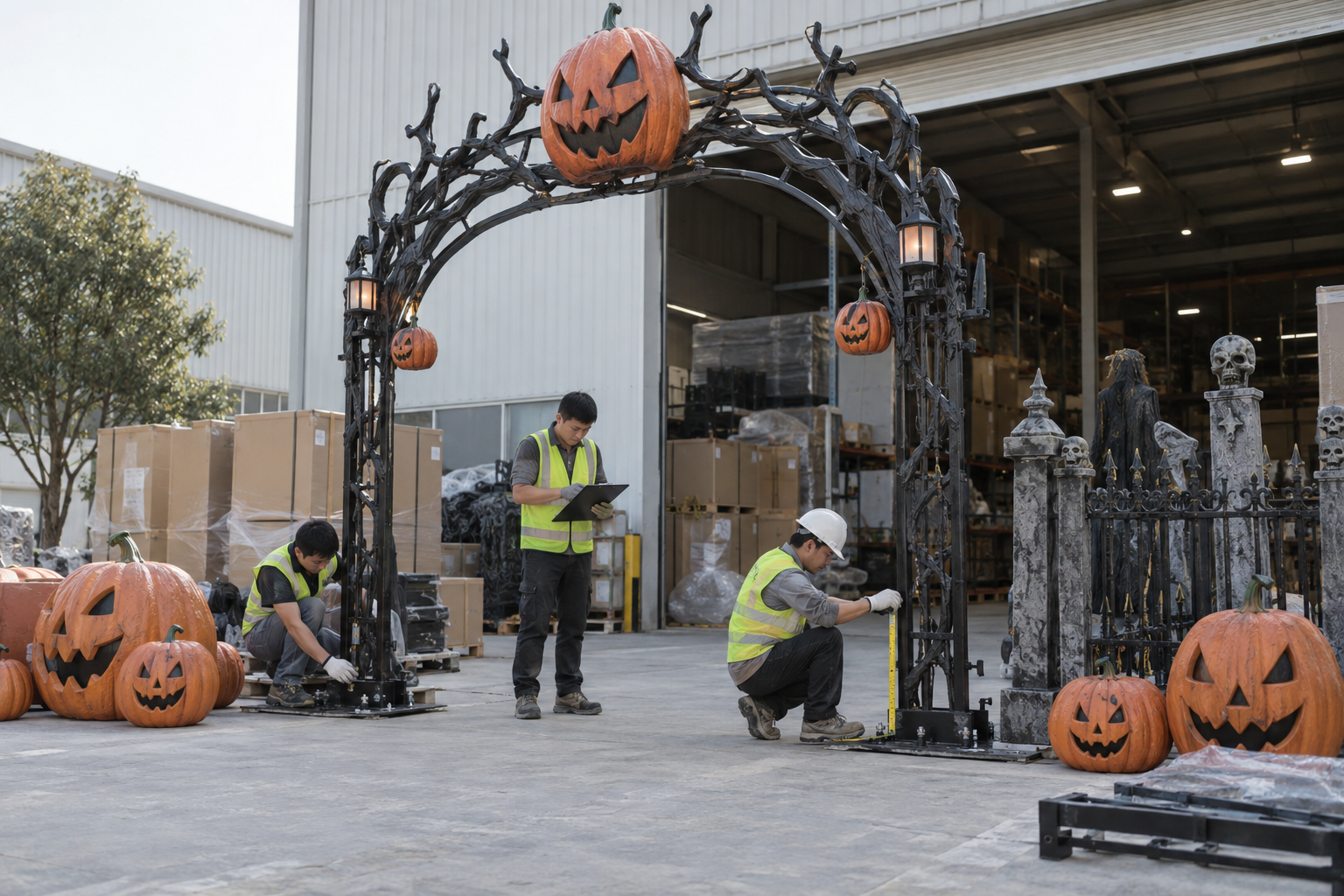
4. Inspect components and packing before shipping
For large or lighted pumpkins, confirm the approved visible finish, components, accessories and applicable functions. Factory testing can demonstrate the agreed visible lighting or moving feature before dispatch.
Shipment inspection should also review protective packing, especially where a product has delicate finishes or separate components. Retain the packing list and product reference for the receiving team.
5. Reuse the display across seasons
A pumpkin display can often be refreshed by changing supporting scene pieces while retaining the primary props. Store the approved images and packing details so the original setup remains easy to understand.
Post-season feedback should cover both visual response and operations: which scale worked, which products were easy to place and what created the strongest seasonal cue for customers or visitors.
Conclusion
Send your display layout, preferred pumpkin style and event or launch date for a commercial seasonal assortment. Clear customer requirements, a documented product direction and a planned inspection sequence give the buying team a stronger basis for the next step.
Frequently asked questions
What size pumpkin props are best for a store entrance?
Choose the scale from the entrance width, viewing distance and available footprint; a large hero piece should not block visitor flow or merchandise access.
Can pumpkin props include lighting?
Yes, where lighting supports the display plan and the final site has an appropriate power and installation arrangement.
Can pumpkin props be mixed with other Halloween characters?
Yes. Pumpkins can frame witches, skeletons, gates and other scene elements while maintaining a coherent seasonal story.
What should be included in a pumpkin-prop quotation request?
Include display zone, quantity, desired scale, lighting needs, site context, target market and required delivery date.
Further reading
Use these external resources alongside your local market, venue and professional safety requirements:
READY TO START A PROJECT?