
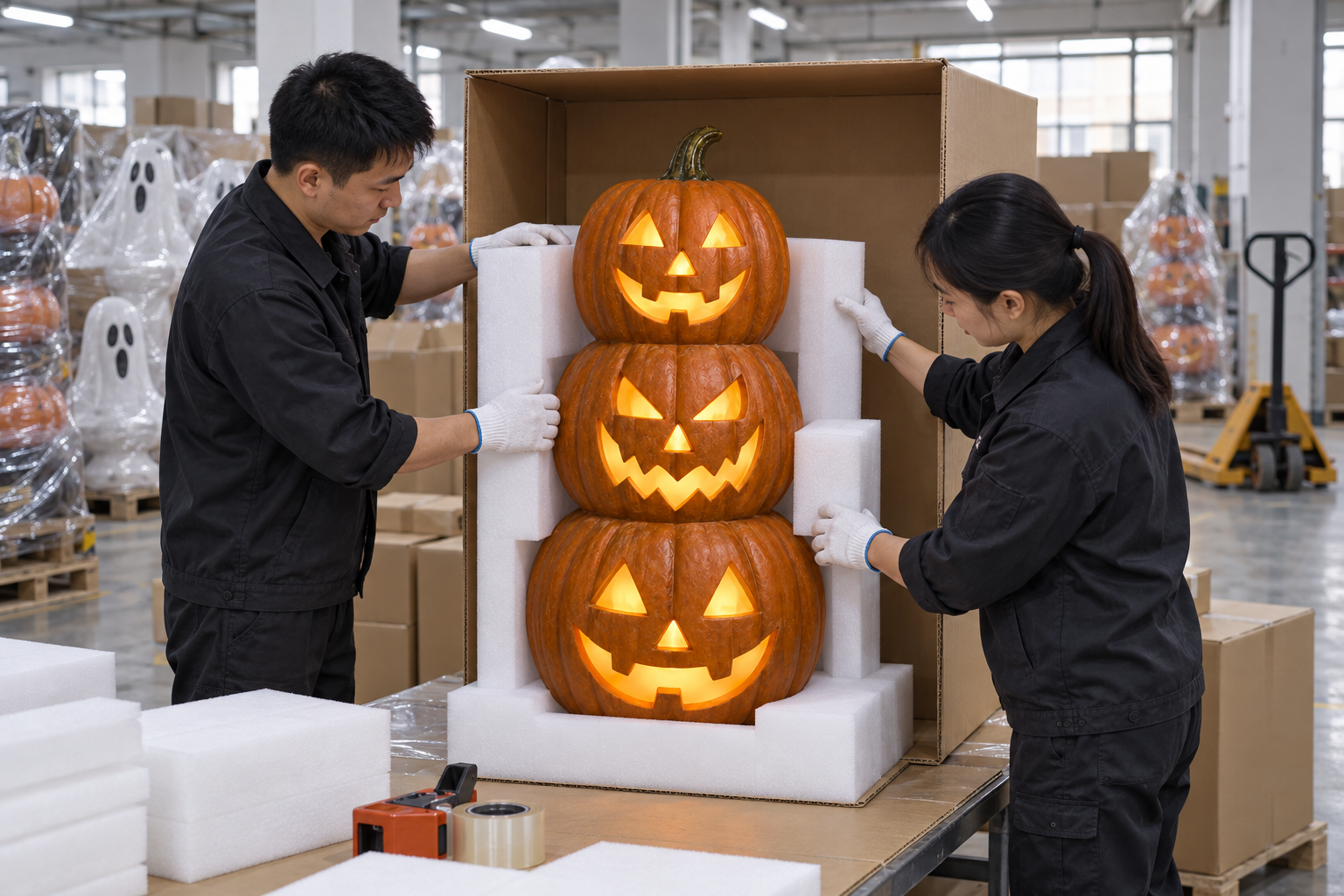
A Halloween retail display should do more than decorate an open area. It should give shoppers a clear seasonal cue, direct attention to the right products and create a visual moment that works from outside the store as well as inside it. The prop plan needs to match the store's traffic flow, display footprint and seasonal launch timing.
This guide helps retailers select commercial Halloween display props for entrances, windows, feature tables and photo zones. It focuses on the planning information a supplier needs to recommend an assortment, prepare packing and support a smooth seasonal installation.
1. Identify the display's commercial job
An entrance display should announce the season from a distance. A window display should create a strong silhouette for passers-by. A feature table should support merchandise without blocking access. Define the job of each zone before selecting prop types or quantities.
Use a simple store map to identify the first sightline, feature-product zone, queue area and any photo opportunity. This helps determine where a large hero prop is worth the footprint and where smaller repeatable decorations will be more useful.
2. Create a clear hero-and-support hierarchy
A retail scene often needs one hero prop, a few supporting pieces and a controlled colour or material direction. A giant spider, witch, skeleton or graveyard gate can establish the main story; pumpkins, skulls, signs or tabletop props can carry it through the rest of the floor.
Do not treat every prop as a focal point. A display with too many competing figures can obscure the merchandise and make the store feel crowded. The goal is to create a memorable seasonal environment that still supports shopping.
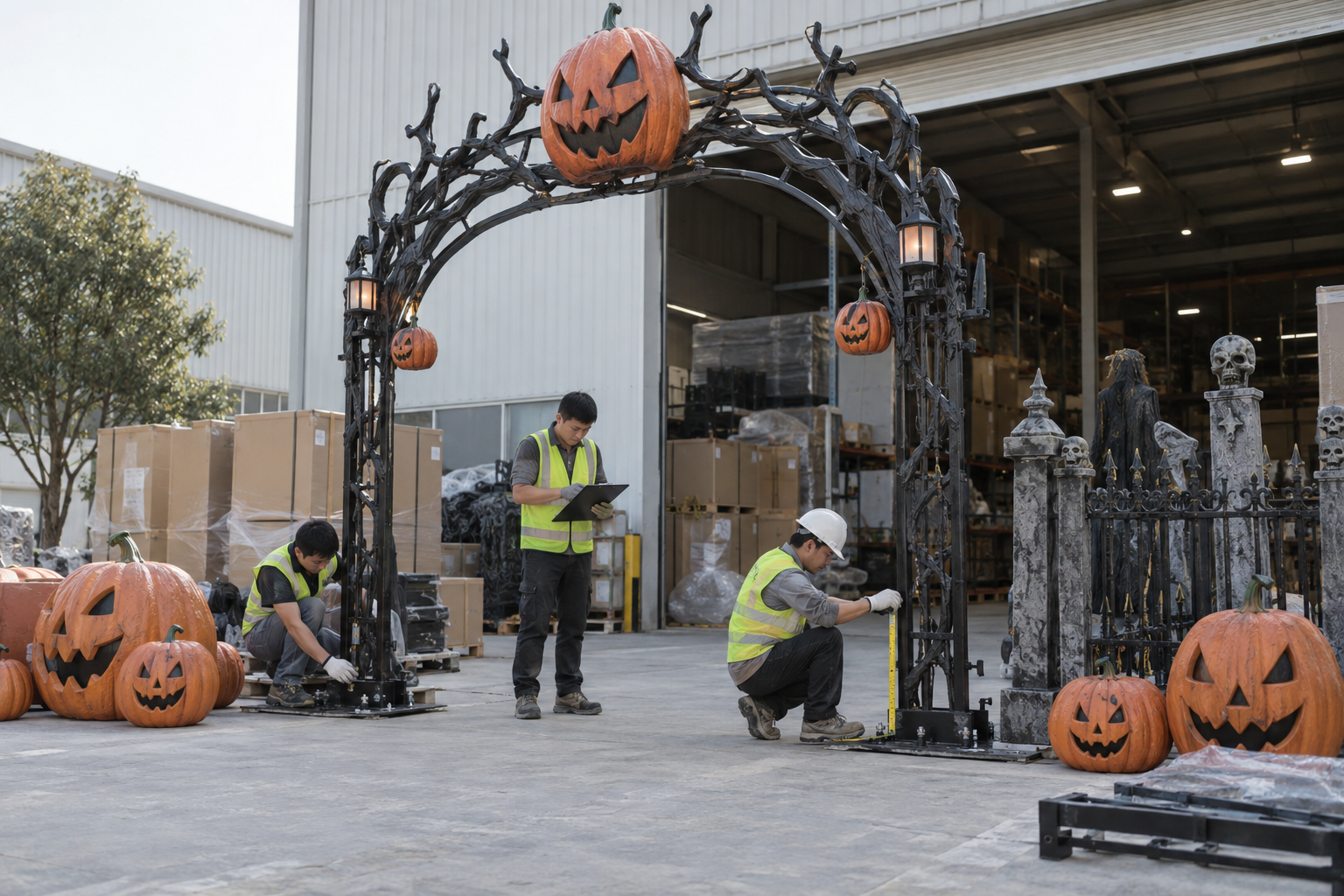
For related product directions, explore BooAri's Halloween prop collection, discuss a custom project or review the factory workflow.
3. Plan quantities, packing and store setup
Order quantities should reflect the number of stores, display zones and planned replacement needs. Confirm whether products are packed individually, by set or by display grouping. This information helps a retail operations team decide how the goods will be received, allocated and opened.
For a chain rollout, give the supplier the store count, target launch date and any standard display dimensions. The factory can then prepare a quotation that reflects the item mix and packing needs rather than quoting isolated products with no operating context.
4. Use factory evidence to support receiving
Before dispatch, factory inspection can confirm the agreed visual condition, quantity, accessories and packing. For lighted or animated props, agree which visible function should be demonstrated. This gives the retail team a reference before it begins store allocation.
After delivery, retain the packing list and opening instructions with the seasonal plan. This reduces avoidable confusion when display teams are working across multiple locations or on a limited pre-launch timetable.
5. Capture learning for the next range
The most useful post-season feedback is operational and visual: what shoppers noticed, which prop types were easy to install, which cartons were difficult to handle and which scene elements created a useful product story. Record this feedback while the display is still fresh.
That evidence can improve the next order more effectively than starting from a generic trend list. It gives the retailer and supplier a shared basis for adding products, adjusting scale or refining the packing plan.
Conclusion
Send your store format, display zones and launch date to request a commercial Halloween retail display shortlist. Clear customer requirements, a documented product direction and a planned inspection sequence give the buying team a stronger basis for the next step.
Frequently asked questions
What makes a Halloween retail display commercial rather than decorative?
It supports a clear shopper journey, fits the store footprint and reinforces the seasonal product story instead of simply filling space.
How should retailers choose a hero prop?
Select a hero prop by the first sightline, available footprint, product story and the visitor action it should encourage.
Can one prop assortment serve multiple stores?
Yes, when the display format and store dimensions are sufficiently standardised. Confirm the store count, zone plan and packing needs early.
What should be included in a retail display order brief?
Include store format, display zones, quantity, target launch date, market, preferred product style and any packing or allocation requirement.
Further reading
Use these external resources alongside your local market, venue and professional safety requirements:
READY TO START A PROJECT?