
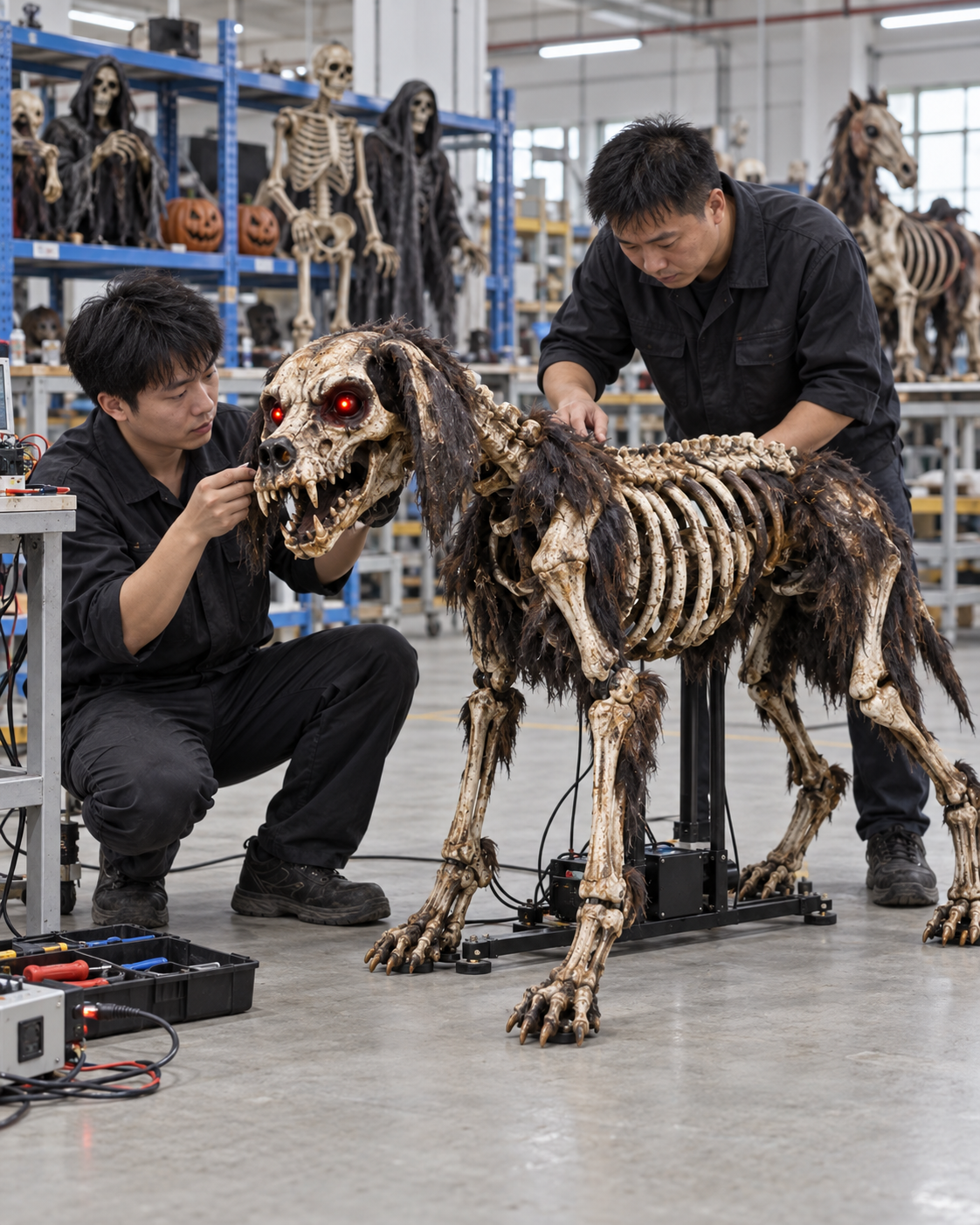
Halloween skeleton props are used across seasonal retail, haunted attractions, events and venue displays because they can work as a single focal piece or as repeatable scene dressing. Commercial buyers should therefore select them by application, not only by a product image. Scale, poseability, base design, surface finish and packing all affect whether a skeleton works for the intended display.
This sourcing guide explains how to compare wholesale skeleton props in a practical B2B process. It helps buyers define the required product direction before they request samples, quotations, factory testing or shipment inspection.
1. Choose the skeleton's role in the display
A skeleton at a store entrance, a tabletop skull in a retail collection and a life-size figure in a haunted route solve different display needs. Start by identifying viewing distance, expected visitor contact, available footprint and whether the item needs to stand, hang, sit or be integrated into a larger scene.
When buyers describe the role clearly, the supplier can propose a relevant scale and construction direction. This is more useful than requesting a general large skeleton because it separates visual requirement from installation and handling requirement.
2. Review poseability, base construction and material together
Poseable joints are valuable only if the intended setup benefits from them. For a repeated retail display, a stable fixed pose may be more practical. For a photo zone or attraction scene, adjustable arms, legs or a supported base can give a styling team more options. Confirm how the item will remain positioned after setup.
Material and finish should be assessed with the actual application in mind. Discuss visible texture, connecting points, surface protection and the conditions in which the prop will be used. Avoid assuming an item is suitable for any location from a studio photograph alone.
For related product directions, explore BooAri's Halloween prop collection, discuss a custom project or review the factory workflow.
3. Plan mixed skeleton and skull assortments
Many buyers create a commercial assortment by combining a hero figure with lower-footprint skulls, bones, signs or scene accessories. This can improve display flexibility and make a container or carton programme easier to plan. Identify which items must be visually matched and which can be selected as supporting products.
For retailers, ask how each item will be packed and whether the assortment supports the intended shelf, entrance or window display. For attractions, confirm whether each item needs independent installation accessories or whether it will be integrated into a fixed scene.
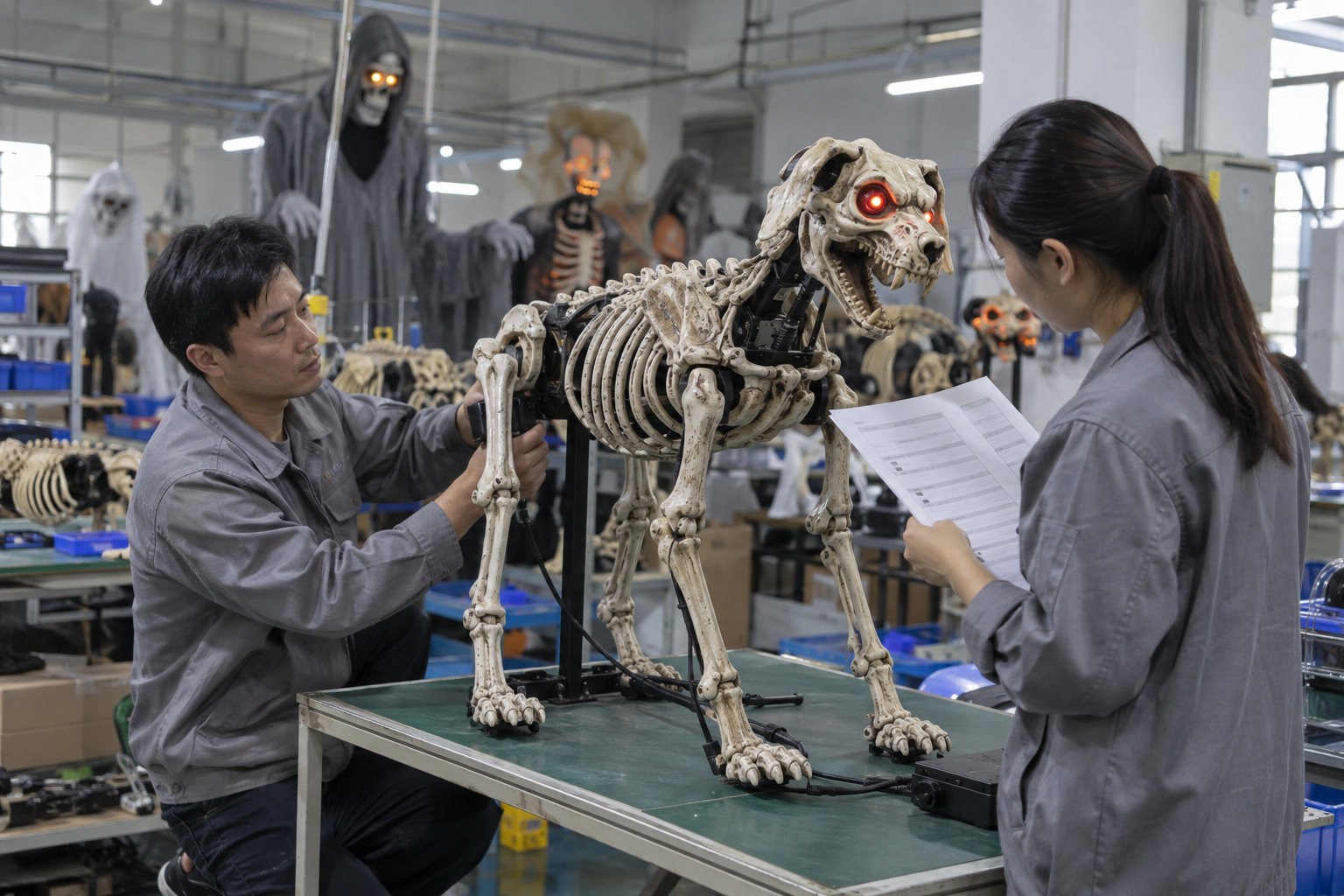
4. Set the inspection points before production finishes
Inspection should relate to the approved skeleton configuration. Confirm visible finish, item count, key joints or components, required accessories and packing direction. If the product includes lighting or movement, agree the visible function that factory testing should demonstrate.
Shipment inspection provides a useful reference for the receiving team, but it does not replace a clear purchase specification or local venue requirements. The buyer should retain approved photos, packing details and a component list for installation and next-season storage.
5. Use packing as part of the sourcing decision
Life-size and poseable skeleton props can take more space than small accessories, so packing should be discussed early. Ask whether a product is delivered assembled, partially separated or packed with protective inserts. The answer affects receiving labour, storage space and the time needed to prepare a display.
A labelled packing approach is particularly useful for a mixed project. It can help the buyer connect each carton to its relevant display zone and avoid delays caused by opening every carton during installation preparation.
Conclusion
Send your target display use, quantity and preferred skeleton style to request a wholesale product direction. Clear customer requirements, a documented product direction and a planned inspection sequence give the buying team a stronger basis for the next step.
Frequently asked questions
What should I confirm before buying skeleton props wholesale?
Confirm product application, overall scale, poseability, stability, quantity, visible finish, packing and delivery timing.
Are poseable skeletons better for every display?
No. They are useful where a scene needs styling flexibility, but a stable fixed configuration can be more practical for repeat retail or large-volume use.
Can skeleton props be part of a custom Halloween project?
Yes. Existing skeleton directions can be combined with custom scale, finish, packaging or complementary scene props when the product brief supports it.
What should inspection cover?
Review the approved visible finish, item count, key components, accessories and agreed packing direction before dispatch.
Further reading
Use these external resources alongside your local market, venue and professional safety requirements:
READY TO START A PROJECT?