
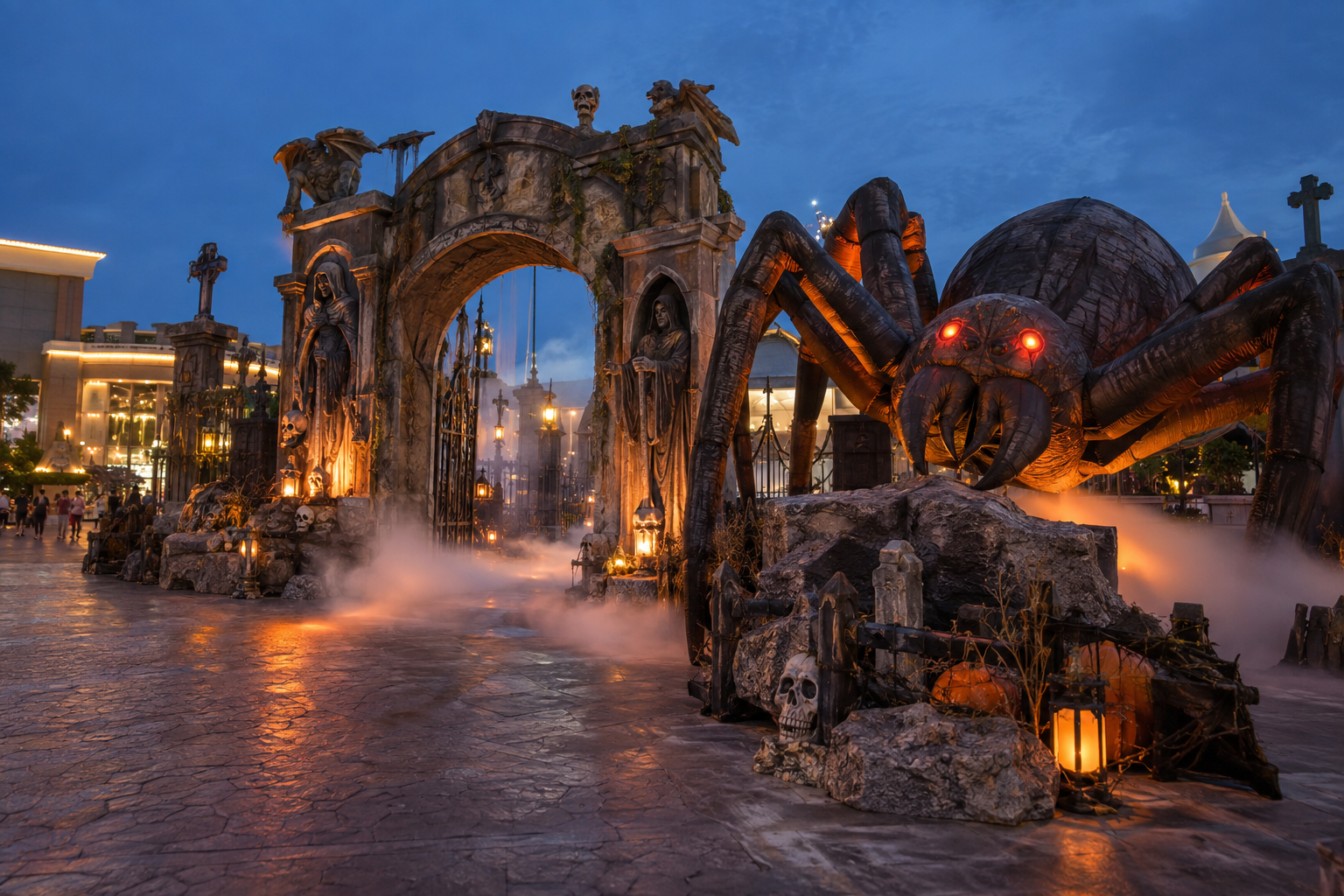
Commercial haunted house props work best when they are selected as part of a visitor route. The route determines what people see first, where they pause, how sound travels and which objects must survive repeated operating cycles. A strong project uses scene dressing for atmosphere and reserves animated effects for deliberate visitor moments.
This buyer's guide helps attraction operators and event teams convert a creative theme into a sourceable prop brief. It addresses layout, focal effects, installation preparation, factory testing and next-season reset without assuming that every venue has the same operating conditions.
1. Start with the route, not the catalogue
Sketch the entrance, queue, turning points, narrow sections, photo areas and exit. Note sightlines, ceiling height, access for staff and the point where visitors are likely to slow down. This turns a creative brief into a layout that can guide product selection.
A prop that looks dramatic in a catalogue can underperform if it is hidden behind a turn, placed where visitors cannot pause or installed in a space with no maintenance access. Give the supplier approximate dimensions and a route plan so the proposed scale and function are grounded in the actual experience.
2. Build the environment before choosing the surprise
Static fences, tombstones, pumpkins, spiders, fabric treatment and themed figures create continuity between focal moments. They are often the most efficient way to establish a complete environment across a longer route. Their value is in atmosphere, scale and repeatability rather than movement alone.
Animated haunted house props are most effective when used selectively. A moving figure, sound cue or light response should have a purpose: direct attention, mark a scene change or reward a visitor who has reached a clear viewing point. The buying team should specify the desired visible effect before discussing mechanisms.
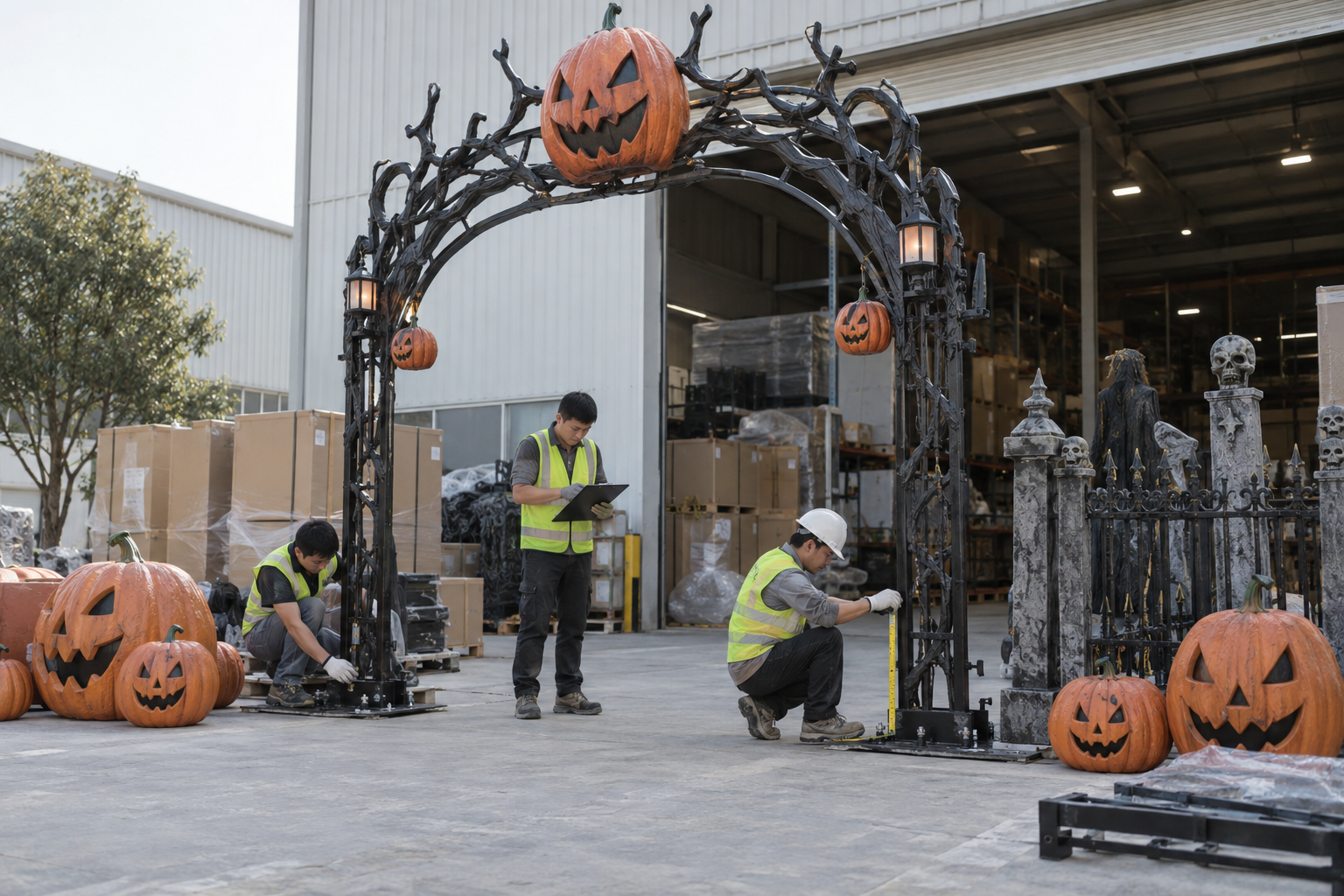
For related product directions, explore BooAri's Halloween prop collection, discuss a custom project or review the factory workflow.
3. Specify visitor flow and operating access together
Commercial displays should allow for the way guests and staff move through the venue. Consider clearance, emergency routes, cable management, cleaning, reset time and the chance of visitor contact. Local venue and safety requirements remain the responsibility of the operator, but the prop brief should make these site conditions visible early.
Maintenance access is particularly important for animated pieces. Identify how staff will reach a power connection, check a visible function or reset a costume layer without dismantling the surrounding scene. A simple access decision at planning stage can prevent a more disruptive operating problem later.
4. Use factory testing to confirm the agreed visitor effect
Factory testing should demonstrate the aspects of the product that the attraction has approved. That may include a movement cycle, lighting, sound, trigger action, modular connection or item count. Ask for the test to be tied to the final product revision so it is useful as a pre-shipment reference.
Testing does not recreate every site condition. Installation, power arrangement, route design and local operation still matter. It does help the venue team verify that the intended product function was checked before the goods entered the transport chain.
5. Design for reset, storage and next season
A haunted attraction is commonly installed and removed on a seasonal timetable. Agree how components are divided, protected and labelled so the team can locate the correct items during the next setup. Smaller accessories should be packed with the relevant main unit rather than left as unidentified loose items.
Ask for a receiving checklist that covers cartons, modular parts and operating accessories. Retaining setup photographs and the approved packing list can save significant time when the creative team is different next season. It also makes it easier to assess what should be refreshed or expanded in the following order.
Conclusion
Send your route sketch, theme reference and opening date for a commercial haunted-house prop recommendation. Clear customer requirements, a documented product direction and a planned inspection sequence give the buying team a stronger basis for the next step.
Frequently asked questions
Should a haunted attraction use more static props or more animatronics?
Static props usually create the scene foundation; animatronics are most effective at selected moments where the route supports a deliberate reveal.
What information should a haunted-house prop supplier receive?
Share a route sketch, approximate dimensions, installation context, desired visitor effect, quantity, market and delivery date.
Can a supplier test animatronic functions before shipping?
The buyer and supplier can agree which visible functions will be demonstrated during factory testing before shipment.
How should seasonal attraction props be packed?
Use a packing plan that protects surfaces, groups accessories with their related components and identifies cartons for the next installation.
Further reading
Use these external resources alongside your local market, venue and professional safety requirements:
READY TO START A PROJECT?