
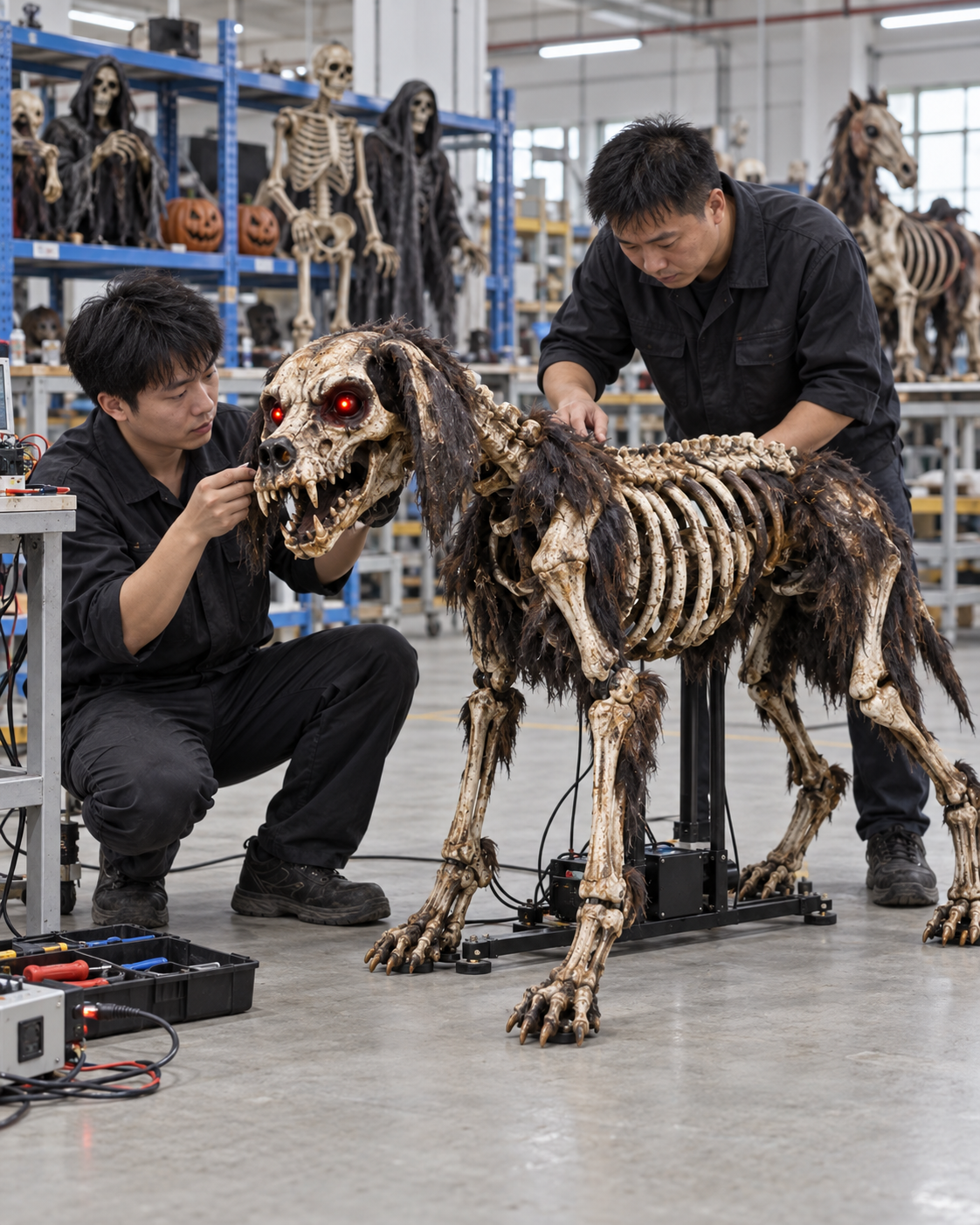
Motion-sensor Halloween props can create a memorable surprise, but their commercial value depends on where the trigger sits in the visitor route. A moving figure placed at the wrong distance, in a crowded entrance or without maintenance access may add complexity without improving the experience.
This guide helps event teams, retailers and attraction operators plan motion-activated props with a clear product application, trigger direction, testing plan and installation preparation.
1. Start with the visitor moment
Define the point at which a guest should notice the prop and what response is intended: a brief reveal, a sound-and-light cue, a photo-zone reaction or a scene transition. This determines whether a motion sensor, sound activation or continuous cycle is relevant.
Map the approach route, expected pace and available clearance. A trigger needs a practical viewing position and a way for staff to reach the product for daily checks or reset.
2. Match the function to the setting
A busy retail entrance may benefit from a visible, repeatable action rather than a narrowly triggered surprise. A haunted attraction can use a controlled trigger point where visitors pause. The appropriate function is the one that works with the route rather than against it.
Describe the available power, intended operating hours and any sound restrictions before the product specification is finalised. These practical constraints can affect the recommended configuration.
For related product directions, explore BooAri's Halloween prop collection, discuss a custom project or review the factory workflow.
3. Agree the factory testing sequence
Factory testing should demonstrate the visible action the buyer has approved. It may include the trigger response, motion cycle, lighting, sound or reset position. Identify the current product revision so the test record refers to the right build.
Testing is a pre-shipment evidence point, not a recreation of every venue condition. The buyer still needs to plan final installation, power arrangement and daily operating checks for the actual site.
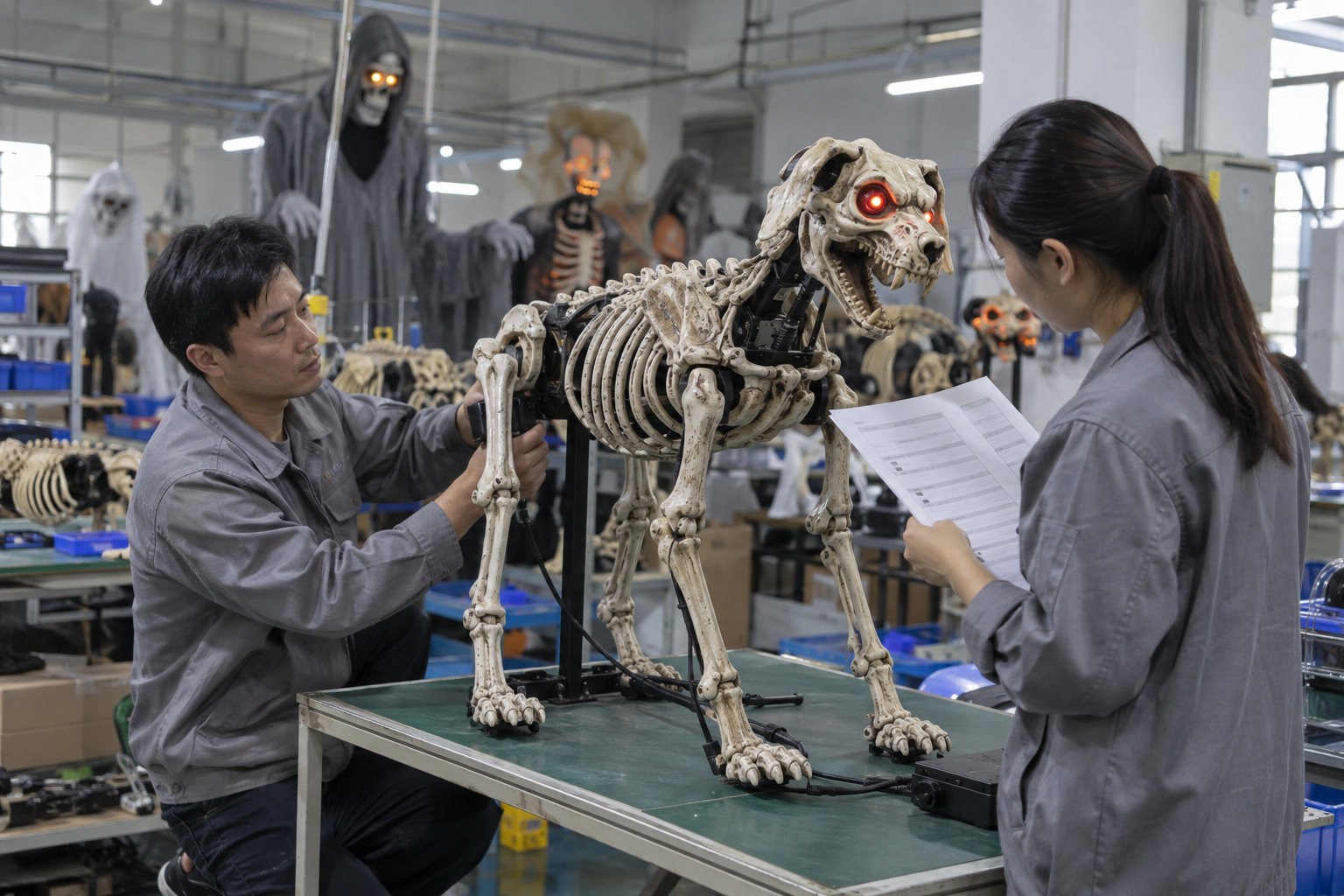
4. Include access and reset in installation preparation
A commercial animatronic needs practical access for staff to inspect visible components, reset a costume layer or check a connection. Confirm this access while planning the scene, not after surrounding props have been installed.
Keep the product manual, approved test record and related accessories with the installation materials. This makes a seasonal setup more consistent when the operating team changes.
5. Use inspection and packing to protect the function
Before dispatch, review visible condition, applicable function, included controller or accessories and protective packing. For mixed displays, identify which carton belongs to the animated focal prop and which cartons hold surrounding scene pieces.
At receipt, compare the shipment to the packing list before installation. Record any question with the related carton and product reference so the supplier and buyer can discuss the same item clearly.
Conclusion
Send your visitor-route sketch, required function and opening date for a commercial animatronic recommendation. Clear customer requirements, a documented product direction and a planned inspection sequence give the buying team a stronger basis for the next step.
Frequently asked questions
Where should a motion-sensor Halloween prop be placed?
Place it where the visitor route provides a clear approach, viewing point and safe clearance, while staff retain practical access for checks.
Can factory testing show a trigger response?
The buyer and supplier can agree which visible trigger, movement, light or sound sequence should be demonstrated before shipment.
Are motion sensors suitable for retail displays?
They can be, but the right approach depends on traffic flow, operating hours, sound conditions and the desired shopper experience.
What should ship with an animated prop?
Confirm the main item, applicable controllers or accessories, product reference and protective packing as part of the approved order scope.
Further reading
Use these external resources alongside your local market, venue and professional safety requirements:
READY TO START A PROJECT?