
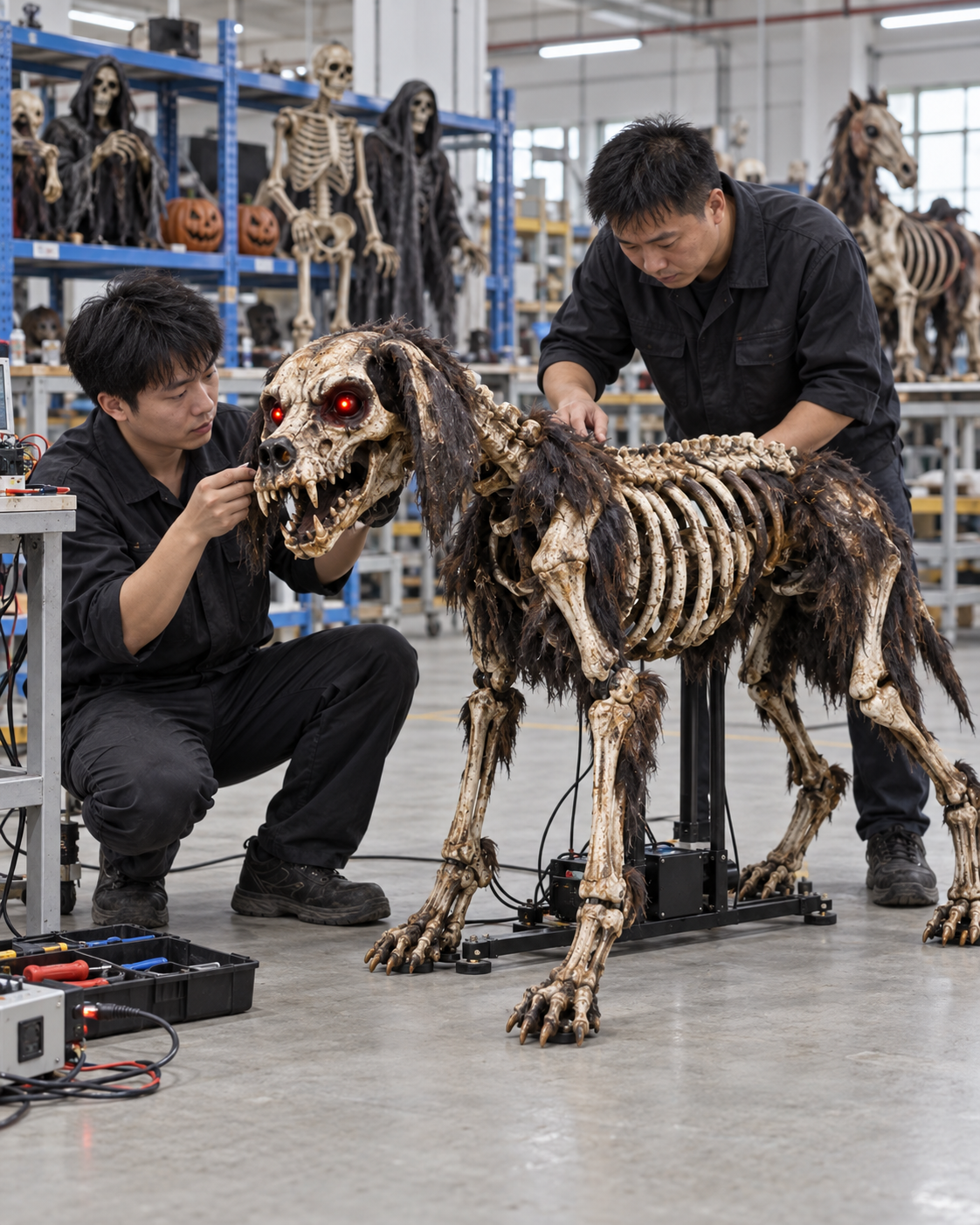
OEM and ODM are useful terms only when the buyer and manufacturer agree what they mean for a specific Halloween prop programme. In practice, the key question is how much of the product is already defined and how much needs to be developed: the silhouette, materials, colour, function, packaging, branding and production method.
For a seasonal range, the model should support the buyer's launch date and commercial objective. This guide compares OEM and ODM paths so an importer, retailer or event brand can request the right information before moving into sample development and production.
1. Define the product-control level before choosing a label
An ODM path typically starts with an existing supplier product direction that can be selected or adapted within defined options. It can be appropriate when time is limited and the buyer mainly needs a reliable seasonal assortment, agreed branding or a practical variation.
An OEM path generally involves a buyer-defined product direction that the manufacturer develops and produces to the approved scope. It can offer more control over design and presentation, but it also requires a clearer brief, more approval time and realistic expectations about material, tooling, minimum quantity and packing decisions.
2. Compare the trade-offs honestly
The correct model is not automatically the most customised one. An ODM range can reduce development steps and allow the buyer to focus on assortment, packaging and launch planning. An OEM project may be suitable where a distinctive hero product, specific dimensions or a branded visitor experience is central to the commercial plan.
Ask the supplier to identify which requested changes are cosmetic and which affect the product structure or production process. A colour adjustment may be straightforward, while a different body shape, moving function or structural base may change sample work, materials and the production schedule.
For related product directions, explore BooAri's Halloween prop collection, discuss a custom project or review the factory workflow.
3. Make sample development an evidence-based process
A good sample brief records what the sample must prove. It may need to confirm a surface finish, a colour reference, a costume layer, a size, a movement sequence or the way a branded package is arranged. The more specific the approval question, the more useful the resulting sample review will be.
Keep a single approved revision as the production reference. Where customer requirements change, record the effect on the scope and timetable before proceeding. This is especially important for Halloween ranges because a late design decision can reduce the available time for production, inspection and transport.
4. Align branding, packaging and product safety information
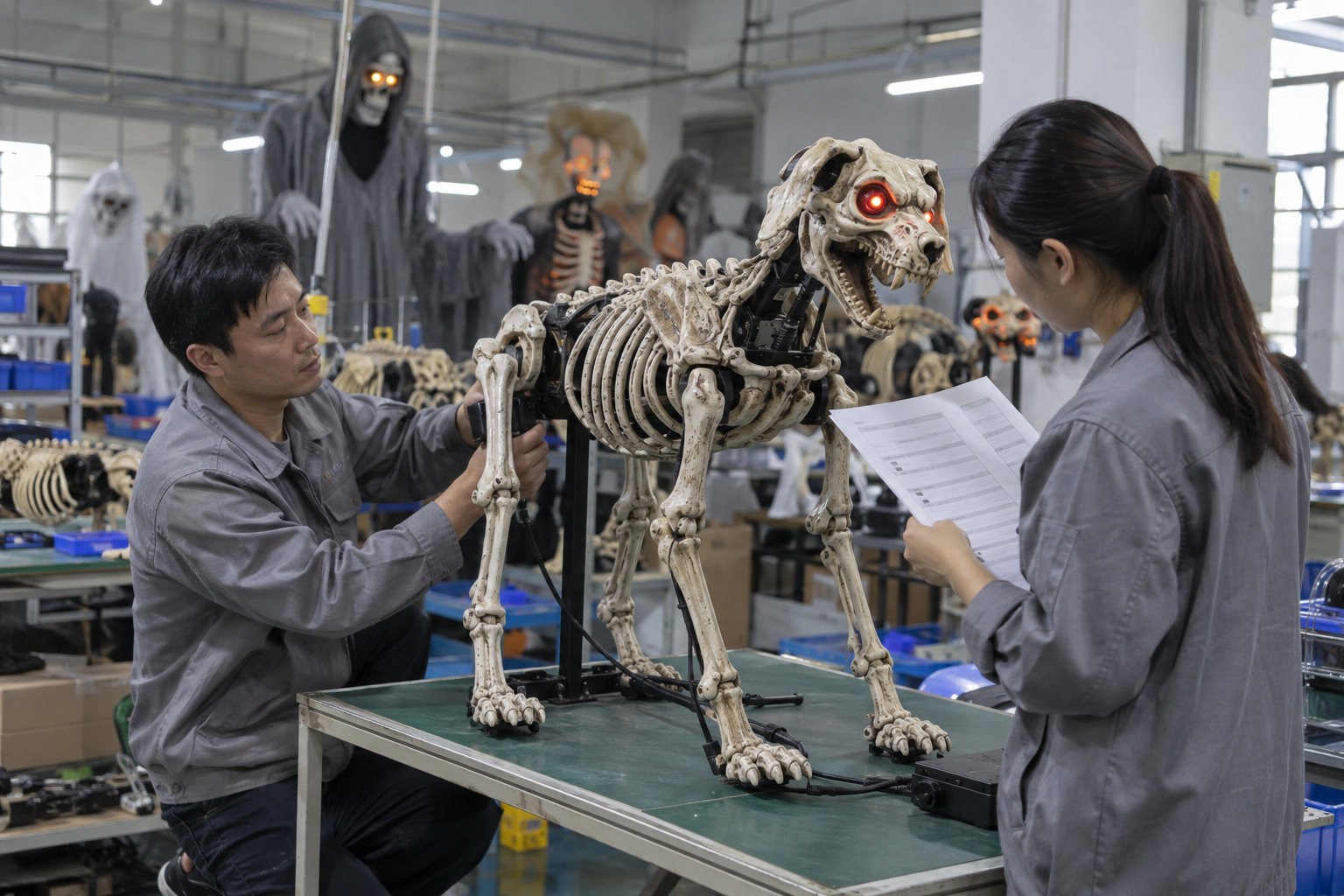
Private-label requirements are not only a logo placement question. The buyer should clarify packaging format, carton labels, language, market information and any applicable product or electrical requirements. The destination market and final application should be shared early so the project does not rely on generic assumptions.
For intellectual-property matters, buyers should use appropriate legal and commercial advice for their market and agreement. The supplier's role is to build the agreed product; ownership, confidentiality and brand-use terms should be documented through the buyer's own professional process.
5. Set quality control around the approved scope
Quality control is most useful when it reflects the approved product rather than an undefined idea of quality. Agree the visible finish, dimensions or key components, applicable function, accessories and packing direction. For an animated Halloween prop, factory testing can demonstrate the agreed visible action before dispatch.
Shipment inspection should then connect the finished order to the approved reference. The buyer can review item count, appearance, included accessories and packing. Clear records support a smoother receiving process and give both parties a factual starting point if a question arises after delivery.
Conclusion
Send your product reference, brand direction, target quantity and launch date to discuss the right OEM or ODM path. Clear customer requirements, a documented product direction and a planned inspection sequence give the buying team a stronger basis for the next step.
Frequently asked questions
Is OEM always more expensive than ODM?
Not necessarily, but OEM usually requires more product-definition and approval work. The commercial outcome depends on the requested product changes, quantity, materials, tooling, packaging and schedule.
Can an ODM Halloween prop be private labelled?
Private-label options can be discussed, including packaging, labels or selected visual changes. Confirm what is available for the specific item and order quantity.
What should an OEM Halloween prop brief include?
Include reference images, intended application, size, required functions, target market, expected quantity, packaging direction and delivery timeline.
Why is sample approval important?
It gives buyer and factory teams a documented reference for the details that will be carried into production and inspection.
Further reading
Use these external resources alongside your local market, venue and professional safety requirements:
READY TO START A PROJECT?