
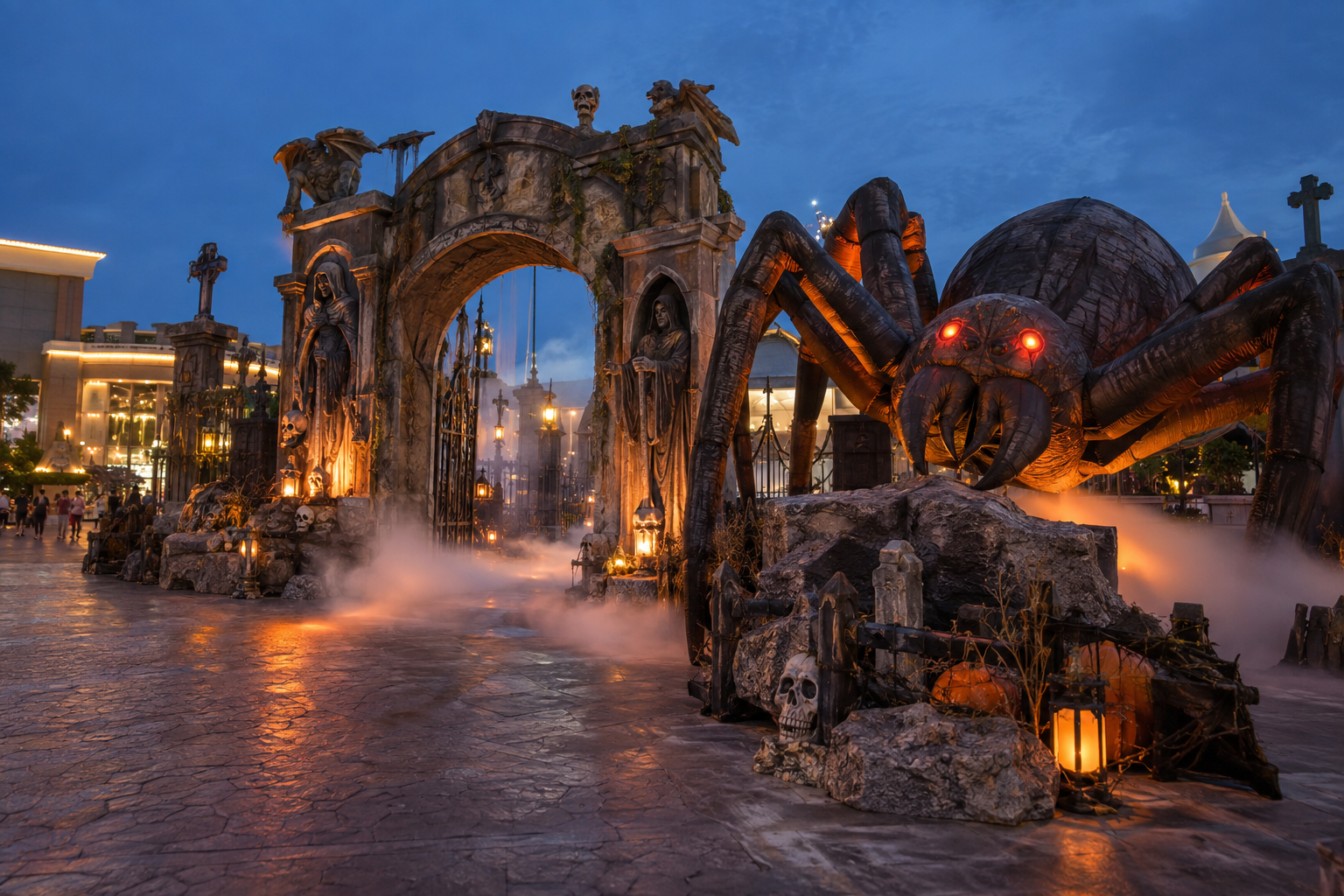
Outdoor commercial Halloween decorations need to do more than look seasonal. They must fit the venue, remain stable through the planned operating period and arrive in a packing format that the installation team can manage. A buyer should evaluate the display as a site project: materials, wind exposure, drainage, electrical planning, visitor contact and daily reset procedures all influence the final direction.
The phrase ‘outdoor use’ is too broad to be useful on its own. A covered entrance, a mall forecourt, a temporary event route and an exposed coastal activation can present very different conditions. This guide explains which questions should be answered before selecting an outdoor Halloween prop or requesting a custom build.
1. Describe the site instead of requesting a generic outdoor prop
Start with the installation location. Note whether the display is fully exposed, partially covered or indoors near an entrance. Record the expected duration, public access, available anchoring points, vehicle access and where power will come from. These details help determine whether the project needs a freestanding display, a modular set, a suspended element or a secured ground-level prop.
Weather exposure should be described honestly. Rain, wind, sun, temperature changes and surface drainage can affect materials, finishes and electronic arrangements. A reference image alone cannot show whether a specific prop is appropriate for those conditions. Product application details are therefore more useful than broad labels such as ‘waterproof’ or ‘heavy duty’.
The same principle applies to visitor interaction. A photo zone with supervised access may allow a different configuration from an unattended public walkway. Let the supplier know whether visitors can touch the display, pass close to it or photograph it from a distance.
Project checklist
- Site photos and a basic layout
- Duration and expected operating hours
- Exposure to rain, wind and direct sun
- Anchoring or ballast options
- Power source and cable route
- Visitor access and maintenance access
2. Match the visible material to the actual operating environment
Commercial displays often combine structural elements, decorative shells, fabrics, lighting and graphics. Each element should be reviewed separately. A surface finish can look appropriate in a studio image yet require a different treatment when used close to a wet ground surface or in a high-touch public area.
Ask how the base, supports and connection points work. For a large spider or gate, stability is not only about weight; it also depends on footprint, attachment method, the venue surface and local installation conditions. For multi-piece scenes, ask how individual units align and whether they need numbering or a simple assembly sequence.
Electrical features require their own review. Confirm the intended power arrangement, cable management and how components will be protected and accessed for checking. Buyers should consult applicable local rules and qualified professionals for the destination market rather than relying on generic internet advice.
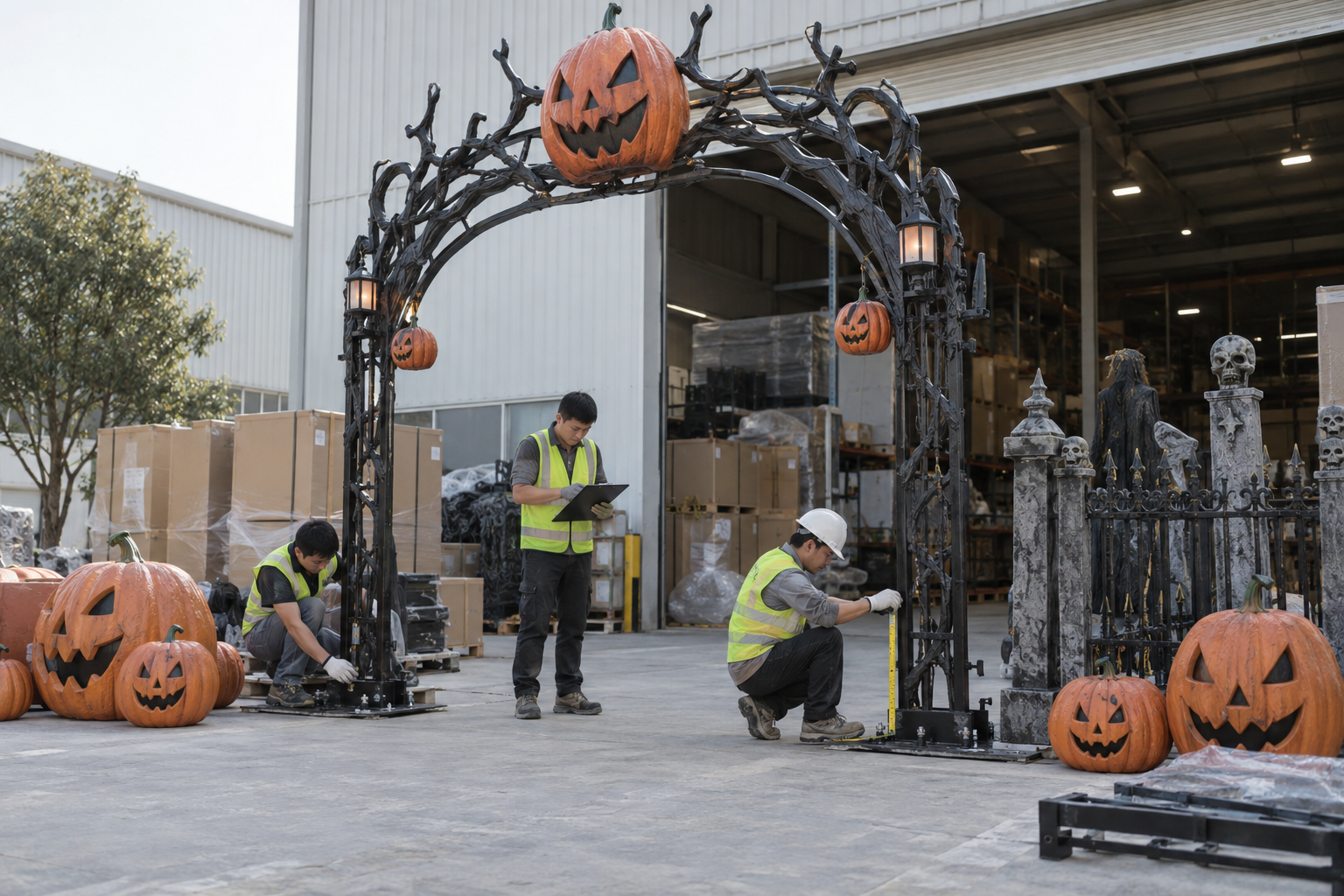
For related product directions, explore BooAri's Halloween prop collection, discuss a custom project or review the factory workflow.
3. Plan lighting and visitor safety as part of the display
Lighting can extend the impact of a display after daylight, but it should be planned with the route people take through the space. Confirm whether the aim is ambient glow, a visible photo backdrop, an illuminated entrance or a moving character highlight. This keeps the light function aligned with the visitor experience instead of adding it as a late accessory.
Plan cable routes and electrical access before the prop is delivered. Installation preparation should state where power is available, how leads are kept clear of visitor paths and who will perform daily visual checks. If the venue needs timers, triggers or a control method, include that in the customer requirements before the build is finalised.
For general consumer-product guidance in the United States, businesses can review the U.S. Consumer Product Safety Commission’s business and manufacturing resources. Project-specific compliance, electrical work and venue safety decisions should still be confirmed for the actual market and installation.
4. Treat packing and reinstallation as a design input
Seasonal displays are often installed, removed, stored and installed again. That means the packing plan affects the long-term practicality of the purchase. Ask whether the display can be separated into manageable sections, how delicate pieces are protected and how cartons are identified for a straightforward next-season setup.
A shipment inspection should confirm more than an attractive final image. It should relate to the agreed item count, visible finish, included accessories and packing method. Buyers can request inspection evidence that helps their receiving or installation team match the shipment to the approved scope.
Where a display is designed as a set, agree whether the installation sequence will be documented with photographs or numbered packing. This can reduce unnecessary unpacking and help a venue team identify the correct section first.
5. Use a site-specific approval checklist
Before production, review the visual reference, overall footprint, base or anchoring direction, required functions, packing approach and installation assumptions. The objective is not to predict every site condition. It is to make the relevant decisions visible before the prop enters production.
A useful outdoor project brief also separates what the supplier is responsible for from what the venue or installer will confirm locally. This may include final fixing methods, power connection, site protection and daily operating checks. Clear responsibility boundaries are more trustworthy than a broad promise that a prop will suit every outdoor condition.
BooAri can review your outdoor display brief, recommend an existing product direction and identify the information needed to prepare a quote. Final materials, dimensions and functions should be confirmed against the intended site before production.
Conclusion
Send your site photos, layout and event dates to request an outdoor Halloween display direction. Clear customer requirements, a documented product direction and a planned inspection sequence give the buying team a stronger basis for the next step.
Frequently asked questions
Are all Halloween props suitable for outdoor use?
No. Suitability depends on the product configuration and the actual site. Share exposure, installation conditions and operating duration before confirming a build.
What should I provide for an outdoor prop quotation?
Provide the site photos, intended location, quantity, target market, desired duration, power availability and any relevant layout or anchoring information.
How should outdoor props be packed for seasonal storage?
Agree the packing method before production. Consider how the display separates, which surfaces need protection and how cartons will be identified for future setup.
Can lighting be added to an outdoor display?
Lighting can be discussed, but the final configuration should account for the site, power plan, access and target-market requirements.
Further reading
Use these external resources alongside your local market, venue and professional safety requirements:
READY TO START A PROJECT?