Application first
Define where the prop will be used, who can approach it and how long it is expected to operate.
 BOOARIGet a Quote ↗
For retailers, attractions and event teams that need an original product direction—not a catalogue item with a new colour. Share the application, quantity, target market and delivery window so the build can be assessed as one commercial project.
BUYING DECISION
A reference image can explain the visual direction, but it does not define the complete product. Scale, viewing distance, visitor access, movement, power, installation and shipment limits all affect the final construction.
BooAri turns those inputs into a reviewable product direction. Dimensions, materials, functions and packing are confirmed against the approved brief before production rather than inferred from a visual reference.
Best suited to: OEM buyers, seasonal retailers, haunted attractions, event contractors and distributors developing an exclusive Halloween range.
Define where the prop will be used, who can approach it and how long it is expected to operate.
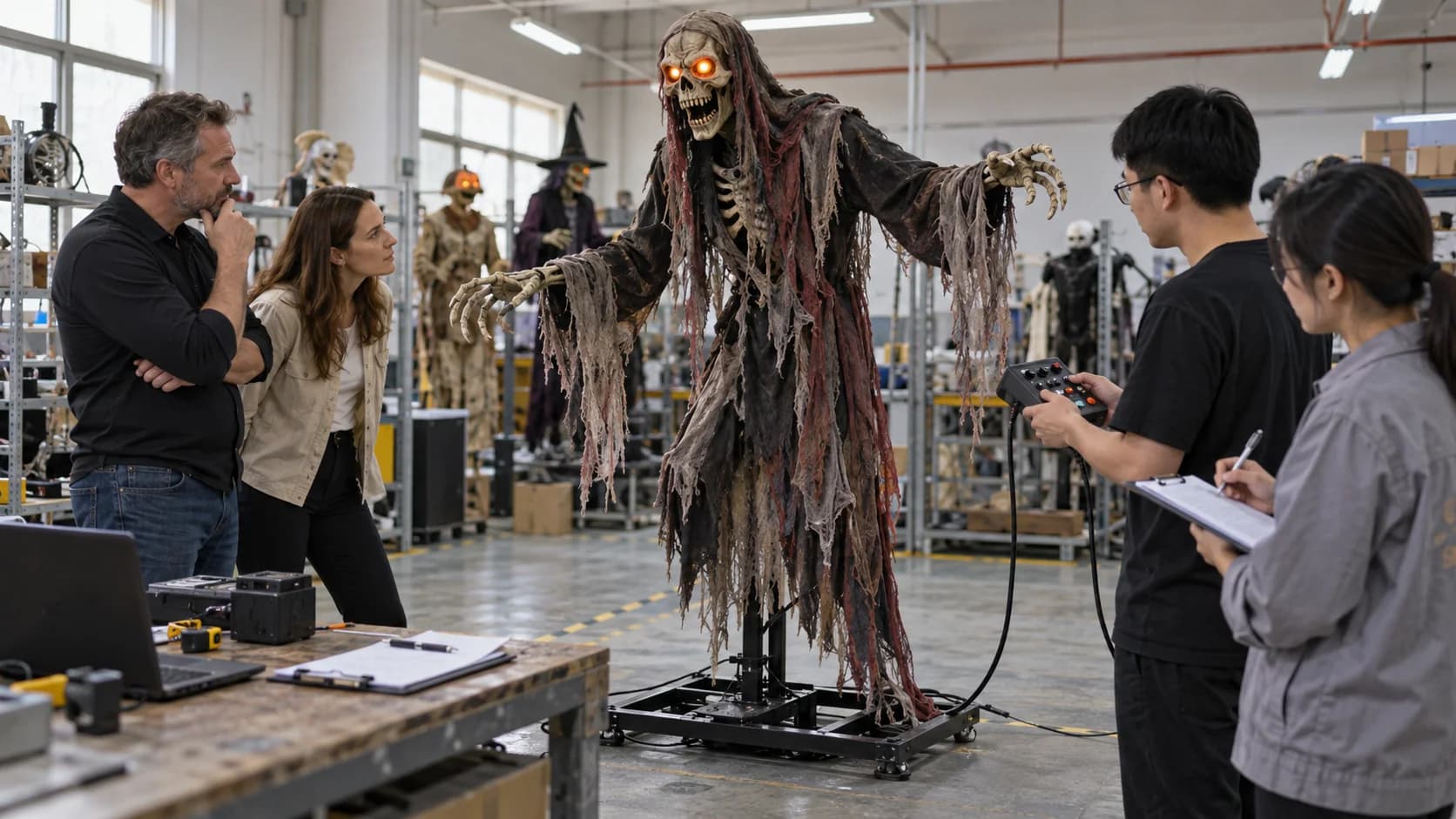
Align drawings, finish references, function videos or sample details before releasing the production direction.
Plan breakdown points, carton or crate logic and installation preparation while the product is being developed.
COMMERCIAL APPLICATIONS
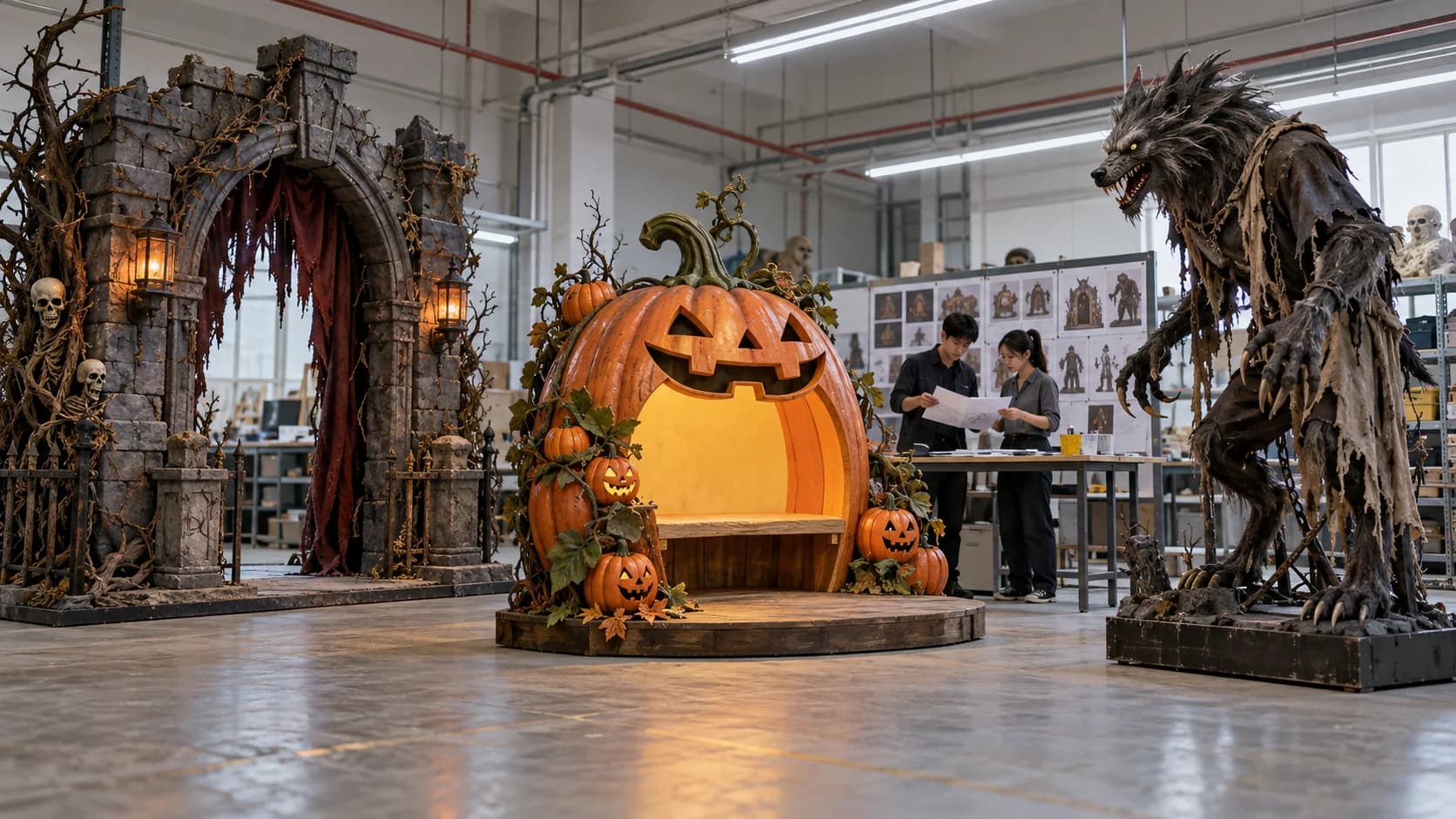
Custom arches, character gateways and branded photo entrances sized for the available visitor opening.
Static or animated pieces developed around the required visual intensity, motion and operating context.
Related products planned with one finish direction for retail floors, hospitality or event environments.
FROM ENQUIRY TO SHIPMENT
Share the reference, application, target size, quantity, market and required arrival date.
Align structure, functions, finish, electrical needs, installation and packing assumptions.
Confirm the agreed drawings, sample details or recorded function before production.
Check the documented requirements and prepare identifiable packing for the receiving team.
PREPARE YOUR ENQUIRY
Product specifications, testing, commercial terms and destination requirements are confirmed for each order. BooAri does not treat a reference image as a complete production specification.
Tell us what you are buying.
Send the commercial context—not only a product name—and our team can review the next practical step.
BUYER FAQ
A reference can start the discussion, but the final quotation requires an agreed specification covering size, materials, functions, finish, quantity and packing.
That depends on complexity and risk. A physical sample, material sample, drawing or recorded functional approval may be appropriate; the approval method should be agreed before production.
Logo application and packaging can be reviewed when artwork, placement, colour requirements and destination labelling needs are supplied.
Provide the application, target dimensions, quantity, destination, functions, visual reference and required arrival date. Unknown items can then be identified clearly instead of guessed.
Include product direction, quantity, target market and required arrival date.