
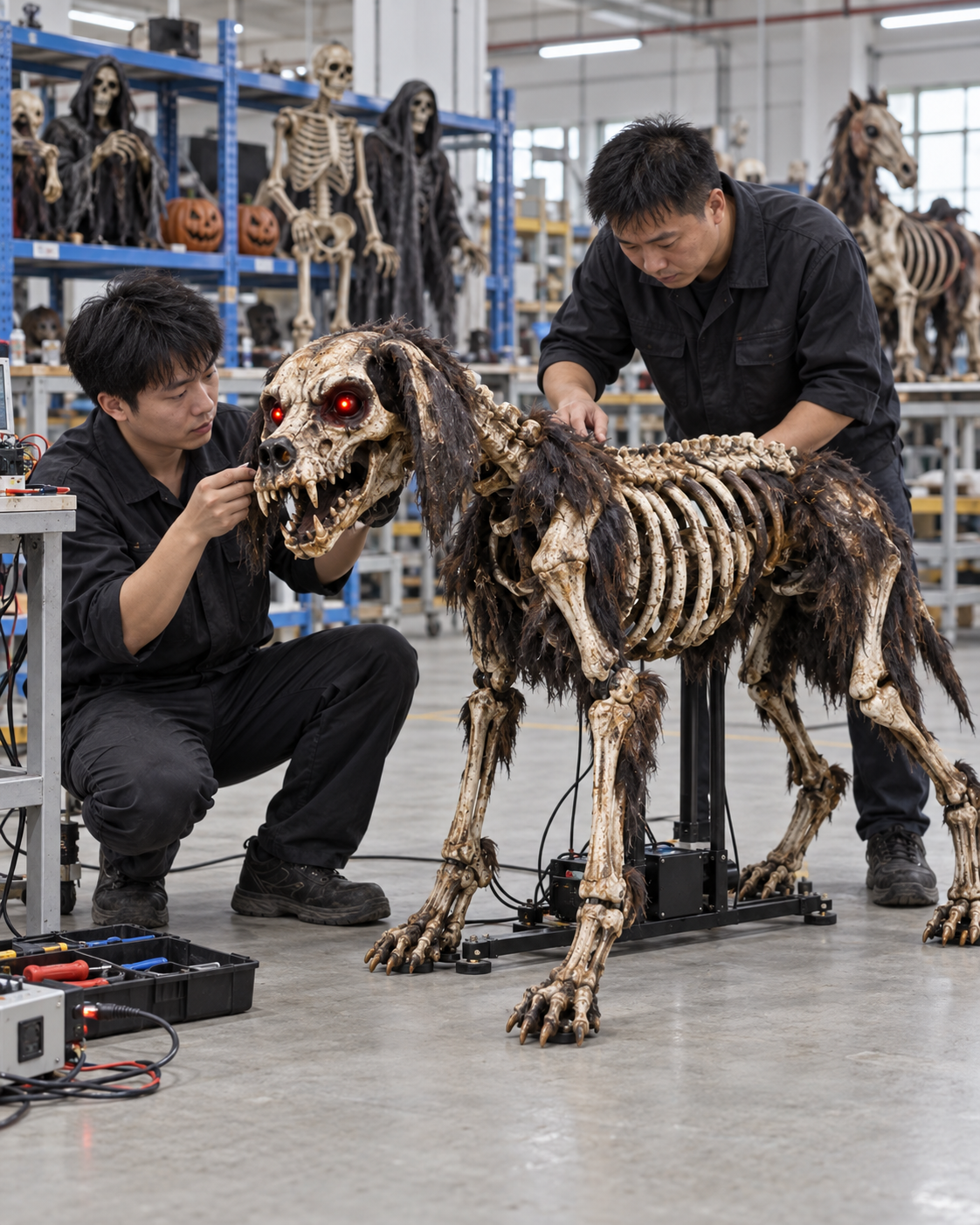
Halloween animatronic spare compatibility is not established by a component looking similar or fitting the same opening. Connectors, operating settings, firmware, mounting and the surrounding mechanism can differ between revisions. A useful spare-parts plan identifies the configuration being supported before purchasing replacements.
For importers and venue operators, this is a seasonal availability decision. A low-cost spare that cannot be identified, installed or configured may contribute little to recovery. Conversely, a clear replacement procedure and a modest inventory can be more useful than a large box of undocumented components.
This guide explains how to build a traceable spares brief for a new order or an existing fleet. It does not provide instructions for bypassing controls or modifying electrical or pneumatic equipment. Product-specific service work should remain within the manufacturer's instructions and the competence of authorized personnel.
Establish the supported product baseline
List the products and revisions that the spare inventory must support. Include model, order reference, serial or batch identifiers where provided, controller version and any options installed. A catalogue model name alone may describe several configurations supplied over time.
Ask whether replacement compatibility is confirmed for the exact supplied units. If the supplier proposes an updated component, request the scope of compatibility and any additional parts, settings or procedures required. Compatible after conversion is different from a direct replacement and should be priced accordingly.
Keep baseline photographs showing identification labels and relevant assemblies. Photographs support communication but do not replace technical identification. Avoid relying on the colour of a wire or connector shell as the only reference, especially when different suppliers use similar-looking parts.
For a reorder, compare the old fleet and new production baseline. The buyer may choose to maintain two documented spare groups or agree a supported conversion. Do not assume a newer product revision automatically uses every earlier spare without written confirmation.
Build a component list around failure consequences
Animatronic spare inventory planning should start with what a failure means operationally. A cosmetic accessory might reduce appearance while leaving a scene usable. A control or motion component may require taking the product out of service. The venue decides the acceptable fallback for each scene.
Ask the supplier which components are user-replaceable and which require specialist service. This distinction prevents the purchasing team from stocking parts that site staff should not attempt to fit. Confirm whether replacement is performed as a complete assembly or an individual component.
Consider supply lead time, storage requirements and the ability to diagnose a fault. A spare is useful only if the team can determine whether it is needed. Request an approved troubleshooting and support route that helps identify the issue without encouraging speculative component swapping.
Prioritize the list using project-specific experience where available. Record actual service observations rather than inventing a general failure rate. When buying a new product without fleet history, use a provisional list and revise it as documented operating information becomes available.
Identify connectors without guessing function
Halloween prop connector identification should be supported by labels, a connection diagram and the manufacturer's specifications. Similar physical connectors can serve different purposes or carry different electrical characteristics. Matching shapes is not permission to connect equipment.
Ask the supplier to label both sides of relevant connections and include clear orientation references. Identify any keyed, locking or revision-specific features. The service document should distinguish normal connection points from areas requiring technical access.
Include cable assemblies in the spares discussion where they are part of an approved replacement. State length, connection identity and routing constraints. A cable that physically reaches may still be unsuitable for the defined system; obtain confirmation rather than improvising an extension.
For products interfacing with show control, retain the approved interface record. The DMX procurement guide explains why control support and channel mapping need explicit scope. A spare controller must preserve the intended behaviour, not merely switch the prop on.
Document settings and software dependencies
A Halloween controller replacement procedure may involve more than moving connectors. Ask whether settings, files, addresses or firmware need to be transferred or restored. Clarify which information is stored in the controller and which remains elsewhere in the system.
The supplier should define who is authorized to configure a replacement and what tools are required. Include the availability of project backups and the version associated with the supported product. An undocumented software requirement can delay recovery even when the hardware is on the shelf.
Record the expected state after power-up and the approved verification sequence. A product that activates unexpectedly or runs the wrong cue after replacement should not be returned to public operation until competent personnel resolve the issue. Do not treat a successful power indicator as complete functional approval.
Ask how configuration changes affect warranty or support. Preserve the distinction between supported adjustments and unauthorized modification. The buying team should understand this before choosing an aggressive local-service strategy for a short seasonal event.
Make service access part of product selection
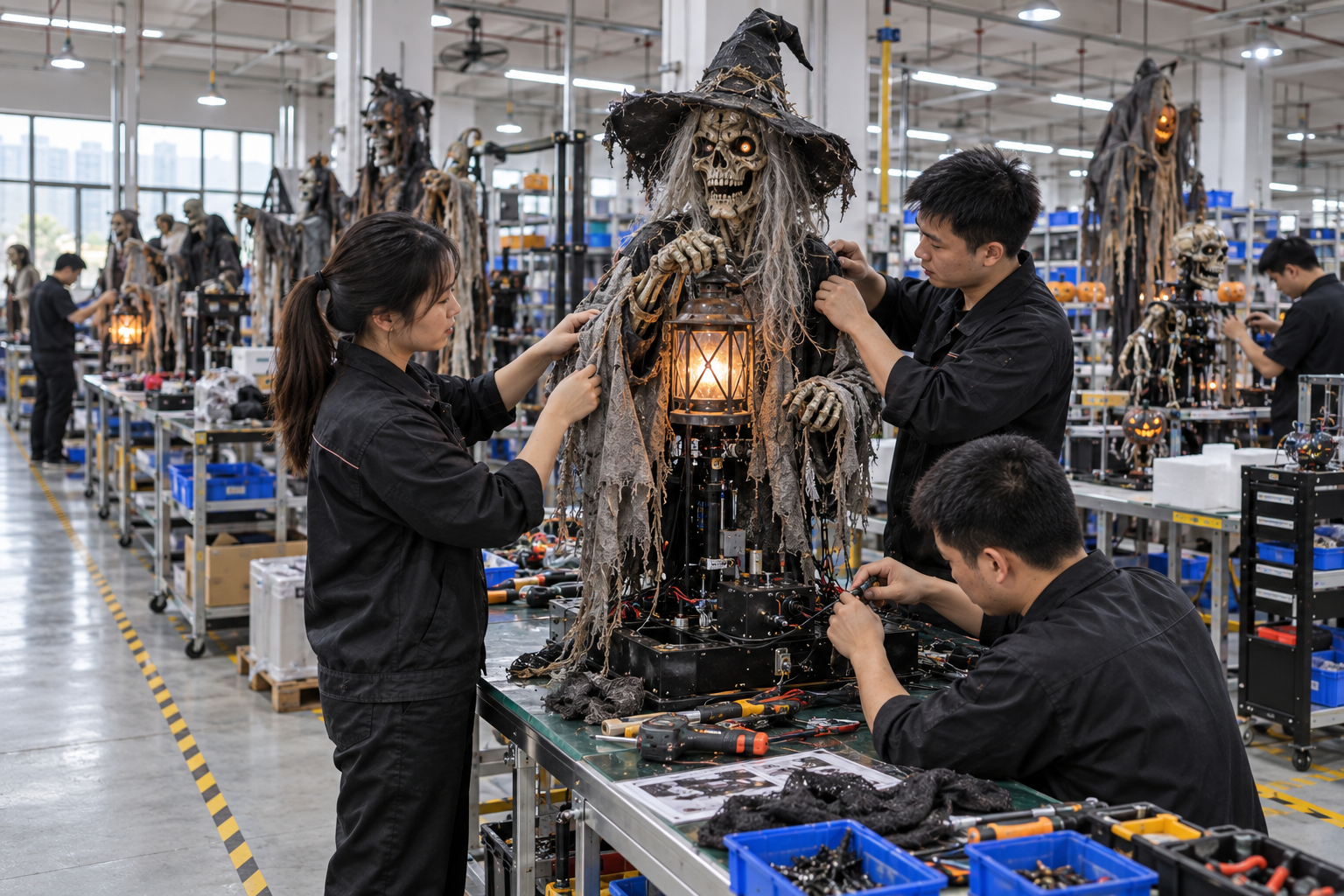
A spare plan is incomplete if the relevant assembly cannot be reached after installation. During sample review, identify the access panel, clearance and removal sequence. Consider adjacent scenery, mounting and costume layers that may obstruct service.
Request product-specific instructions for making the equipment safe before service. Electrical isolation, stored energy and moving mechanisms require competent handling. This article deliberately does not prescribe one method for every animatronic; the manufacturer and venue's technical team must define the applicable procedure.
Evaluate how a supported replacement affects the finish and scene. Removing a panel might require costume detachment or later touch-up. Include these steps in the service scope so the operator does not underestimate recovery time by counting only the component installation.
For remote venues, ask what diagnosis evidence the supplier needs. A clear product identifier, symptoms and approved observations can reduce repeated exchanges. Staff should not open restricted areas simply to obtain a photograph requested without context.
Preserve traceability through purchasing and storage
Haunt spares traceability connects the supplier's identifier to the buyer's inventory location and supported products. Record the order, revision, quantity, receipt date and storage instructions. Keep spare components distinguishable from returned or unverified parts.
Separate confirmed good stock from quarantined items. A component removed from a failed scene is not automatically defective, but it should not be placed back in usable inventory without assessment. Use a status label and a documented review process.
Store packaging and instructions needed to identify the part. Removing every component from its labelled bag may make the shelf look organized while destroying useful traceability. If repacking is necessary, transfer approved identifiers and preserve protection appropriate to the component.
Follow product-specific storage guidance and check any stated limits. Do not infer that an unused component will remain suitable indefinitely. Review the inventory before each season and resolve missing identification before a breakdown makes the issue urgent.
Verify replacements before relying on them
Where practical, include an approved replacement demonstration in factory testing or sample acceptance. The purpose is to establish the supported procedure, required configuration and post-replacement checks. It is not an invitation for unqualified buyers to dismantle equipment.
Request evidence that the proposed spare matches the ordered revision. This can include supplier confirmation, relevant labels and a demonstration with the identified configuration. Shipment inspection should check spare quantities and identification, not just confirm that a separate carton exists.
The post-service check should cover the affected function and interactions. For a controller, that may include complete action, reset, repeat-trigger response and show interface. For a cosmetic assembly, fit and retention may be central. Agree the scope for the actual part.
Do not return a prop to operation based solely on a successful single movement. The venue's authorized technical team should approve it under the relevant service procedure. Retain the result and any configuration change in the product record.
Example: two seasons, one model name
Consider a hypothetical operator that purchases a character in one year and orders additional units the following season. The catalogue name stays the same, but the supplier has revised the controller and connector arrangement. The example does not claim this happened to a BooAri customer.
The buyer initially requests five spare controllers for the entire fleet. A revision review shows that a single spare identifier will not serve both groups directly. The supplier proposes distinct replacements, each labelled for the supported production revision, and explains the configuration procedure.
The operator chooses separate inventories rather than assuming an untested conversion is worth the effort. Each storage bin lists the supported units and the service document revision. The site team receives a clear instruction not to interchange the controllers merely because the housings look alike.
A supported replacement demonstration reveals that one controller needs the approved soundtrack and cue settings loaded before use. The quotation is updated to include configured spares and a backup record. This is a scope correction before shipment, not an unexpected opening-day task.
After the season, maintenance records identify which components were actually used. The next order adjusts quantities using that evidence. The buyer gains a more informed spares plan without relying on invented component-life figures or a supplier's generic recommendation alone.
Compare support proposals, not just part prices
A spares quotation should include part identity, supported revision, quantity, storage guidance, replacement scope and any configuration work. Separate component supply from remote diagnosis, local service and technical training. This makes proposals commercially comparable.
Ask how discontinued components are handled. Is an approved successor available, and what changes would it require? What information should the buyer retain to receive future support? No supplier can guarantee every part will remain available forever, but a defined notification process is valuable.
Include logistics and responsibility for urgent replacements. Discuss realistic dispatch arrangements without inventing guaranteed transit times. A venue can then decide whether to stock more locally or accept a defined fallback during support lead time.
Send BooAri's product team a fleet list or proposed order configuration. Request a revision-specific spares proposal rather than a universal kit. For a new product, make the spare list part of sample approval and shipment planning.
Buyer worksheet: verify a spare can actually restore service
Choose a critical product from the fleet and identify its current controller, connectors, costume and supported settings. Request one replacement proposal for that exact revision. The supplier should state whether the spare is a direct fit, requires an approved adapter or needs software configuration. Similar appearance is not sufficient. Put the response on a part-to-product compatibility table that operators can use without guessing which seasonal version they own.
Trace the replacement workflow through real staff roles. Who recognizes a fault? Who is allowed to access the assembly? What evidence is sent to support, and who approves a replacement? If the venue has no qualified technician for a component-level repair, stocking individual electronic parts may provide little benefit. A supported complete assembly or remote service arrangement could be more practical, depending on the product. Document the manufacturer's instructions and the venue's competence rather than writing an improvised repair method in the purchasing order.
Inspect the spare on receipt. Check its identifier, revision, included accessories and storage requirements against the ordered record. Keep unverified or returned components apart from ready stock. A replacement controller may require files or settings; confirm that the necessary backup and tool are available to authorized personnel. Ask for a demonstration of the supported post-replacement check, which should cover the full relevant effect, reset and any venue control interface.
Review the list after the season using actual service observations. Record which items were consumed, which remained unused and which failures could not be solved locally. Adjust inventory using this evidence and lead times, not a made-up generic failure rate. The result is a spare plan that supports the specific fleet and an operator who knows how to use it.
Questions to close before buying spares
Identify the exact supported fleet, not just a product family. Request a part list with revision, compatible units, configuration needs and the authorized replacement role. FrightProps' support library illustrates the value of product-specific controller documentation; it is not compatibility evidence for a BooAri configuration. A component may be technically replaceable yet impractical for a site with no trained technician.
Check access to the relevant assembly in the installed scene. If replacement requires dismantling a scenic wall or removing a delicate costume, that effort belongs in the operational recovery plan. Ask how the prop is verified after service and who may return it to public operation.
Stock usable parts with labels and storage guidance intact. Retire unknown or unverified components from ready inventory until the supplier can identify them. Review consumption after the season using actual service history. The purchasing goal is a feasible restoration path, not an impressive count of spare boxes.
Frequently asked questions
Can we order spares using only the catalogue model name?
Use the model name together with revision and order identification where available. A model may change over time. Ask the supplier to confirm compatibility with the exact supported units and list any additional configuration or conversion requirements.
Does a matching connector prove compatibility?
No. Physical fit does not establish electrical function, control behaviour or operating suitability. Use approved identification and product-specific connection information. Authorized technical personnel should resolve uncertainty before connecting or replacing components.
How many spare parts should we buy?
Base quantities on the supported fleet, operational consequences, lead time, service capability and documented experience. A new fleet may need a provisional plan. Review it after the season using actual service records rather than assuming a universal percentage.
What belongs in the replacement record?
Identify the product, removed and fitted components, revisions, approved procedure, settings changed and post-service verification. Include who performed and approved the work. This connects future diagnosis and reorders to the actual supported configuration.
Conclusion
Useful animatronic spares are identified, compatible, accessible and supported by a clear procedure. Build the plan around the actual fleet and the venue's competence, then verify the proposed replacements before relying on them during the season.
Send BooAri your model or order references, operating schedule and local support arrangements through the enquiry form. Ask for a revision-specific spare-parts quotation with identification, replacement scope and configuration responsibilities.
Further reading
Use these external resources alongside your local market, venue and professional safety requirements:
READY TO START A PROJECT?