

Theatrical fog can change a Halloween prop from ordinary scenery into a striking reveal. It can also hide the face the buyer paid to sculpt, obscure a route or make a painted surface difficult to inspect during operation. A fog-ready prop brief therefore begins with the venue's intended effect and operating controls, not a vague request that the prop 'works with smoke.'
This guide addresses coordination between a prop supplier and a venue-managed theatrical effect. It does not recommend a fog fluid, exposure level or machine setting for a specific site. A qualified venue team should review air quality, fire detection, visibility, local rules and operator procedures. A NIOSH evaluation of theatrical fog discusses minimizing exposure and using manufacturer-approved fluids in the studied context; it is not a blanket safety approval for a new venue.
Define the visual purpose of fog
Ask what fog should reveal or conceal. A ground-hugging layer might frame a graveyard set; a brief burst might precede an animatronic action; a continuous haze might make light beams visible. Each use creates a different visibility requirement. The buyer should provide the scene plan, visitor route, lighting positions and desired viewing point before choosing the prop's finish or pose.
Photograph the scene without fog first. If the prop does not read clearly in ordinary conditions, adding fog may not fix the composition. Define the focal feature: face, silhouette, glowing eyes or moving limb. Test whether that feature remains readable at the visitor position with the proposed atmospheric effect. Do not judge only from a close camera shot that visitors will never see.
Consider the off state. Some venues will operate with fog reduced or disabled because of local conditions, maintenance or guest needs. The prop should still make sense when the effect is absent if it remains visible to the public. A design whose only impact depends on the fog machine may be fragile as a commercial installation.
Put the effect owner in the brief
Name the party responsible for the fog device, fluid, placement, operation and maintenance. The prop supplier should know where equipment may be located and which product surfaces might be affected, but should not be assumed to supply or certify the effect unless that scope is expressly quoted. The venue's show and safety teams own the site-specific effect assessment.
Review finish, lighting and visibility together
Fog scatters light and can lower perceived contrast. A dark face against a dark backdrop may disappear, while a small lit detail may become the only visible part. Review finish panels and a representative prop under the actual lighting direction. A high-gloss surface may create an unexpected reflection; a heavily textured surface may read well from close range but merge into a grey haze at distance.
Ask whether the surface will be exposed to condensation, residue or more frequent cleaning in the venue's particular setup. Do not label a prop 'fog-proof' without defining the machine, fluid and exposure conditions. A representative material or costume sample can be evaluated under a controlled venue trial, following the effect manufacturer's instructions. If a surface changes, investigate before committing to a bulk finish.
Power and control should be coordinated. If a prop's lighting or movement is timed to a fog cue, identify which controller owns the sequence and what happens when the fog effect is unavailable. An animatronic should not be given an unsupported control interface merely to match a show concept. The DMX integration guide addresses controller scope in more detail.
Keep routes and staff visibility under venue control
The event operator should check how fog affects signs, floor edges, queue boundaries and staff sightlines. A scenic prop that becomes invisible is a creative problem; a route or staff position that becomes invisible is an operations problem. The supplier can provide dimensions and location options, but the venue must decide whether the effect can be run in its public area and under what controls.
Plan for different crowd patterns. In a guided attraction, staff may hold a group until a cue completes. In a mall activation, visitors may enter from several directions without warning. A fog burst that works in a staged demo may be unsuitable for continuous public flow. The buyer should communicate operating mode before asking for a motion or lighting recommendation.
If the venue offers low-sensory sessions, state whether the prop remains usable with fog, sound or strobe-like effects disabled. A static silhouette and readable signs can preserve the scene even when effects are reduced. The supplier needs to know which product functions are essential and which are optional at the site.
Specify a controlled trial rather than a marketing promise
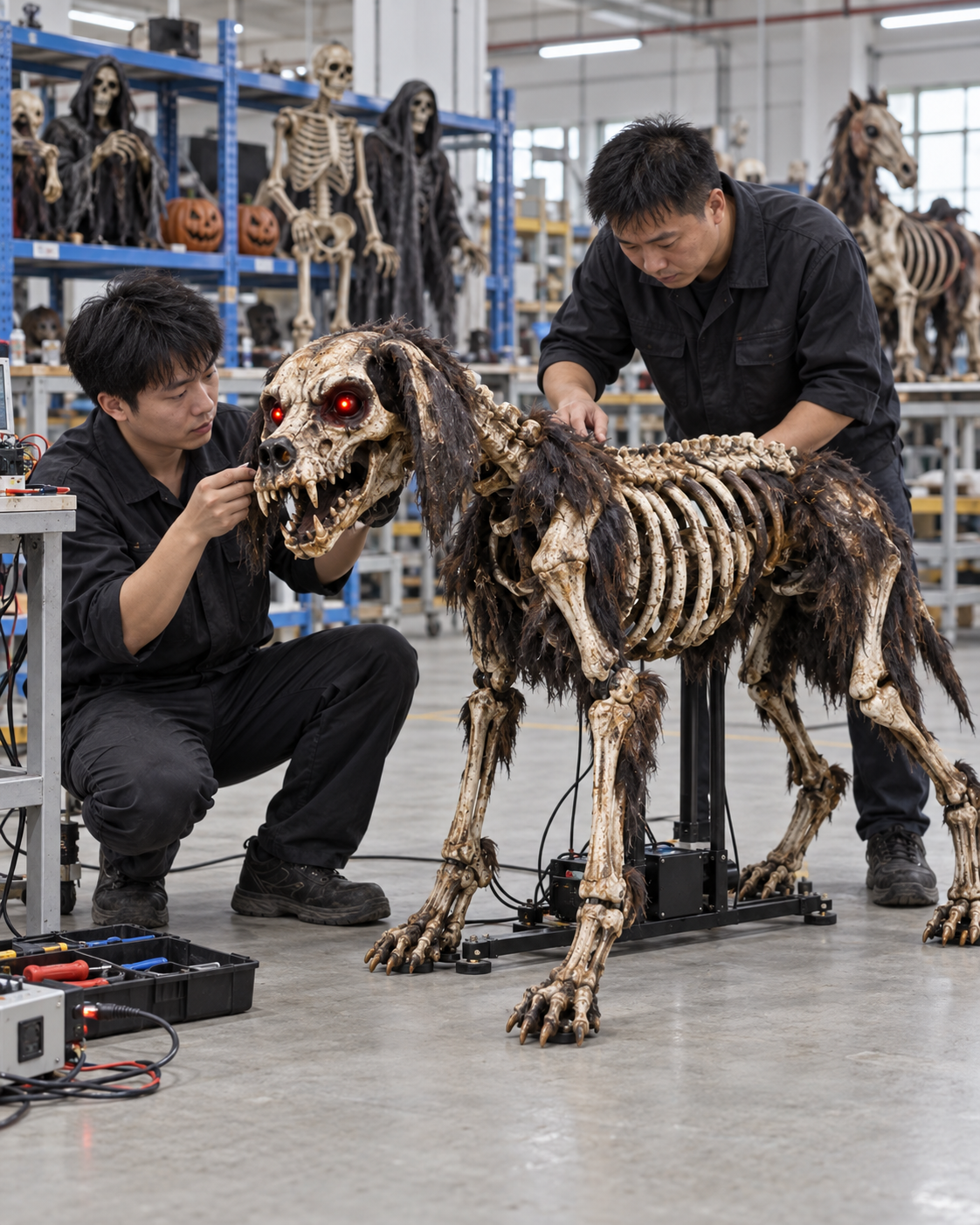
At the factory, the prop supplier can demonstrate the physical prop's finish, lighting and movement under documented conditions. It cannot replicate every venue's airflow, ventilation or effect machine. Ask for neutral-light photographs and full function footage so the buyer has a baseline. Record the surface material, finish revision and any approved cleaning instructions.
At the venue, perform a controlled trial with the actual effect equipment under the venue's qualified supervision. Observe visitor-position visibility, lighting, signs, staff view and surface condition after the trial. Document the equipment and settings used. If the result is poor, adjust the scene plan, lighting or prop finish through a controlled change, not an improvised overnight repaint of finished stock.
Shipment inspection should confirm the prop and accessories match the approved order and that surfaces are protected in packing. It should not be reported as a successful fog trial unless the actual trial occurred. Clear language prevents a buyer from assuming that an atmospheric concept image proves operational compatibility.
Decision example: a hidden graveyard focal point
Imagine a fictional haunted route with a sculpted reaper behind a tombstone. The concept image uses dense fog and dramatic backlight. During a site rehearsal, visitors see only the backlight and the reaper's dark face disappears. The team reduces the fog cue, moves the light and adjusts the reaper's position before considering any finish change. This is a hypothetical example, not a BooAri installation record.
The revised scene keeps the intended atmosphere while making the focal object visible. The venue also checks that directional signs remain legible and staff can see the route. The supplier's original product may have met its specification; the site integration needed correction. This distinction matters when assigning responsibility and avoiding unnecessary product rework.
Suppose a fabric costume collects residue after repeated operation. The venue documents the exposure and asks the supplier for material-specific care advice. It does not assume that an unapproved cleaning chemical is harmless. Future orders may use a different costume or place the prop outside the direct effect plume.
Buyer worksheet: the fog-ready scene packet
Create a scene drawing showing prop, visitor, operator, effect-machine and lighting positions. State the desired visible moment, exposure frequency, alternative no-fog operation and who owns each piece of equipment. Attach the prop's material and finish references, product-side power needs and access requirements. Give the venue team the information needed to review visibility and effect operation.
Define three acceptance views: ordinary light without fog, show light without fog and show light with the venue-managed effect. Record the intended camera and visitor positions. If the prop is to be photographed for marketing, keep those images separate from evidence of actual product and operational suitability.
Plan a fallback. If the venue cannot use the proposed fog level, can lighting, silhouette or scene layout still deliver the experience? An effective purchase does not rely on one unverified atmospheric assumption. Include any finish or location revision in the sample approval record before production.
Control the assumptions between prop, effect and venue
The buyer can prevent many fog-scene disputes with an interface sheet. Name the prop's approved finish and position, the venue's intended effect machine and operator, the lighting cue, and the visitor viewpoint. Mark assumptions that have not been tested. If the venue later changes the fog device or moves it closer to the prop, the interface sheet prompts a new review. Without it, each supplier may claim the other changed the conditions.
Consider cleaning and maintenance after the first operating week. Staff should inspect whether residue, moisture or repeated wiping affects fabric, paint or moving joints. If a change is seen, document the exact exposure and care method before requesting a product revision. A stained costume can be caused by placement, fluid, handling or unsuitable material; a photo alone cannot identify which. A controlled sample and supplier instruction give the buyer a better basis for action.
The scene also needs a shutdown state. If the effect machine is unavailable or the venue decides to reduce output, staff should know which lighting and prop functions remain active. A sign or barrier should not depend on fog being visible. If a dramatic reveal becomes less intense, the route should still be understandable and the product should still appear intentional. Build that alternative into rehearsal rather than inventing it during a public session.
When a custom prop is ordered, ask whether the fog will contact a removable costume layer, a coated shell or internal electrical components. The supplier can identify material and access limitations; the venue's qualified team decides whether the atmospheric effect and its placement are acceptable. A statement that 'the prop was tested with fog' needs the exact setup and duration to be meaningful. A studio clip with an unknown machine is promotional context, not a transferable site approval.
Use a decision record after the trial. It should say whether visibility met the creative brief, whether staff could see the route, whether surfaces changed, which settings were used and what remains open. If the result requires a different prop finish, revise the sample before bulk production. If it requires a different effect cue, the venue updates its show file. A shared record prevents a visually striking but operationally fragile scene from being approved by accident.
Questions for the fog trial record
Which equipment and operating setting produced the visual approval? Could staff still see the route and could visitors see the focal prop from their real position? Did the costume or finish change after exposure and cleaning? What remains attractive when the effect is off? Record those observations before describing the prop as 'fog-ready'.
If the venue later moves the machine, changes fluid under its approved procedures or alters airflow, repeat the relevant review. The supplier should be told about material observations, while the venue owns effect operation. Clear separation of these roles helps resolve a poor scene without making unsupported claims about either product.
Evaluate fog effects against a normal operating day
A controlled launch rehearsal may use a fresh machine, an empty route and an experienced technician. Normal operation includes crowded sessions, cleaning, staff changes and periods when the effect is reduced. Test the prop's readability under those conditions. Ask whether a visitor can still identify the intended feature from more than one position and whether operators can see when the scene needs attention. Record the observations rather than relying on the best single photograph.
For repeated exposure, create a product-side condition check. Inspect fabric, paint and moving joints at a stated interval chosen by the venue and material guidance. If a finish changes, pause the assumption that the original sample remains representative. A supplier can review a material or coating revision, but the venue should also check whether the effect plume, cleaning method or airflow changed. Separating these variables helps avoid an expensive redesign that does not solve the real cause.
Frequently asked questions
Are Halloween props automatically suitable for fog effects?
No. Suitability depends on materials, finish, effect equipment, exposure and site operation. Discuss the actual product and have the venue's qualified team review the effect; do not rely on a generic 'fog-ready' label.
Does BooAri supply the fog machine with a prop?
Do not assume so. The quotation should list every supplied component. This guide treats theatrical fog as a separately managed venue effect unless a specific order says otherwise.
Can factory testing prove a prop will look right in my venue's fog?
It can establish the prop's appearance and functions under stated factory conditions. Site airflow, machine settings and lighting differ. A venue trial is needed for the installed effect.
What if fog is disabled during some sessions?
Plan an off-state scene. Choose a prop silhouette, finish and lighting that still communicate the intended story, and make any essential route signs readable without the effect.
Should fog contact costume fabric directly?
That depends on the machine, fluid, placement, fabric and venue rules. Avoid assuming direct exposure is harmless. Use manufacturer instructions and a controlled trial, and review any residue or cleaning requirement.
Conclusion
A fog-ready Halloween scene is a coordination task. The buyer defines the visual moment and prop requirements; the venue manages the atmospheric effect and site review. Test visibility, lighting and materials in context, keep a no-fog fallback and avoid turning an evocative concept image into an unsupported performance promise.
Send your scene layout, prop dimensions and effect-owner details to BooAri's project team. Ask for a prop finish and configuration brief that your venue can test with its own theatrical-effect system.
Further reading
Use these external resources alongside your local market, venue and professional safety requirements:
READY TO START A PROJECT?