

Halloween display opening readiness is the point where purchased products become an operational scene. Delivery confirmation alone does not establish that components are complete, installers are prepared or staff know how to run the display. Seasonal deadlines make these gaps especially costly to discover on opening day.
Commercial buyers can reduce uncertainty with a warehouse-to-opening plan. It should link receiving, allocation, mock assembly, technical checks and handoff. Each stage has a defined owner and decision, so teams understand what ready means for their own role.
This guide explains a practical readiness review for retail displays, attractions and commercial events. It does not replace venue safety management, technical commissioning or local requirements. Those decisions remain with the responsible qualified teams.
Start with an opening definition
Define the experience that must be operational on the target date. List required scenes, accepted alternatives and features that can be deferred without misrepresenting the project. A product may be physically present but not ready to open if its approved controls or staff instructions are missing.
Identify the milestones working backwards: venue approval, installation, warehouse release, receiving, supplier dispatch and production sign-off. Use realistic dependencies rather than assuming all tasks can occur on the final day.
Assign an owner to each decision. The supplier can confirm shipment contents, but the venue owns access and operational release. The installer owns the agreed installation work. A readiness meeting should resolve overlaps before they become an opening-day argument.
Record contingencies for critical features. An alternative scene, compatible spare or revised operating mode may be acceptable if planned and approved. Do not invent a fallback during the event without understanding its technical and visitor implications.
Inspect arrival against the right records
Halloween prop receiving to installation begins with matching cartons to the purchase order, packing list and location allocation. Check identifying labels, counts and visible handling condition. Retain records and photographs for discrepancies.
Distinguish shortage, shipping damage and an unidentified carton. Each has a different investigation path. A buyer should not report a missing character when its carton was routed to another store; nor should a damaged part be hidden by a count that happens to match.
If one scene spans several cartons, reconcile the complete group before releasing it to installers. The multi-store kitting guide explains how carton relationships and kit identities support this check.
Follow supplier instructions for opening and handling. Do not cut into a protected finish or lift a module from a decorative element. Document any transit concern before discarding its packaging; the packing arrangement may help diagnose the issue.
Stage components by installation sequence
Warehouse staging should identify which products, tools, instructions and accessories are needed at each venue or store. Group items without mixing revisions. A complete order can still be delayed when a small hardware pack is separated from the correct module.
Mark assets that require technical assessment before installation. Visible damage, uncertain connections or missing documentation should not be treated as routine assembly tasks. Give the installer a clear route for escalating the problem.
Protect finish references and labelled parts during staging. Opening every carton early can help inspection but may also remove protective packaging or confuse kit identity. Choose a method that balances visibility with controlled handling.
Keep reserve components distinct from allocated display parts. Otherwise an installer may consume the only spare to complete a kit whose original item was simply mis-sorted. Use the agreed inventory register and document any reassignment.
Run a warehouse mock assembly when justified
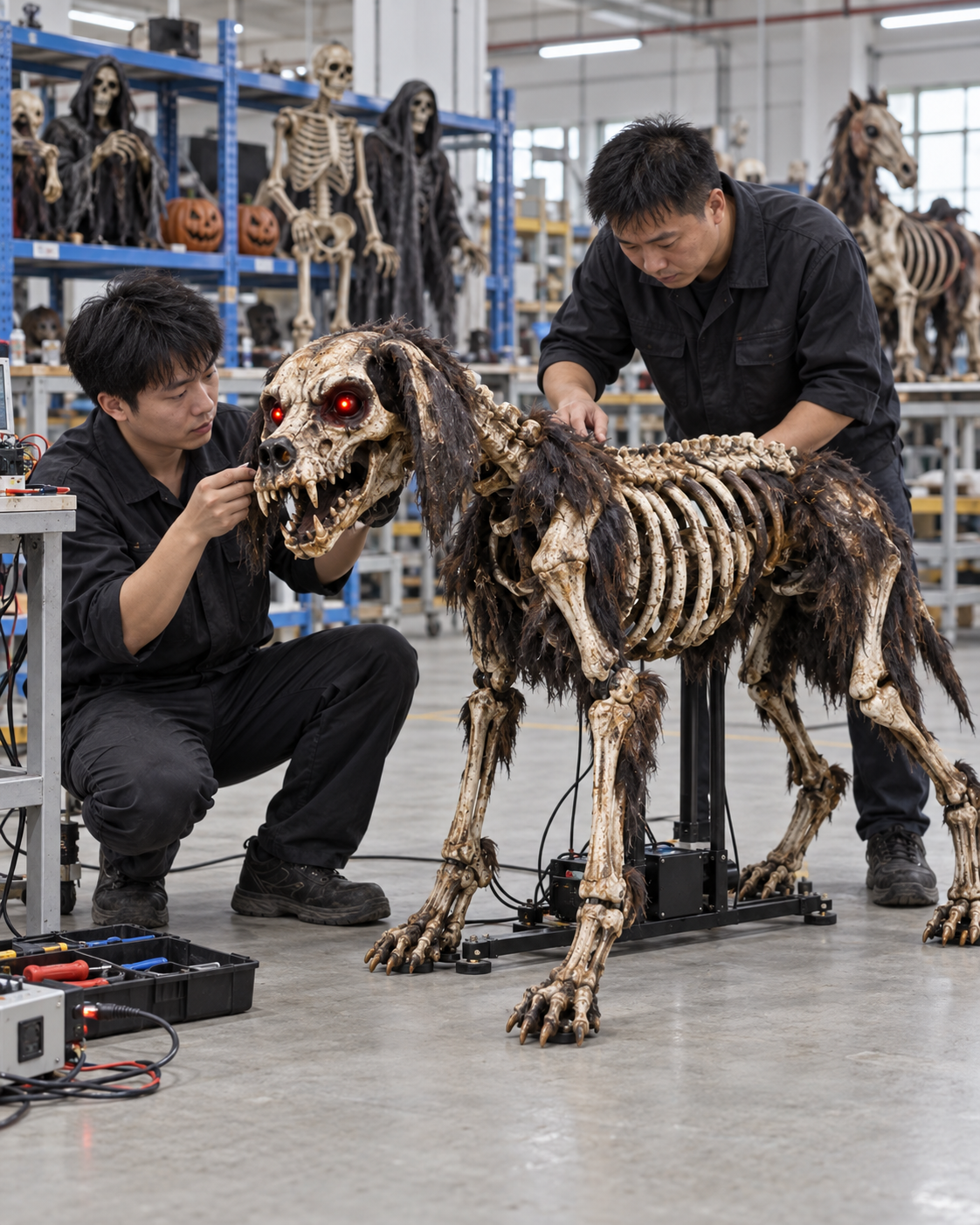
A Halloween warehouse mock assembly can reveal missing parts, unclear labels and tool needs before the venue build. It is particularly useful for new, modular or multi-location configurations. Define whether the trial represents one sample kit, every variant or a full installation.
Use the actual current instructions and intended installer capability. If a specialist from the factory assembles the scene while branch staff later work from a short printed sheet, the trial may miss the handoff problem. Observe which steps require explanation and update the guide.
Record time and difficulties without turning one trial into a guaranteed installation duration. Venue access, staff familiarity and site conditions vary. The result should improve the plan and identify dependencies rather than become an unsupported labour promise.
Finish the trial with dismantling and correct repacking where the kit will travel again. The reusable scenery guide explains why a second assembly can reveal issues the first build did not.
Confirm site readiness separately
The venue should check the space, routes, mounting provisions, power and relevant technical infrastructure before products arrive for installation. Product delivery cannot solve missing site preparation. The supplier's quotation should identify required interfaces and any excluded work.
If sound or show control is included, record who commissions the integrated system. A prop's factory test may show its own sequence while the final cues depend on DMX show control, audio zones or venue equipment.
Review the position of each product in its installed state. Include movement envelope, service access and expected visitor position. The actual venue design and competent review determine suitability; a catalogue dimension is an input, not complete authorization.
Keep changes visible. A relocated display or new cable path may affect approved finish, cue timing or access. Update the site plan and have the responsible team assess the impact before opening.
Handoff operations with usable information
A Halloween display launch handoff should explain normal behaviour, supported controls, daily checks and fault reporting. Identify who can restart, pause or adjust each scene and which actions require technical personnel.
Give staff the correct product and configuration references. An operator sheet for an older controller may cause more confusion than no sheet at all. Link the instructions to the delivered revision and mark temporary changes clearly.
Run a walkthrough in the expected operating mode. Staff should see a complete effect, the reset state and the way the scene behaves when visitors arrive close together. Ask them to identify the correct support contact and procedure for a stopped effect.
Record any open issue and its decision. A small cosmetic touch-up may be scheduled after opening if approved; an unresolved technical or route concern may require different action. The venue's responsible people should make that judgement explicitly.
Use a readiness review before opening
Bring together purchasing, venue operations, installation and technical leads. Review each scene against the agreed requirements: received, assembled, connected, tested, documented and accepted by the responsible team. Avoid one overall green tick with no evidence for the individual stages.
Ask for a short demonstration of the actual installed configuration. Check complete cycles where applicable, relevant sound, staff controls and visitor-facing presentation. Record the date, product revision and any conditions under which the observation occurred.
Define the action for an incomplete item. It may need correction, a supported alternate mode or removal from the opening scope. Document the decision and owner. Silence is not approval, and a supplier video from another location should not substitute for a venue readiness decision.
Retain the final handoff package where staff can find it. A cloud folder known only to the original project manager will not help the opening team. Controlled access is still appropriate for settings and technical records.
Example: a launch with three scene types
Imagine a hypothetical venue opening with a static photo area, an animatronic corridor and a queue display. The supplier ships all ordered cartons on time. The first receiving check nevertheless finds an unidentified box and an incomplete accessory list for the corridor.
The warehouse team reconciles the box against the packing record and discovers that it contains the missing corridor accessories under a different internal name. The documentation is corrected before the installation team receives the kit. No new part needs to be manufactured.
A mock assembly of the corridor shows that the scene's controller uses the approved sequence, but its venue audio cue is still unconfigured. The technical integrator owns this task. The buyer updates the readiness board to show product assembled and integration pending rather than calling the entire scene ready.
At the venue, the photo area passes its framing review. The queue display's sound conflicts with staff instructions, so its supported quiet mode is selected pending the audio contractor's adjustment. The corridor cue is then commissioned and demonstrated under the final configuration.
The opening review records each scene's state and staff handoff. The lesson is not that shipping was unimportant; it is that shipping was one checkpoint in a longer chain of decisions.
Feed lessons into the next season
After opening, record which readiness issues were caused by product specification, packing, receiving, site preparation or handoff. Do not attribute every problem to factory quality or every delay to the installer. Evidence helps assign the next corrective action.
Update kit lists, instructions and allocation records while observations are fresh. If a new product revision is approved, connect it to SKU change control. Keep the original record for units already delivered.
Review actual installation effort and support calls against the plan. This can improve staffing and procurement next season without inventing universal setup times. Discuss recurring issues with the relevant supplier or technical partner.
Use BooAri's custom-project enquiry to describe opening date, receiving route, scene types and installation responsibilities. Request a delivery and inspection proposal with defined handoff information. The buyer can then connect manufacturing milestones to the venue's full launch plan.
Buyer worksheet: run a short opening rehearsal
Select one representative scene and follow it from warehouse arrival to the public-ready state. Use the actual packing list to identify cartons, check contents and separate visible shipping concerns from product defects. Stage parts in the order installers need them. A kit that is complete in total can still delay work if the correct instructions or small hardware pack are inside another destination's carton.
Ask installers to assemble the scene using the current product revision and the tools actually available. Note dependencies such as power, mounting, soundtrack files and control integration. Distinguish the manufacturer's product demonstration from the site's completed installation. If the venue integrator still has work to do, mark that task pending with an owner and date rather than calling the scene ready because its body is standing upright.
Walk operators through the final configuration. Show normal activation, full cycle, return, supported pause or stop and the issue-reporting route. Include the visitor-facing appearance and any access or audio settings approved by the venue. Staff should understand what intentional delays look like so they do not improvise a repair during the event.
Hold a short readiness review with the responsible teams. Record which scenes are released, which have approved limitations and which remain closed pending correction. Keep the decision with the installation and product records. After opening, capture discrepancies while memories are fresh and update next season's packing, instructions or schedule. The rehearsal turns a delivery milestone into an accountable operational handoff.
Questions to close before public opening
Start from the scene list and mark the actual state of each one: received, complete, assembled, integrated, demonstrated and handed to operations. GS1's logistics-label guidance can support traceable receiving where its system applies, while the venue still needs a local kit check. Assign an owner to every incomplete step. Goods on site are not necessarily usable when an accessory, cue file or technical decision remains unresolved.
Walk a representative visitor route with normal sound, lighting and controls active. Observe complete motion and reset, staff communication and the final visual result. If a supported alternate mode is chosen, document it and ensure operators know how it is selected.
Record the opening decision and any limits. A cosmetic item may be scheduled for later correction while another concern requires a scene to remain closed; the responsible venue team makes that judgement. Feed the findings into next season's kit list, installation instructions and schedule.
Decision example: a display with one unresolved cue
Imagine a fictional launch where the characters, scenery and cartons all arrive before opening, but one audio cue has not been integrated into the venue's control system. The supplier shows a factory video of the prop playing sound locally. That footage confirms a product function; it does not complete site integration.
The readiness board records the static photo area as installed and approved, the queue display as operating in its documented mode, and the animatronic scene as assembled with integration pending. The technical integrator owns the cue test. Operations staff receive the current status and know which scene should remain unavailable until the venue approves it.
After the integrator demonstrates the installed cue, the responsible team checks the full sequence, reset and operator handoff. The record is updated to ready with the actual configuration. If the cue cannot be completed before opening, the venue chooses a supported alternative or keeps the scene closed. The decision is visible and attributable rather than hidden inside an optimistic delivered-on-time report.
Frequently asked questions
Does delivered on time mean a display is ready to open?
No. Arrival should be followed by identification, completeness, installation, functional checks and operational handoff according to the project. Define readiness for each scene and assign the decision to the responsible venue team.
When is a warehouse mock assembly useful?
It is useful when a new kit, modular design or multi-location rollout creates assembly uncertainty. Set its scope and use the actual instructions and representative parts. A mock assembly can reveal gaps, but site-specific checks still remain.
Who approves an installed animatronic?
The responsible venue and technical personnel should make the installation and operating decision within the project arrangement. The supplier can provide product information and factory test evidence. Clarify the responsibilities in the order and commissioning plan.
What should an opening handoff contain?
Current configuration, normal operation, supported controls, relevant daily checks, issue-reporting route and outstanding decisions. Staff should receive information they can use for the actual installed scene, not an outdated generic manual.
Conclusion
Opening readiness links goods, people and the venue. Reconcile arrivals, stage identified kits, test representative assembly and hand off the installed configuration to operators. A scene becomes ready when the responsible team can explain and verify its actual state.
Send BooAri your project schedule, scene list and receiving requirements through the enquiry form. Ask for a quotation that identifies packing, shipment checks and the product information needed for installation and opening review.
Further reading
Use these external resources alongside your local market, venue and professional safety requirements:
READY TO START A PROJECT?