

A multi-site Halloween rollout can multiply a small design error across dozens of stores or venues. A representative pilot gives the buyer a chance to observe the actual carton flow, assembly, footprint, lighting and staff handoff before committing the full program. The pilot is not merely a photoshoot; it is a controlled test of whether the approved display can be repeated.
This article is about the decision to scale, not the later multi-store kitting process. GS1's trade item hierarchy guidance illustrates why units, cases and display configurations should be recorded distinctly. A pilot should validate these product and package levels together with installation. It cannot prove every site will behave identically; it reveals assumptions worth fixing before rollout.
Choose a representative pilot site
Do not select the easiest showroom if most sites have narrow receiving doors and tight shelves. Pick a site that captures normal constraints: floor area, access, staff skill, power availability and customer traffic. If the portfolio has radically different formats, one pilot may be insufficient. Define at least two site classes or a conservative common specification rather than claiming a single example represents all.
Collect a measured site plan, photos at visitor eye level, delivery route and operating hours. The supplier can then adapt a prototype to a real setting. Keep the pilot's exceptions visible: if that store has unusually helpful staff or a freight elevator, note that the rollout plan cannot assume those advantages.
Decide the pass criteria first
Agree the maximum footprint, installed height, viewer sightline, acceptable assembly effort, completeness of each kit and product condition after unpacking. Define who judges each criterion. A pilot without pass criteria may create attractive photos while leaving the same operational questions unanswered.
Ship the pilot as production will ship
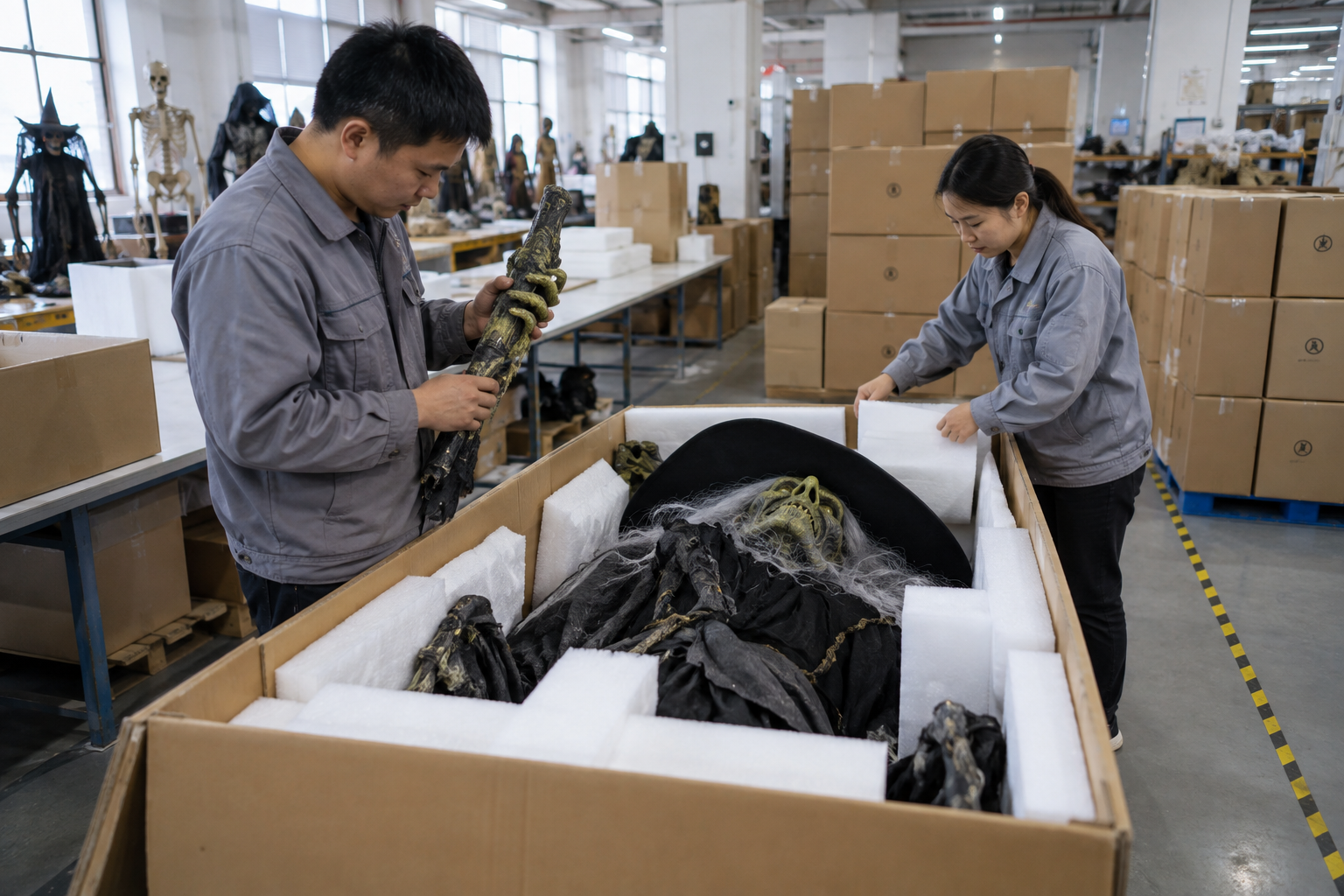
The pilot should use the proposed carton, labels, accessory bags and instructions. Hand-delivering an assembled display bypasses the very receiving process the rollout must survive. If the final pack is not ready, record the gap and run a second pack trial before release. The retail-ready packaging guide offers additional criteria when the box also serves merchandising.
Let site staff open the cartons without factory coaching. Observe whether they can identify the set, protect the floor, locate hardware and understand the sequence. Time the steps in the actual location. Report both active labour and waiting for a missing tool or key. A single timed setup is not a guaranteed rollout rate; it gives evidence for planning and training.
Photograph the installed display from agreed positions, including the least flattering side and the route where customers move. Ask whether the product obstructs signs, creates an unwanted bottleneck or leaves a power cable visible. Fix design or site instructions based on observed issues rather than adjusting photos to hide them.
Test the full stakeholder handoff
Marketing may approve the look while operations objects to access; store staff may like setup while procurement sees high replacement risk. Give each owner a sign-off section: visual objective, safety or venue constraints, installation, replenishment, cleaning, storage and commercial cost. Resolve disagreements before full order approval. This prevents a visually approved sample from being interpreted as full deployment approval.
For a powered display, have local qualified staff review the installed connection and shutdown process. Factory function testing is not the same as site acceptance. If the display includes custom artwork, confirm that the final print revision and product data match the pilot. The wider display readiness guide helps coordinate warehouse-to-opening work after the pilot design is frozen.
Keep a defect and change log. Distinguish product issue, packing issue, instruction issue and site exception. A missing screw may require a BOM change; an awkward route may require a smaller module; a color concern may require a finish proof. Each cause points to a different owner.
Decide what can be standardized
After the pilot, define the standard kit: exact parts, approved images, carton dimensions, label content, assembly steps, maintenance notes and replacement-part IDs. Then list site-variable fields such as store number, local power position or display orientation. Standardization should make change control visible, not forbid necessary site adaptations.
Use a rollout matrix. For each location, record class, quantity, expected delivery, access restrictions, responsible installer, power needs and any approved deviation. If one location cannot meet the standard, stop and resolve it before shipping its kit. The supplier should not be asked to improvise custom cartons for every site without a controlled plan.
Illustrative scale decision
Imagine a chain planning twenty Halloween entrance sets. The pilot reveals that the scenic arch fits but the labelled cable is too short and a decorative cap hides a fastener. A small product revision can be made before the rest are packed. This is a hypothetical example, not a BooAri customer case. Its value is showing how operational feedback should change the product baseline, not merely the installation memo.
Price the pilot as risk reduction
The pilot has costs: sample fabrication, one-site freight, staff time, revisions and possible second trial. Compare these with the potential cost of repeating an unworkable kit across many locations, but do not invent a guaranteed savings figure. Ask bidders to quote a pilot milestone and a production milestone separately. The purchase order should say whether pilot hardware is reusable, who owns revisions and how approval triggers the bulk order.
At shipment inspection for the rollout, verify against the final post-pilot revision, not the earlier concept sample. Check carton labels, complete sets and representative assembly. Distribute the approved pilot photos and instructions to receiving teams with version control. If changes arise during production, decide whether another pilot check is necessary.
Convert pilot observations into production changes
Sort every issue by root area: product dimensions, visual content, packaging, instructions, electrical interface, site-specific constraint or staff training. Do not solve an instruction problem with an expensive product redesign, and do not solve a structural fit problem by telling staff to push harder. Assign each proposed correction an owner and a verification method. A dated pilot report should show the old configuration, the change and why the buyer accepted it.
Retest changes proportionately. A revised carton label might need a receiving exercise; a new base may need a qualified site review and another assembly; changed show timing may require a functional demonstration. If several changes interact, a second full pilot can be wiser than separate desk approvals. The buyer should decide this before committing the final manufacturing slot.
Keep photographs of what the pilot actually shipped, what was assembled, and what the final approved rollout will contain. Marketing images may be captured at the pilot but should not replace product evidence. If the pilot prop was hand-finished and production uses another process, record that difference and require a first-article production approval. A prototype can validate layout while still leaving batch repeatability open.
Build the rollout exception process
Some locations will be outside the standard site class. Give local managers a way to report door clearance, power position, prohibited fixings and delivery constraints before their kits are packed. Set a cut-off date for exceptions. Late site changes may require a different kit or a local installation plan; they should not be hidden in the standard pack and discovered at opening.
Create a site matrix with status: standard approved, approved deviation, awaiting information or cannot deploy. The logistics team ships only where the kit and site are ready. A location marked 'awaiting information' is not a negative judgment; it is a control against wasting freight and crew time. The supplier needs the final allocation list and labels before packing, and the receiving team needs the same version.
At the first few rollout sites, sample the assembly and support experience. If a pattern emerges that the pilot missed, pause and correct remaining packs where practical. A rollout is not a single release event but a controlled sequence that continues to gather evidence. This is especially important when the displays are installed by different contractors or in different building formats.
Decision review: make the evidence comparable
Before selecting a quotation, write a one-page decision record for validate a rollout before scale-up. Start with the customer requirement, not a supplier feature. The same installed dimensions, destination, display period and approval date should appear on every option being compared. If two offers use different product scope, record the difference as a separate alternate. Otherwise a cheap option may simply omit work that the other bidder included.
For this guide, the useful sample is one display shipped as the future rollout will be shipped. Ask for its revision and say what it can and cannot demonstrate. The critical inspection focus is actual assembly time, finish, sightline and content of each kit. Set the viewing or operating condition in advance, then photograph or record the outcome. The person approving the sample should know whether a visual result, a technical function or a packing action is being accepted. One attractive image does not cover all three.
The packing question is production-style labels and protective pack at the pilot site. Measure or verify the proposed shipping unit rather than assuming an installed dimension will predict freight. At the site, the practical question is whether an ordinary site team can set up within its access window. Ask the receiving and operations teams to answer it before the purchase is called complete. If they cannot answer from the supplier's proposed evidence, the project has an unresolved interface, not merely a documentation preference.
Keep a short decision log
Create columns for requirement, offered configuration, evidence, owner, approval status and unresolved risk. Mark evidence as a physical sample, drawing, supervised test, production record or professional site review. Those are not interchangeable. A factory test can validate a product function; it cannot approve unknown local conditions. Conversely, a site plan can show access but not prove the final batch matches the sample. Give each open item a person and date rather than leaving it in an email thread.
Challenge the proposal with a failure scenario
Imagine that a sample looks good but needs a tool absent from every store. Ask what the operator would first observe, what should be stopped, which record identifies the affected unit and what corrective action can be checked. This is a stress test of the proposed purchase, not a claim that the failure has happened in a BooAri project. The answer may reveal a need for a revised sample, a clearer part ID, a different pack, or a local professional decision.
One viable route to examine is a BOM and instruction revision followed by a targeted second pilot. It is an option to test, not a universal prescription. Estimate its effect on price, lead time, appearance, freight and maintenance. If the alternative changes the approved specification, issue a new revision and repeat the affected checks. Do not rely on verbal assurances that the change is minor. The buyer should be able to trace why the new option was accepted.
Close the record only when the buyer, supplier and destination owner agree what will be shipped and what remains a site responsibility. At shipment inspection, compare the production item and documents with that decision record. If the product arrives later with a changed component, the record tells the team which approval must be reopened. This discipline is more useful than a vague claim that a prop is 'commercial grade' because it ties the actual purchase to observable evidence.
Final rollout approval question
Do not approve the full quantity with a single note saying the pilot 'looked good'. State which criteria passed, what revisions were made, what remains site-specific and which production sample now governs the batch. If the pilot was assembled by a specialist but stores will use general staff, add a representative training or assembly trial. A pilot only reduces the risks it actually tested.
When the first rollout kits arrive, check a few sites against the approved pilot baseline. Record assembly time and missing or damaged parts separately from design concerns. If the same issue appears in more than one location, consider a controlled hold on remaining dispatches while the cause is reviewed. This is faster than sending many identical defective kits and then treating every site as a separate support case.
Frequently asked questions
Does a pilot replace quality inspection of the full batch?
No. It tests design and operational fit. Production still needs agreed inspections against the approved revision.
Can a pilot use a hand-built sample?
It can reveal visual and site issues, but may not validate production packing or repeatability. Mark those gaps and test them separately.
How many sites should be piloted?
That depends on how different the locations are. Group sites by meaningful constraints and choose a representative or conservative sample for each class.
What is the most useful pilot output?
A documented go/revise/no-go decision tied to the final kit, instructions, carton plan and site exceptions.
Conclusion
Pilot a repeatable installed outcome, not just a finished object. One disciplined site trial can turn a concept into a reliable rollout baseline. Send BooAri the site classes, quantity, target launch dates and proposed pilot location through Send Your Requirements to plan a staged production decision.
Further reading
Use these external resources alongside your local market, venue and professional safety requirements:
READY TO START A PROJECT?