
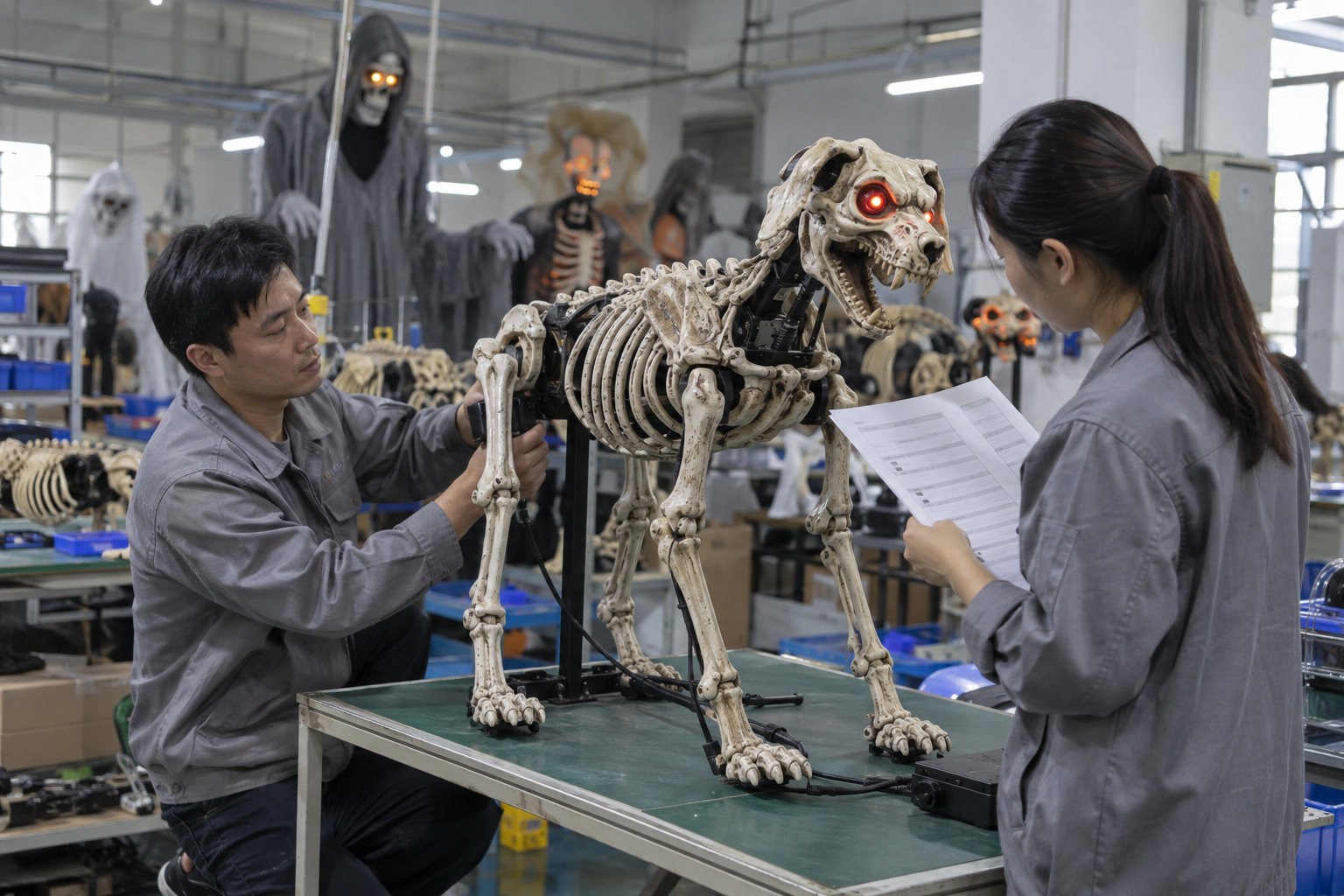
An animatronic may pass a factory demonstration and still arrive without the files and settings required to repeat that performance. A buyer of a custom Halloween effect should treat controller configuration as part of the deliverable: cue file, firmware or software version, address map, backup, restore method and authority to change it. The question is not whether the supplier can run a demo today, but whether the venue can recover the approved show next month.
This guide is about configuration control rather than cybersecurity certification. NIST's configuration-management definition describes maintaining integrity while systems are initialized and changed. The principle fits a prop controller even though the specific NIST standard does not prescribe Halloween show files. Use the DMX show-control guide for channel and cue interfaces. Avoid claiming the file package replaces qualified site commissioning.
Identify every piece of show information
Ask for the control architecture: standalone controller, external show controller, audio player, lighting module, motor driver, sensor or network interface. List the settings that create the visible sequence: timing, trigger threshold, sound selection, light levels, motion limits and reset delay. A technician should be able to point to the approved configuration version and explain how it is loaded onto the actual hardware.
Separate editable source files from deployable files. The buyer may need one, both or neither depending on the contract and long-term service plan. If the supplier uses licensed software or proprietary tools, discuss access, support and fees before production. Do not assume that paying for a custom character automatically transfers intellectual-property rights in its control program.
Record a configuration identity
A practical record could contain product SKU, controller model, hardware revision, firmware version, show-file name, checksum or other integrity reference, approval date and operating notes. The exact fields depend on the equipment. The purpose is to prevent a replacement controller from silently receiving an older or incompatible show. Keep personal credentials or confidential keys in an appropriate secure handoff, not printed on the carton.
Make the factory demonstration repeatable
Define the approved visitor-facing sequence before final sign-off. Film a complete start, trigger, action, reset and stop with the production unit identified. Record the configuration version used. Then power down, restore the same version from the handoff media or repository under supervision, and rerun the sequence. A restore test reveals whether the backup is actually usable rather than merely present.
Include failure behaviour. What happens after power loss, missed trigger or sensor fault? A file may load successfully while the wrong address map drives a different output. Compare the restored performance to an acceptance checklist, not only to the operator's memory. The fault-recovery guide addresses what the venue does if the effect stops during operation.
If a late artistic revision changes timing, record the new version and approval. Do not overwrite the prior approved file without a recovery copy. The production unit, spare controller and demonstration video should all reference the same version at shipment. A folder named 'final-final' is not a revision system.
Clarify rights, access and support boundaries
The purchase order should say who owns the creative cue content, who can edit it, what software is required, how long a backup remains available and what support the supplier provides. Some buyers only need a locked, restorable executable plus service support; others require editable show files for an in-house technical team. State that distinction in the RFQ so quotes are comparable.
If audio or licensed content is included, confirm that the buyer has the rights necessary for the intended use. A product handoff does not automatically grant public-performance or character rights. Ask for a content inventory and identify any buyer-supplied files. Avoid loading unapproved media after final testing, as it can change duration and timing.
For a networked controller, agree who maintains accounts, updates and backups. Do not leave default credentials as an informal convenience. A qualified technical lead should decide security requirements for the venue environment; this article does not prescribe a universal IT control.
Prepare the onsite commissioning package
Give the installer a wiring and address map, startup sequence, expected output behaviour, safe shutdown process and version record. Provide a means to confirm which file is active without exposing the system to untrained staff. A field change should be logged with date, reason, author and retest result. If the venue has several identical props, each one may still need an individual controller identity and as-built record.
If the effect is part of a larger show, identify responsibility at the boundary: does BooAri supply a local trigger-ready unit, or a controller intended to receive a cue from the venue? Who provides the final show file and who commissions the integrated sequence? An animatronic cannot be assumed compatible with every show-control system from a video demo.
At the handover, run the effect in its installed lighting and visitor-flow conditions. The factory video verifies a product configuration; the site test verifies integration under local conditions. Preserve both records. If an onsite setting changes, send the new version back to the designated owner so the spare and documentation can be updated.
Price the digital deliverable in the quote
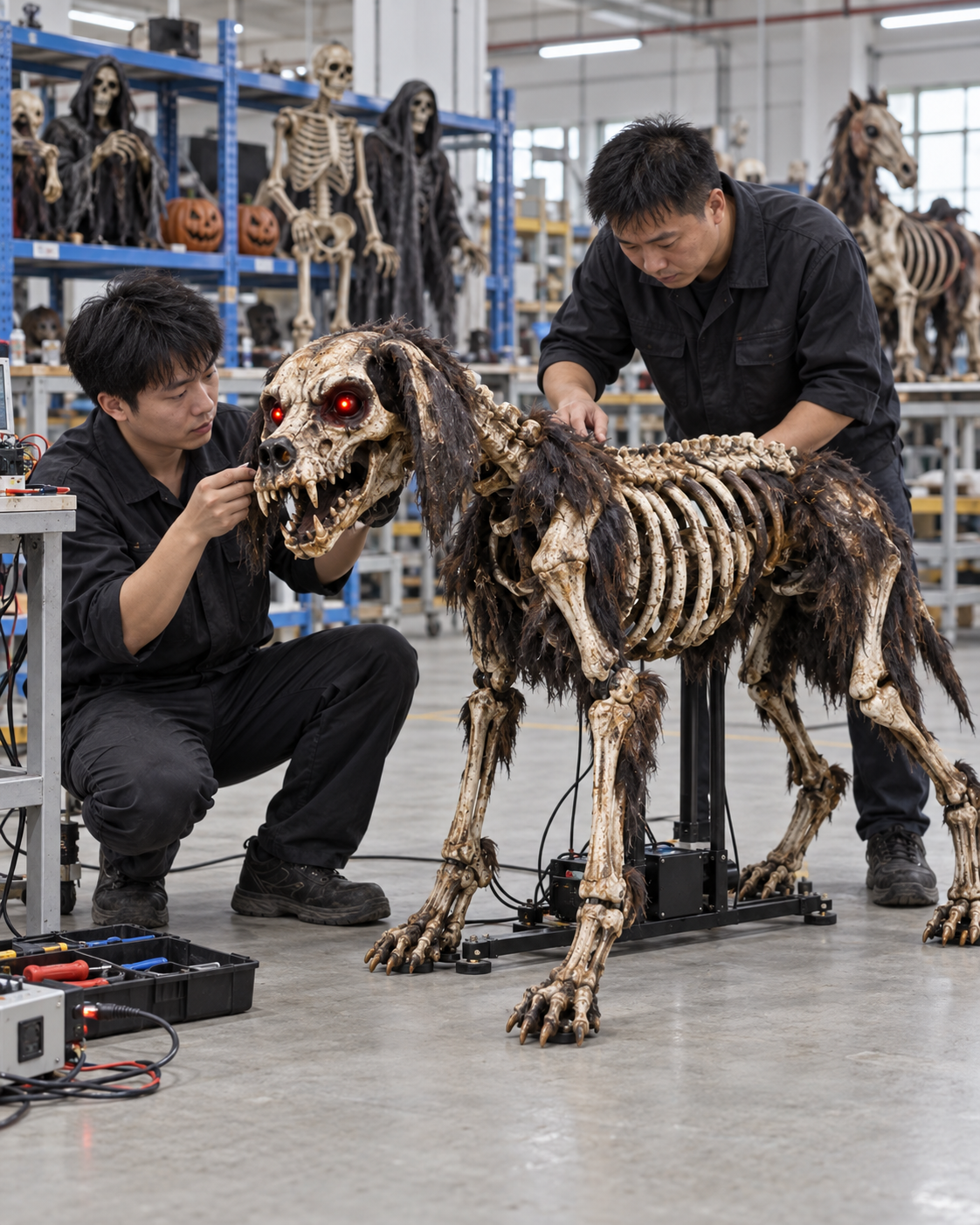
Ask what is included: controller hardware, approved cues, editable files, backups, licenses, documentation, restore training and post-delivery support. Clarify whether a replacement controller is supplied preloaded and whether a technician is required to commission it. A low headline price can hide the cost of maintaining a bespoke effect for multiple seasons.
A hypothetical attraction might require an editable cue package because its technical team retimes a scene every year. A small retailer might prefer a locked show with a supplier-supported spare controller. These are illustrative buyer models, not BooAri customer projects. Each is valid when the file and support scope is understood in advance.
Pre-shipment acceptance sheet
Record the product serial or unit ID, visible motion checklist, trigger settings, controller and firmware identifiers, show-file identity, backup location, restore-test result and packed media or access route. Do not place confidential credentials in a public carton label. At shipment inspection, verify the physical unit and accompanying documentation are the versions actually approved.
Test a replacement-controller scenario before dispatch
Ask the supplier to prepare a compatible spare controller or clean production controller under the intended service arrangement. Starting from the delivered backup, load the approved cue and confirm the version and essential output mapping. Run the complete scene sequence and compare it with the signed acceptance video. If a proprietary technician must perform this, note the lead time and support contact. The buyer may still accept that model, but should not represent it as a self-service restore.
Do the test with connected peripherals, not only a file on a laptop. A cue can open correctly yet address the wrong light or trigger input. Record hardware identity, firmware, file revision and any external media. If the supplier changes one item after the restore trial, decide which part of the acceptance sequence must be repeated. This is the practical meaning of configuration control for a commercial Halloween effect.
Store backups in at least one controlled location designated by the buyer and supplier agreement. A USB stick inside an export carton may be useful but is not a complete long-term custody plan. If files are stored online, the venue should know access requirements and whether service can continue during an internet outage. Avoid putting credentials or licensed content on a publicly accessible page.
Separate creative change from corrective maintenance
After opening, the venue may ask for a longer scare delay or different sound. That is a creative revision; a replacement controller after a fault is maintenance. Both change the as-built configuration, but the approval and urgency can differ. Maintain a short change log that records the requested effect, approved file, test result and old-version recovery path. A seemingly harmless timing adjustment can affect visitor flow or synchronisation with lights.
Before the next season, compare the active configuration in each unit with the master record. Identify props that were modified locally and whether their spare controllers match. If the supplier no longer supports a firmware version, plan a controlled upgrade with a sample test rather than discovering incompatibility during load-in. A durable digital handoff is a maintained agreement, not a one-time email attachment.
Decision review: make the evidence comparable
Before selecting a quotation, write a one-page decision record for secure a usable control-file handoff. Start with the customer requirement, not a supplier feature. The same installed dimensions, destination, display period and approval date should appear on every option being compared. If two offers use different product scope, record the difference as a separate alternate. Otherwise a cheap option may simply omit work that the other bidder included.
For this guide, the useful sample is the approved production unit restored from the proposed backup package. Ask for its revision and say what it can and cannot demonstrate. The critical inspection focus is controller model, firmware, cue identity and exact trigger-reset sequence. Set the viewing or operating condition in advance, then photograph or record the outcome. The person approving the sample should know whether a visual result, a technical function or a packing action is being accepted. One attractive image does not cover all three.
The packing question is secure handoff media or repository access matched to the product unit. Measure or verify the proposed shipping unit rather than assuming an installed dimension will predict freight. At the site, the practical question is whether the venue technical lead can identify and restore the installed version. Ask the receiving and operations teams to answer it before the purchase is called complete. If they cannot answer from the supplier's proposed evidence, the project has an unresolved interface, not merely a documentation preference.
Keep a short decision log
Create columns for requirement, offered configuration, evidence, owner, approval status and unresolved risk. Mark evidence as a physical sample, drawing, supervised test, production record or professional site review. Those are not interchangeable. A factory test can validate a product function; it cannot approve unknown local conditions. Conversely, a site plan can show access but not prove the final batch matches the sample. Give each open item a person and date rather than leaving it in an email thread.
Challenge the proposal with a failure scenario
Imagine that a replacement controller arrives with a different cue timing than the approved character. Ask what the operator would first observe, what should be stopped, which record identifies the affected unit and what corrective action can be checked. This is a stress test of the proposed purchase, not a claim that the failure has happened in a BooAri project. The answer may reveal a need for a revised sample, a clearer part ID, a different pack, or a local professional decision.
One viable route to examine is a versioned restore and retest before the unit returns to operation. It is an option to test, not a universal prescription. Estimate its effect on price, lead time, appearance, freight and maintenance. If the alternative changes the approved specification, issue a new revision and repeat the affected checks. Do not rely on verbal assurances that the change is minor. The buyer should be able to trace why the new option was accepted.
Close the record only when the buyer, supplier and destination owner agree what will be shipped and what remains a site responsibility. At shipment inspection, compare the production item and documents with that decision record. If the product arrives later with a changed component, the record tells the team which approval must be reopened. This discipline is more useful than a vague claim that a prop is 'commercial grade' because it ties the actual purchase to observable evidence.
Final digital acceptance question
Ask whether the exact cue running on the production unit can be restored by the party who will support the venue. If the answer depends on a single employee's laptop, a private account or undocumented software, the handoff remains fragile. Define a backup custodian and demonstrate the agreed recovery process on a compatible controller before shipment.
The buyer should also decide how later creative updates are approved. A changed sound or timing file may need a new show video and site test; the replacement controller must then receive the same version. Keep an archive of earlier approved files where the contract permits. This makes it possible to roll back a faulty revision rather than improvising during an operating night.
Frequently asked questions
Is a video enough to document a show file?
No. Video records appearance but cannot restore a configuration. The handoff needs the agreed file, version and loading or support method.
Must a supplier deliver editable source files?
Only if the commercial agreement requires them. Decide ownership, license and support scope before production.
What if firmware changes after approval?
Record the change, check compatibility and rerun the relevant acceptance sequence. Do not ship an untested revision.
How should a spare controller be prepared?
Match hardware and configuration compatibility, identify its version and test a restore or substitution under the agreed procedure.
Conclusion
The visible effect and its configuration are one procurement package. A versioned, restorable show handoff protects the buyer from losing an approved sequence after a hardware change. Send BooAri the control interface, rights expectations, support model and delivery date through Send Your Requirements to define the file and factory-test scope.
Further reading
Use these external resources alongside your local market, venue and professional safety requirements:
READY TO START A PROJECT?