

A Halloween animatronic skin is not only a visual layer. It moves over a mechanism, touches costume and frame parts, may need to be removed for service, and will be seen under deliberately theatrical lighting. Buyers comparing latex and silicone should ask how the exact skin design behaves through the approved motion cycle, not which material looks more realistic in a single close-up.
This article concerns removable or flexible creature surfaces on commercial props, not wearable medical or cosmetic products. Material suppliers distinguish cured hardness and flexibility across rubber and foam families in their selection guidance. Product behaviour depends on formulation, pigmentation, thickness, backing, attachment and care. Do not turn the generic material name into a service-life or allergy claim; the final use and local requirements govern evaluation.
Specify the movement before the skin
Describe each visible motion: jaw opening, brow change, head turn, arm flex or breathing effect. Record travel, approximate speed and the surfaces that stretch, compress or rub during that movement. A skin may look excellent when the figure is still yet bunch at full extension. Give the manufacturer a repeatable motion sequence and request a demonstration at the approved controller setting.
Identify the mechanical components beneath the skin. A sharp frame edge, exposed fastener or insufficient clearance can damage either material. The builder should address contact surfaces and pinch points as part of the assembly, not by relying on a thicker skin to hide them. A qualified technical review remains necessary for moving equipment in public venues.
Separate expression from durability
The buyer should identify which facial details are essential from the actual visitor distance. Fine wrinkles may matter in a close photo moment; silhouette and eye expression may matter more across a dark queue. Compare two finished samples under the same show lighting, not raw swatches photographed under different conditions.
Compare the whole skin assembly
Ask whether the proposed latex or silicone is a solid layer, a skin over foam, or part of a multi-material construction. Obtain a diagram showing thickness zones, reinforcement, edges and attachment to the mechanism. A thicker face can preserve a sculpt, but added stiffness may change movement. A thin edge can look natural yet become a maintenance point. The design must balance expression and replaceability.
Request technical information for the exact grade used, and confirm how it will be cleaned and stored. Do not paste one producer's hardness or tear data onto an unspecified prop. An approved sample can reveal more about local flex, paint adhesion and attachment than a broad marketing comparison. Keep a material reference, finish swatch and revision record so replacement skins are matched to the order.
Review colour in the actual scene. Some pigments, coatings and theatrical lights shift perceived tone. Photograph the face under neutral inspection light and show light. If blood, grime or aged texture is part of the aesthetic, mark those features on the approved image so they are not confused with production defects at shipment inspection.
Design service access before approving the sculpt
A skin that cannot be removed without tearing makes minor mechanism service expensive. Ask how the mouth, eyes, head or arm panels open. The solution may be a hidden seam, removable panel or separate mask. Confirm that staff can access the relevant actuator or connector without pulling on a vulnerable lip. If service requires a specialist, state this in the handover package instead of promising field repair.
Examine the edge treatment where skin meets hair, costume, teeth or a rigid shell. These transitions are common visual and wear points. A buyer can ask for a close-up video after repeated demo cycles, including reset, and compare it with the initial sample. The number of cycles and acceptance criteria should be agreed for that product; avoid inventing a universal pass count.
If a replacement skin is offered, request a part identifier and installation method. Is the skin matched to a particular sculpt revision? Does replacement involve adhesive, fasteners or a trained fitting procedure? A spare that cannot be fitted at the site within the available maintenance window has limited operational value.
Test cleaning and storage compatibility
Ask the supplier for care guidance based on the actual finished surface, including paint, hair, fabric and attached foam. Test any proposed cleaning agent on a concealed or spare sample before applying it to a face. A product may tolerate water while its finish or adhesive does not. High-contact zones may need a different design with a replaceable protective surface rather than frequent wiping of delicate skin.
Storage must avoid deformation. Document the neutral pose, support points, protective cover and whether any component should be removed or relaxed. Keep finished skins away from avoidable crushing in the case. At the next season's opening, inspect for cracks, tackiness, colour change, loose edges and motion interference before energizing the effect. The off-season storage guide offers the wider condition-record method.
Illustrative procurement example
Suppose a venue wants a monster that turns its head eight hours per day during an event run. The buyer should not select silicone or latex from that sentence alone. It should define the actual motion cycle, event duration, downtime tolerance, cleaning routine and replacement window; then ask for a representative skin and mechanism trial. This scenario is a planning example, not a reported BooAri installation or lifetime prediction.
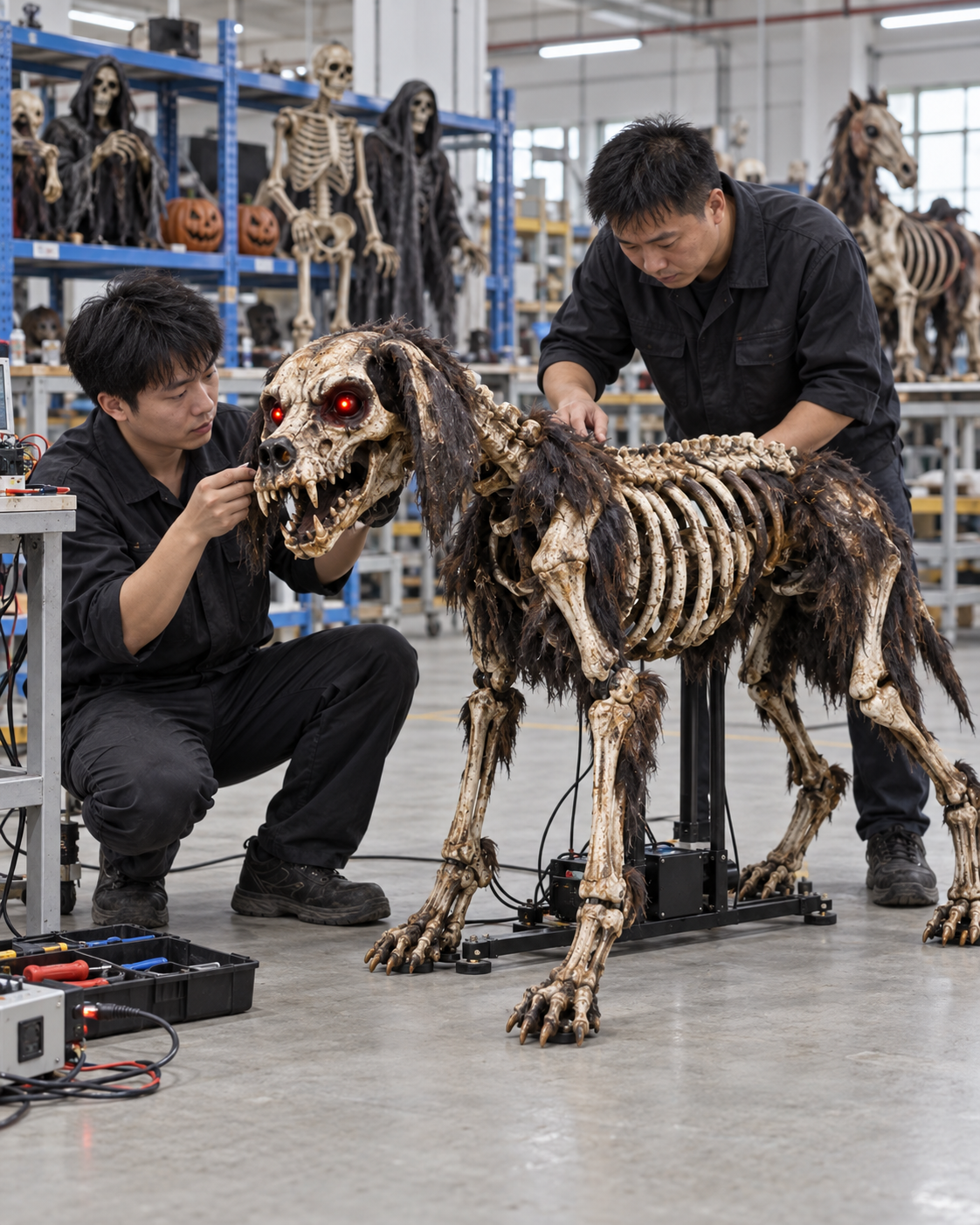
Compare quotation scope and production evidence
Two skin quotes should state whether the sculpt, mold, colour work, backup skin, attachment hardware, service instructions and shipping protection are included. A cheaper material quote can become costly if a one-off mold or fitting process is excluded. If the character is custom, clarify ownership and re-order access to the sculpt and tooling separately from material choice.
Approve one named reference skin on the intended mechanism. Show the full operating sequence, stop, reset and service opening. Photograph front, sides, seams and edges under agreed lights. At pre-shipment inspection, verify the production version, visible condition, edge adhesion, repeated movement and packed support. A function demonstration should be traceable to the actual item being shipped.
The site team should receive a care and escalation note: approved cleaning method, inspection points, replacement contact and a clear rule for taking the effect out of service when skin interferes with motion. Do not ask untrained staff to trim material near moving parts while the system is energized. Product application includes maintenance, not only the first night of operation.
Build a motion-and-skin approval matrix
List each moving area in a table: forehead, eyelid, cheek, jaw, neck or hand. For each, record the action, visible stretch or compression, underlying contact surface, edge position and whether a technician can reach it. A skin comparison becomes more meaningful when the buyer can see where the selected formulation will actually flex. The same creature may need a different edge construction at the mouth than at the still back of the head. Asking for a single blanket material thickness can create unnecessary bulk in one area and weakness in another.
Run the approved movement sequence from a cold start, then after repeated operation under an agreed trial. Inspect for wrinkling, adhesion loss, rubbing and unintended interference. Use neutral light to locate defects and show light to judge expression. The test count must be chosen for the product and venue; the goal is not to cite an impressive arbitrary number. The trial should stop if an abnormal condition appears, with qualified staff deciding whether further cycling is safe.
When comparing two sample skins, use the same sculpt and motion where practical. A different face shape can dominate the visual judgment. Record production method and finish changes separately. If a material change requires a different mold or paint system, include those effects in the quotation rather than presenting the choice as only a raw-material price difference.
Replacement trial and operating records
Ask the supplier to remove and refit a sample skin using the proposed service method, with the mechanism isolated. Observe whether the process disturbs hair, eyes, costume or calibration. Note the tools, trained skill and time under the trial conditions. A replacement part that requires a specialist may still be the best solution, but the venue should not plan it as an attendant task. Preserve a photo of the approved edge and seam after refitting.
The operating log can be simple: unit ID, opening check, visible skin condition, unusual movement and any cleaning or service. Photograph the same high-wear points periodically. At the end of the season, compare condition with the opening reference before storing the unit in its neutral pose. These records support a sensible reorder or refurbishment decision; they do not establish a universal service life.
If a supplier offers a spare skin, define its packing, storage and compatibility. A flexible skin can deform if folded or compressed incorrectly. A spare may also differ in pigment from the production figure if made later. Decide whether a replacement should be finished alongside the first production lot and kept as a controlled reserve.
Procurement questions beyond the material label
Ask whether the price includes sculpt, mold, finishing, installation on the mechanism, motion testing, cleaning instructions and replacement procedure. Identify buyer-supplied costume or makeup products that may contact the surface. Require notice before changing the formulation, pigment or adhesive that forms part of the approved sample. A material name without its application process is insufficient to judge the completed animatronic.
Clarify how the supplier will report a failed test. Will it revise skin thickness, reshape a contact point, change the attachment, or recommend a different effect? A buyer should allow design iteration while keeping the approved visual intent and technical record. This makes the procurement decision about a working character system rather than a generic latex-versus-silicone debate.
Decision review: make the evidence comparable
Before selecting a quotation, write a one-page decision record for choose a flexible character surface. Start with the customer requirement, not a supplier feature. The same installed dimensions, destination, display period and approval date should appear on every option being compared. If two offers use different product scope, record the difference as a separate alternate. Otherwise a cheap option may simply omit work that the other bidder included.
For this guide, the useful sample is the same facial movement using the actual skin attachment and mechanism. Ask for its revision and say what it can and cannot demonstrate. The critical inspection focus is edge adhesion, rubbing, expression and removable access after cycling. Set the viewing or operating condition in advance, then photograph or record the outcome. The person approving the sample should know whether a visual result, a technical function or a packing action is being accepted. One attractive image does not cover all three.
The packing question is neutral-pose support for the face and any spare skin. Measure or verify the proposed shipping unit rather than assuming an installed dimension will predict freight. At the site, the practical question is whether qualified staff can isolate and replace a skin within the service window. Ask the receiving and operations teams to answer it before the purchase is called complete. If they cannot answer from the supplier's proposed evidence, the project has an unresolved interface, not merely a documentation preference.
Keep a short decision log
Create columns for requirement, offered configuration, evidence, owner, approval status and unresolved risk. Mark evidence as a physical sample, drawing, supervised test, production record or professional site review. Those are not interchangeable. A factory test can validate a product function; it cannot approve unknown local conditions. Conversely, a site plan can show access but not prove the final batch matches the sample. Give each open item a person and date rather than leaving it in an email thread.
Challenge the proposal with a failure scenario
Imagine that a visually realistic face snags the moving jaw after a short operating period. Ask what the operator would first observe, what should be stopped, which record identifies the affected unit and what corrective action can be checked. This is a stress test of the proposed purchase, not a claim that the failure has happened in a BooAri project. The answer may reveal a need for a revised sample, a clearer part ID, a different pack, or a local professional decision.
One viable route to examine is adjusting geometry or attachment before deciding the polymer family is at fault. It is an option to test, not a universal prescription. Estimate its effect on price, lead time, appearance, freight and maintenance. If the alternative changes the approved specification, issue a new revision and repeat the affected checks. Do not rely on verbal assurances that the change is minor. The buyer should be able to trace why the new option was accepted.
Close the record only when the buyer, supplier and destination owner agree what will be shipped and what remains a site responsibility. At shipment inspection, compare the production item and documents with that decision record. If the product arrives later with a changed component, the record tells the team which approval must be reopened. This discipline is more useful than a vague claim that a prop is 'commercial grade' because it ties the actual purchase to observable evidence.
Frequently asked questions
Does silicone always last longer than latex on a prop?
No blanket lifetime claim is credible. Grade, thickness, backing, movement, light, heat, care and storage all matter. Compare finished-system samples under an agreed trial.
Is the skin easy to replace?
Only if the design provides access, compatible parts and a documented fitting method. Ask to see a removal and refit demonstration before calling it field replaceable.
What evidence should the factory provide?
An identified sample, material and finish reference, full motion video, edge and seam close-ups, service-opening view and packed condition are useful starting points.
Can the same skin be used outdoors?
Do not assume so. Outdoor suitability depends on the finished system, exposure, enclosure, mechanism and local site approval. Request a separate outdoor-use review.
Conclusion
The material choice should follow the desired expression, actual motion and maintenance method. A finished-system trial is more valuable than a general claim about latex or silicone. Send BooAri the character reference, motion sequence, visitor distance, operation schedule and replacement expectations through Send Your Requirements to define a testable brief.
Further reading
Use these external resources alongside your local market, venue and professional safety requirements:
READY TO START A PROJECT?