

Outdoor Halloween scenery often involves two overlapping systems: the prop supplied by a manufacturer and the temporary electrical installation managed by the venue. A buyer can approve a weather-conscious product and still create an unsafe site if cables cross visitor routes, connectors rest in water or enclosures are installed incorrectly. The procurement brief should make the boundary visible before the display is ordered.
This guide is not an electrical code interpretation or installation instruction. NEMA's enclosure FAQ explains that enclosure type descriptions depend on conditions and that ratings have defined meanings. A label on one enclosure does not rate an entire scene. Qualified local electrical professionals and the venue authority must design and approve actual power routing. Read the outdoor prop guide for the broader material and anchoring brief.
Map every power boundary
Draw the site with supply point, distribution equipment, prop controller, lighted elements, sensors and paths between them. Mark public walkways, cleaning routes, doors, drainage, landscaping and areas where vehicles may cross. The diagram need not be an electrical design to be useful; it identifies questions the qualified installer must answer. Add a responsibility column for product-supplied hardware versus venue-supplied wiring.
Record actual distances and elevations. A line from an outlet to a prop across a plan may pass a gate, corner and raised base. Cable length and protective method should be decided after a site survey, not estimated from a rendering. If the scenic layout changes, revisit the route. Do not let an attractive final position force an improvised extension lead.
Ask where water can travel
Rain can run down cable into a connection, collect in a low point or enter a damaged cover. Ask the product team to show the intended connector orientation, sealing and inspection access. The local installer should account for drainage and elevation. Never claim a connector is weatherproof merely because its shell looks substantial.
Specify enclosures as part of an installed system
Ask what equipment is housed inside each box and whether staff need regular access. Enclosure selection should account for the actual environment, door or cover condition, penetrations, mounting and maintenance. A rated empty box may lose suitability if holes, glands or open doors are not handled as designed. Use the manufacturer's data for the exact component and the local professional's assessment.
Make visibility deliberate. A box hidden behind scenery can preserve the illusion but may trap water or become inaccessible for inspection. Plan a discreet but reachable position. Show service clearances and identify who may open it. A decorative panel should not become the only barrier protecting public access to electrical components.
Where battery-powered props are considered instead, compare charging and battery transport obligations as a separate route in the power-choice guide. Removing a cable from the visitor route may solve one issue while creating another operating process.
Keep cable routes out of predictable damage zones
Think about people, not just weather. Visitors may cut a corner; cleaners may drag equipment; grounds staff may move planters; temporary barriers may be relocated. Provide the local installer with these movement patterns so cable protection is not based on a deserted site photograph. If cables must cross a traffic route, the competent site team selects a suitable protection and approval method.
Check movement at the prop itself. A cable routed through a moving jaw or across a detachable base can abrade. Provide strain relief and service access appropriate to the design. During a sample assembly, inspect cable condition after the full effect cycle and after disassembly. An outdoor-rated cable is not immune to mechanical damage.
At public-facing surfaces, keep connectors and low-level loops from becoming handles or trip features. The scenic team and electrical installer should review the same final plan. The installation package should show the actual route after commissioning, not only the original concept.
Agree test and inspection boundaries
The factory can demonstrate the product's functions and inspect its supplied connectors or enclosures in the agreed configuration. It cannot test the unknown venue outlet, temporary distribution or local weather after shipment. The site professional must test the installed system according to the applicable rules. Distinguish those records clearly so a factory video is not misrepresented as a site approval.
For product inspection, ask for a labelled wiring diagram or connection map, accessory count, visible seals and covers, and a function demonstration. For site acceptance, ask the qualified installer what records the venue requires before opening. Document responsible parties, deficiencies and closeout. The buyer can coordinate the process without personally interpreting electrical standards.
Make daily opening checks observable: visible damage, secure covers, pooled water near equipment, tripped controls and expected function. Define when the attraction or display is kept off pending professional review. Do not encourage staff to dry a live connector or tape over a damaged cable.
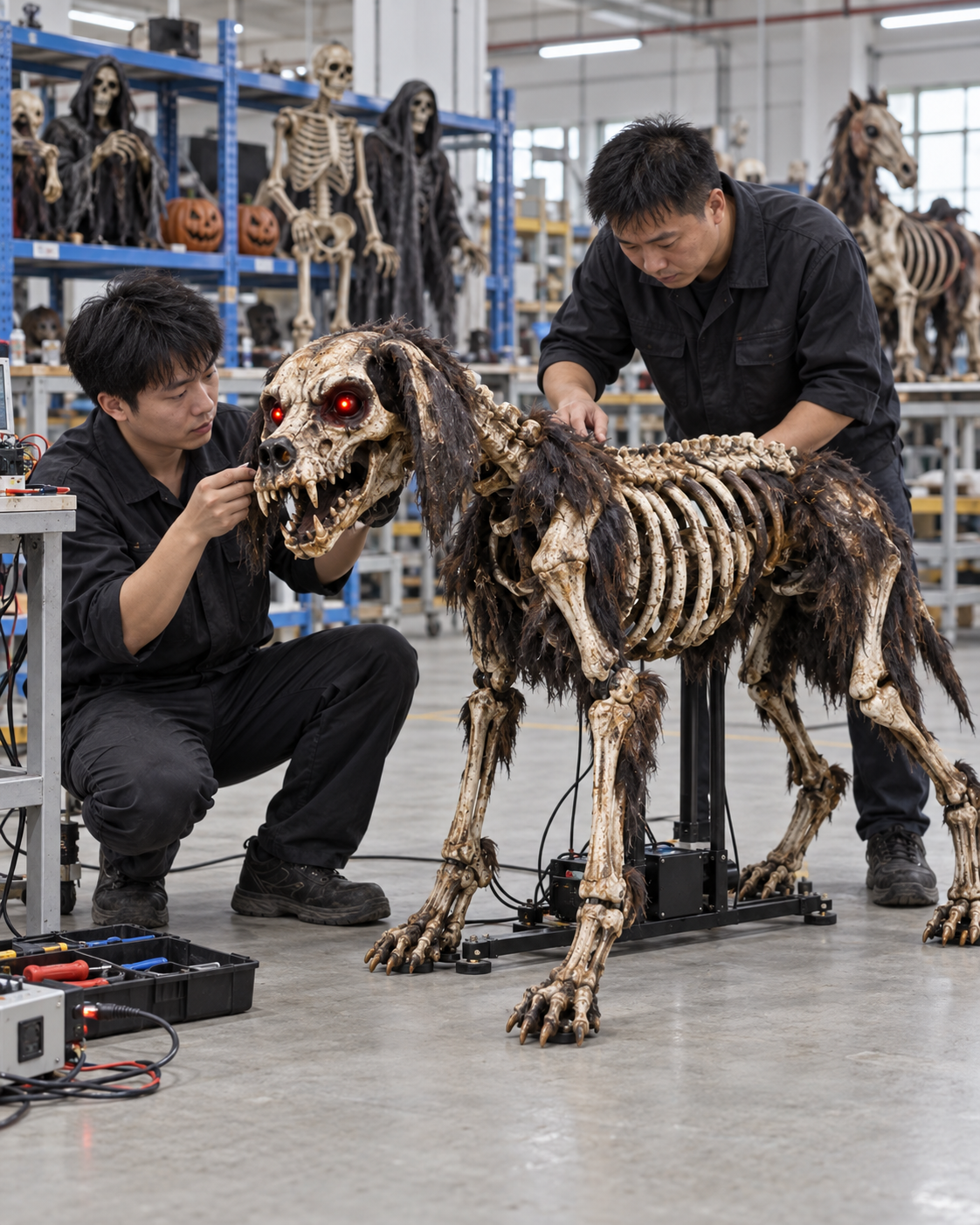
Price the complete outdoor scene
The prop quote should state its supplied enclosure, cable length, connector, controller and any environmental assumptions. The local budget should include distribution, route protection, mounting, testing and maintenance. An unpriced 'site electrical by others' line is a risk until a named party has accepted and quoted it. Compare all proposals on the same installed scope.
A hypothetical outdoor market might move lighted pumpkins every weekend. A fixed plaza display may remain in one location for a month. The first needs repeated-connection and handling review; the second may prioritize long unattended exposure. These are illustrative planning situations, not BooAri performance claims. The same enclosure label alone cannot settle either project.
Preproduction site handoff
Send the supplier the venue plan, local power characteristics as confirmed by the qualified team, exposure description, connection boundary and installation schedule. Ask for a product connection drawing and accessory list before approval. After a mock assembly, freeze the final product interface and tell the installer if it changes. This avoids discovering at site that the connector or cable leaves from the wrong side.
Review rain, cleaning and condensation separately
An outdoor prop may be exposed to rain from above, splash from ground cleaning or condensation within an enclosure. These are different paths. Give the local electrical professional the actual site context, including sprinkler schedules, roof runoff and routine washdown. The qualified team can then choose appropriate positioning and components. A generic 'outdoor' line in a quote does not describe these exposures.
Ask how a closed enclosure will be inspected after a wet period. If staff must remove a decorative panel to check it, define who may do so and how the area is isolated. Look for a route by which water could follow a cable into a box or collect at a connector. The product team should provide drawings of penetrations and recommended orientation. A field modification to a rated box should be reviewed by the responsible installer and enclosure manufacturer, not improvised behind scenery.
Cleaning can be equally important. A pressure hose near a display or chemical cleaner on a cable jacket may create conditions different from rainfall. Add cleaning method and route to the venue brief. If the intended cleaning practice conflicts with the product, change the scene location or cleaning plan before opening.
Document the installed electrical boundary
After commissioning, the site professional should mark the final supply point, cable route, protective equipment, enclosure IDs and product connection. Keep an as-built photograph or drawing with the operating file. This avoids next season's staff assuming that an original plan still matches reality. If planters, barriers or market stalls move, reevaluate cable protection and inspection access.
The buyer should also request an end-of-season removal plan. Disconnecting and coiling wet cables without inspection can carry damage into storage. Tag any suspect component and prevent it from being packed with usable spares. A recurring display benefits from a pre-season professional review before re-energization. This is not because every outdoor prop is inherently unsafe; it is because temporary public installations change between uses and need evidence that the current configuration is suitable.
Decision review: make the evidence comparable
Before selecting a quotation, write a one-page decision record for prepare an outdoor electrical site brief. Start with the customer requirement, not a supplier feature. The same installed dimensions, destination, display period and approval date should appear on every option being compared. If two offers use different product scope, record the difference as a separate alternate. Otherwise a cheap option may simply omit work that the other bidder included.
For this guide, the useful sample is the final product-side connector and enclosure arrangement under representative exposure. Ask for its revision and say what it can and cannot demonstrate. The critical inspection focus is covers, seals, cable exits, damage points and safe access. Set the viewing or operating condition in advance, then photograph or record the outcome. The person approving the sample should know whether a visual result, a technical function or a packing action is being accepted. One attractive image does not cover all three.
The packing question is connector protection and accurate cable inventory. Measure or verify the proposed shipping unit rather than assuming an installed dimension will predict freight. At the site, the practical question is whether local professionals can route and approve the complete installed system. Ask the receiving and operations teams to answer it before the purchase is called complete. If they cannot answer from the supplier's proposed evidence, the project has an unresolved interface, not merely a documentation preference.
Keep a short decision log
Create columns for requirement, offered configuration, evidence, owner, approval status and unresolved risk. Mark evidence as a physical sample, drawing, supervised test, production record or professional site review. Those are not interchangeable. A factory test can validate a product function; it cannot approve unknown local conditions. Conversely, a site plan can show access but not prove the final batch matches the sample. Give each open item a person and date rather than leaving it in an email thread.
Challenge the proposal with a failure scenario
Imagine that a nominally rated box is undermined by an unreviewed field penetration. Ask what the operator would first observe, what should be stopped, which record identifies the affected unit and what corrective action can be checked. This is a stress test of the proposed purchase, not a claim that the failure has happened in a BooAri project. The answer may reveal a need for a revised sample, a clearer part ID, a different pack, or a local professional decision.
One viable route to examine is relocating the interface or revising the installation plan under qualified review. It is an option to test, not a universal prescription. Estimate its effect on price, lead time, appearance, freight and maintenance. If the alternative changes the approved specification, issue a new revision and repeat the affected checks. Do not rely on verbal assurances that the change is minor. The buyer should be able to trace why the new option was accepted.
Close the record only when the buyer, supplier and destination owner agree what will be shipped and what remains a site responsibility. At shipment inspection, compare the production item and documents with that decision record. If the product arrives later with a changed component, the record tells the team which approval must be reopened. This discipline is more useful than a vague claim that a prop is 'commercial grade' because it ties the actual purchase to observable evidence.
Final outdoor release question
Ask the qualified local installer to compare the as-built cable route and enclosure orientation with the approved plan before visitors enter. A drawing made before scenery was placed can miss a new low point, a hidden drain or a cable exposed to cleaning equipment. The product supplier can explain its connector and enclosure assumptions; the local professional must approve the installed arrangement under applicable requirements.
Keep inspection access practical. If staff cannot see whether a cover is closed without dismantling a large prop, the operational check may never happen. A small design revision, such as moving an access panel, can preserve both scenery and maintenance. Record any deviation before the seasonal handover, then revisit it when the display is removed and stored. Include the inspection point on the daily opening sheet, with a clear escalation contact.
Frequently asked questions
Does an IP or NEMA rating make the whole display waterproof?
No. Ratings apply to defined components or enclosures under specified conditions. Installation, penetrations, connectors and maintenance matter.
Can the factory choose the site's cable protection?
The factory can provide product data, but the qualified local installer must review the actual route, public use and applicable requirements.
What should be tested before shipment?
Product functions, supplied wiring and connectors, enclosure condition, accessories and the final approved configuration. Site power is tested locally.
What changes if the scenic location moves?
Recheck cable length, route, exposure, access and protection. A changed scene position can invalidate assumptions used for the initial quote.
Conclusion
Outdoor electrical readiness is a shared interface, not a product sticker. Get a site survey, product connection data and local professional review into the same approval process. Send BooAri the venue plan, exposure notes, power boundary, quantity and target date through Send Your Requirements to define the product-side brief.
Further reading
Use these external resources alongside your local market, venue and professional safety requirements:
READY TO START A PROJECT?