
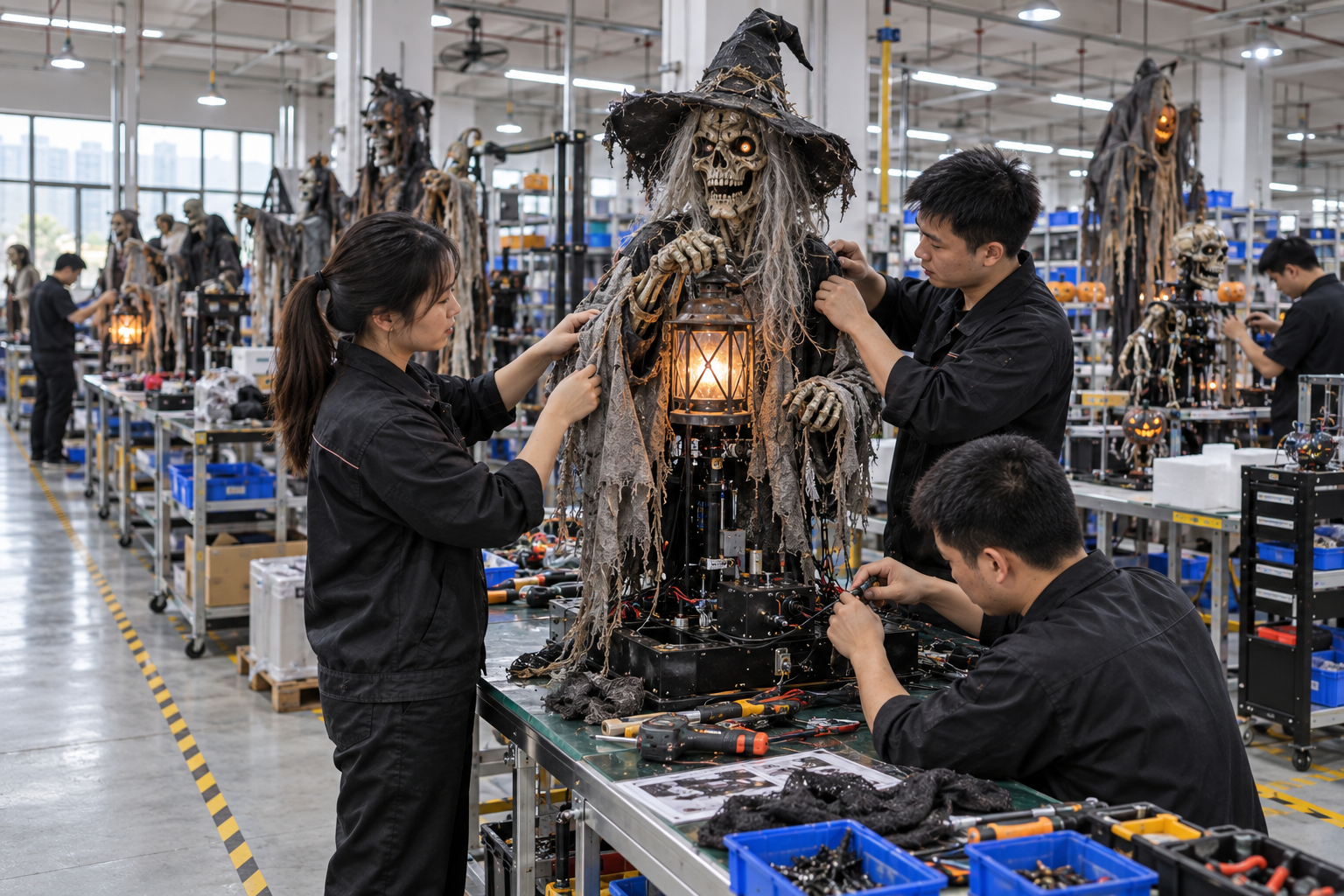
Choose pneumatic or electric haunt actuation by the movement you need and the infrastructure the venue can support. Pneumatic effects require an appropriate compressed-air arrangement and control scope; electric effects require a confirmed electrical and mechanical configuration. Neither category alone establishes reliability, noise, operating cost or suitability for a particular scene.
A buyer may see two effects producing a similar reveal while their daily requirements differ substantially. One needs an air system, another an electrical supply and a different service approach. The procurement decision should compare the complete installation and operating workflow rather than only the visible action in a video.
This guide provides a commercial comparison. It does not give pressure, wiring or mechanical modification instructions. The selected manufacturer and appropriately qualified technical team must specify and implement the actual system. BooAri's offered configurations are confirmed for each enquiry rather than assumed from this article.
Start with the movement and scene purpose
Describe the intended action: a short reveal, a slow turn, a repeated gesture or another supported movement. Include the visitor position, desired timing, return sequence and scene clearance. Ask which actuation options can deliver that action within the product's documented operating limits.
Avoid choosing a power method because it appears more dramatic or more modern. The same visitor reaction can sometimes be achieved with a simpler effect or different placement. Conversely, a demanding movement may need a particular supported mechanism. The manufacturer should connect the proposal to the requested action.
For a procurement comparison, hold the visible outcome and scope constant as far as possible. If two options use different scale, travel or accessory functions, record those differences. A price comparison between non-equivalent effects can obscure the reason one system appears less expensive.
Request the full return sequence
The dramatic movement is only part of the effect. Ask how it returns, how it becomes ready and what happens after an interruption. The cycle and reset guide shows why these stages matter to visitor flow. Compare them for both proposals.
Understand the pneumatic infrastructure scope
A pneumatic effect uses air infrastructure as part of its system. Ask what components are included with the prop and what the venue must supply. The answer may involve a compatible air source, conditioning, regulation, connection and control arrangement, but the exact requirements belong to the manufacturer's documentation.
Location matters. Equipment placed near a visitor scene can introduce sound or access issues; equipment placed remotely changes the distribution arrangement. Provide the technical team with the intended site, service route and operating schedule. Do not assume the factory demonstration's air source represents the venue installation.
Ask the manufacturer for the documented operating requirements of the exact model. Buyers should not select pressure or connection components by analogy with another prop. Those details affect the actual mechanism and need qualified review rather than a universal internet recommendation.
Understand the electric infrastructure scope
For an electric effect, request the required supply, interface, control arrangement and manufacturer instructions. Distinguish the prop's internal configuration from the venue's available connection. A low-voltage component can still rely on a separate supply or other equipment whose suitability needs confirmation.
Ask which components are included, which are replaceable and which settings are fixed or adjustable. The product's visible simplicity may hide a controller, mechanism or accessory relationship that matters during service. Include access requirements in the scene layout before decorative panels obscure them.
The local team should review final installation and connection using applicable requirements and manufacturer documentation. A commercial buyer can compare scope and demand evidence without improvising electrical work from a product article.
Compare operating cost with stated assumptions
Request the information needed to estimate the actual configuration's consumption and operating pattern. The venue can then use its own tariff and schedule. Avoid assigning a universal energy cost to all pneumatic or electric props; system size, simultaneous effects and operating behaviour can differ.
For a hypothetical planning exercise, separate installed infrastructure from usage. An air source supporting several effects might have a shared cost, while a stand-alone electric prop might have its own supply. Allocate shared costs according to a documented method so one effect does not unfairly carry the entire attraction budget.
Include maintenance, commissioning and staffing. A lower component purchase price can be offset by equipment or work the venue does not already have. Conversely, an attraction with suitable infrastructure and technical staff may find a supported pneumatic effect straightforward to integrate.
Compare the whole order scope
Use a quote matrix listing prop, controller, support equipment, required site work, demonstration, spares and commissioning. Mark exclusions. This makes it possible to see whether a higher quote includes more of the actual project rather than a more expensive version of the same scope.
Evaluate sound as part of the visitor experience
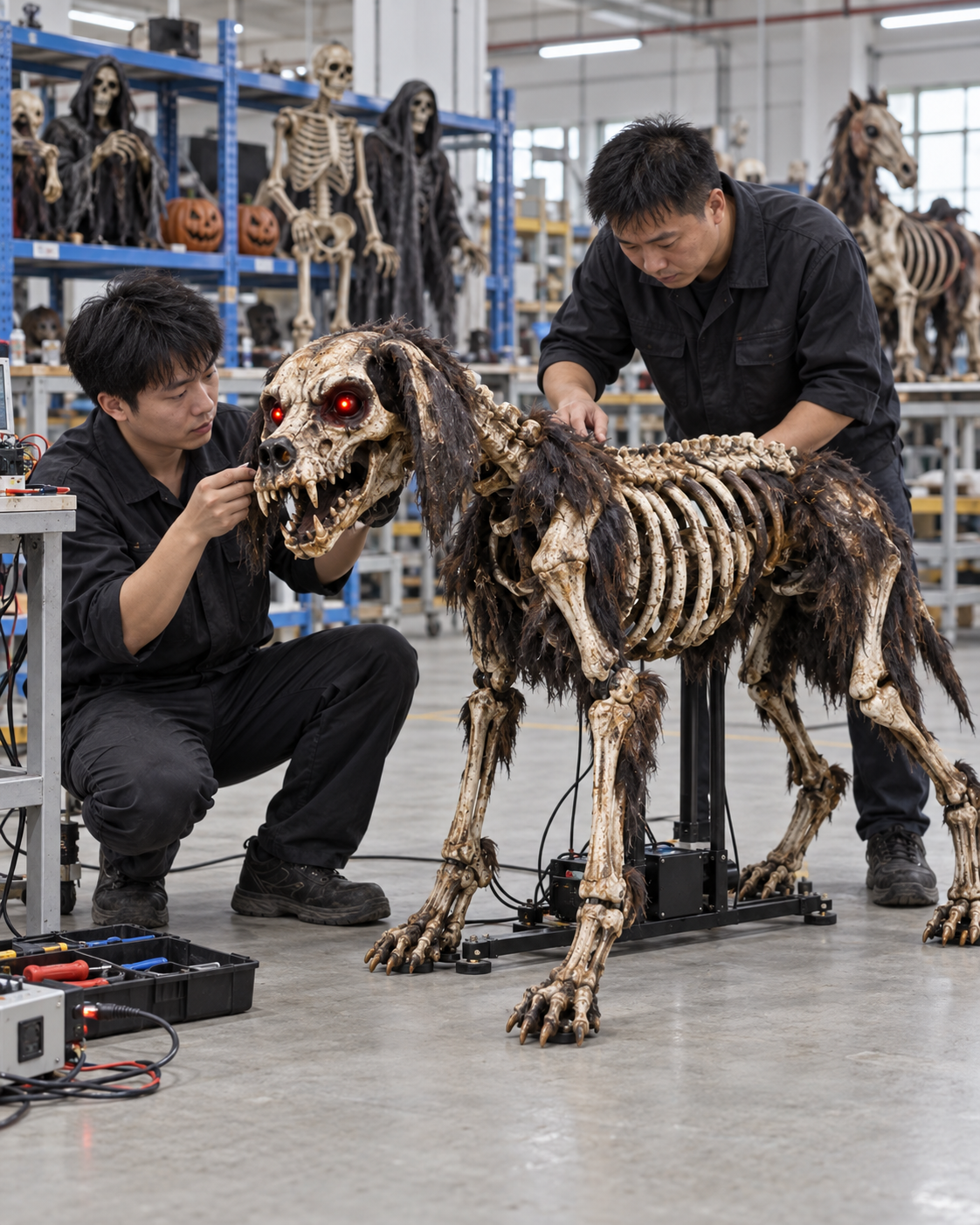
Actuation and support equipment can contribute sound independently of the programmed audio. Review the proposed effect at the visitor's position and during return. A sound that adds intensity to one scene may be distracting in a quiet retail display.
Ask whether the demonstration includes the representative support arrangement. A microphone near the prop or an edited video may distort the perceived sound. A meaningful comparison states where the recording was made and what equipment was operating.
Do not promise that one actuation category is silent. Product and installation details determine the result. The audio-zone guide can help the venue separate deliberate sound cues from unwanted spill or repetitive mechanical noise.
Discuss an effect requirement with BooAri by describing movement, scene timing and the infrastructure already available. The product collection is a visual starting point; the technical proposal should establish the actual actuation scope.
Review trigger and control relationships
Both categories need an agreed activation and recovery sequence. Confirm the supported trigger input, response to repeated events and return behaviour. The mechanism type does not determine how every controller handles a new visitor.
The FrightProps trigger comparison illustrates why sensor placement and detection differ between trigger options. Use the documentation for the selected product to confirm compatibility. Do not assume a sensor from a supplier's catalogue connects to every proposed prop.
For an integrated scene, ask how the effect's readiness is coordinated with other supported cues. A system can receive a command before the mechanism is ready. The technical team should demonstrate the actual behaviour instead of treating a control command as proof of a completed action.
Compare service access and staff capability
Identify the components that need routine observation and the ones that require specialist service. Ask what the venue can check according to the manual, how an abnormal condition is recognized and which organization handles repair. The answer should be specific to the proposed configuration.
Plan access before installing scenery. A support component behind a fixed decorative wall can turn a minor service issue into a major interruption. The creative layout should preserve the manufacturer's required clearances and practical access without asking staff to reach through moving areas.
Match the system to the venue's technical capability. An attraction with trained staff may accept a more complex arrangement; a retailer operating a small seasonal scene may prefer a supported configuration with fewer site dependencies. This is a fit decision, not a claim that one technology is inherently professional and the other is not.
Scope factory demonstration and site commissioning
Factory testing should identify the prop revision, supporting equipment and settings used to demonstrate the agreed action. Show the complete movement, return and another accepted cycle where relevant. State which installation conditions are represented and which remain for site commissioning.
Site commissioning confirms the actual infrastructure, placement and operating sequence. The buyer should agree who performs it and what evidence the venue retains. A factory video from a different support setup cannot replace that check.
If the proposed mechanism or support equipment changes, review the effect on documentation, parts and acceptance evidence. Preserve the relationship between the approved movement and the actual configuration. This protects both the creative intention and future service planning.
Plan seasonal interruption and storage
Request the manufacturer's shutdown, storage and recommissioning instructions for the system. Pneumatic and electric equipment can have different requirements, but the specifics belong to the model and environment. Avoid applying a generic procedure because it worked for another prop.
Keep equipment labels, component lists and settings with the scene record. If support equipment is shared across seasonal projects, record what belongs to this effect and what must be available next season. A missing infrastructure component can prevent an intact prop from operating.
Capture operating observations after the season: unwanted sound, service access problems, trigger behaviour or setup work. Use these facts to refine a future purchase. A technology comparison becomes more valuable when it is grounded in the venue's own workflow rather than generalized marketing claims.
Buyer worksheet: compare the whole actuation system
Write one movement requirement that both proposed systems must meet: visible travel, speed impression, repetition pattern and intended scene relationship. Avoid choosing technology solely from a component video. A pneumatic option may need air supply, conditioning, valves, tubing and technical service access. An electric option may need its own motor, drive, power and control arrangements. Ask suppliers to state included equipment, destination infrastructure and commissioning work for the specific configuration.
Compare installation conditions. Where can equipment be located without spoiling the scene? What existing services are available and who is qualified to connect them? How will staff stop and inspect the effect according to the manufacturer's approved procedure? Operating sound may be part of the effect or an unwanted cue. Request a representative demonstration in the finished scenic body, because bare-actuator noise may not reflect the installed experience.
For running cost, use supplier-provided consumption and maintenance information where available. Combine it with the venue's schedule, utility tariffs, staff capability and any shared infrastructure allocation. State assumptions rather than publishing a generic cost per cycle. A system that looks less expensive at the prop level may require new site equipment; another may fit existing infrastructure. The purchasing team should compare the delivered and supportable scene.
Agree the demonstration: full action, return, repeated trigger response and the configuration shown in the quote. Record which conditions the factory can reproduce and what the venue must confirm during commissioning. Preserve the product revision and applicable operating instructions. Neither technology guarantees a better scare or a longer life by category alone. The buyer's decision should follow the required action and the site's ability to support it.
Questions to close with technical operations
Ask for the full equipment scope of each actuation proposal, including any air supply or drive equipment the venue must provide. Record the product's intended movement and operating schedule. A technical category alone cannot establish cost, noise or service needs for the final scene.
Request product-specific operating guidance and a demonstration in the finished prop. Costume layers, enclosure and mounting can change perceived sound and access. Have the venue's qualified personnel review how the system fits its existing services and staff capability. No single power, pressure or maintenance interval should be copied from an unrelated product into the order.
During acceptance, review the complete action, return and supported response to a second trigger. Record installed infrastructure still awaiting site verification. A factory video can confirm the supplied configuration, but the venue must make its own commissioning decision with the actual services and route in place.
Decision example: a small venue with limited infrastructure
Imagine a fictional attraction that wants a sudden door movement but has no existing compressed-air system. A pneumatic proposal may produce the desired action, yet the venue would need to evaluate supply equipment, line routing, maintenance and qualified operation. An electric proposal might fit existing infrastructure, but its drive, control and motion still require product-specific review. Neither category wins by its name alone.
The buyer sends one action brief to both suppliers and asks for complete-system scope. Each response lists equipment provided, services required at destination, operating assumptions and factory demonstration. The venue's technical lead checks available space, acceptable sound and staff capability. A simple comparison now includes the cost and work needed to operate the scene, not merely the actuator price.
If the preferred option changes after this review, record why and update the sample plan. The final order should identify the selected configuration, the visible action approved and the site work excluded. Shipment inspection can check supplied components; commissioning confirms the installed system. This distinction protects both the purchasing decision and the operating team.
Frequently asked questions
Are pneumatic effects always faster or stronger?
No general category claim should replace the actual manufacturer's specification and demonstration. The visible action depends on mechanism, load and control arrangement. Describe the required movement and ask for a supported configuration with evidence. Compare return and operating limits as well as the dramatic part of the effect.
Does an electric prop need less site work?
It may suit a venue with the required supply and fewer additional dependencies, but confirm the whole configuration. Controllers, support equipment, cables and local installation can still require work. Compare the included scope and the actual site conditions rather than assuming an electric label means plug-and-play installation.
What operating-cost information should a buyer request?
Request the manufacturer's consumption and operating information for the proposed system, including support equipment where applicable. Combine it with the venue's schedule, tariff and maintenance arrangements. Shared infrastructure should be allocated using a stated method. This produces a project estimate rather than a universal price per actuation type.
What should be shown before shipment?
The agreed action, full return and relevant repeat-trigger behaviour should be demonstrated with identified equipment and settings. Record the product revision and any conditions not represented. Confirm the site-commissioning responsibilities separately so a factory test does not become an assumed approval for every installation environment.
Conclusion
Pneumatic versus electric haunt actuation is a complete-system choice. Define the movement, compare infrastructure and support, and test the agreed sequence. The strongest buying decision connects the visual effect to equipment, staff capability and the venue's operating plan.
Send BooAri the desired character action, visitor timing, available infrastructure and delivery window. Ask for a configuration proposal with inclusions, exclusions and a factory demonstration plan through the enquiry form.
Further reading
Use these external resources alongside your local market, venue and professional safety requirements:
READY TO START A PROJECT?