

A custom Halloween display may mix hand-painted texture and digital-printed artwork. Neither approach is inherently premium or cheap. Paint can follow an irregular sculpt and create varied surface depth; printing can repeat a controlled graphic across panels or batches. The buyer needs to know which surfaces use each method, what reference governs the result and how it will look under the intended lighting.
This article addresses finish choice, not general defect classification. Use the cosmetic acceptance guide once the chosen finish is defined. Digital images need accompanying product data; the GS1 image specification is a useful reference for keeping image assets identifiable, but it does not approve a physical paint or print. A physical proof remains central.
Define the surface and viewing task
List every customer-facing surface: figure face, back of a gate, scenic panel, photo backdrop, retail packaging and any replaceable graphic. A hand-painted face may reward close viewing, while a repeated brand motif on twenty identical panels may be easier to control with approved print artwork. One prop can use both. Mark the method on a surface map rather than assigning a single method to the entire SKU.
Record visitor distance and lighting. A textured brush effect can be lost at long range; a printed stone image can look convincing head-on but flat at a side angle. In a photo zone, glare and camera exposure matter. At a high shelf, silhouette and broad colour blocks may matter more than minute marks. Request sample pieces at the actual surface scale.
Keep brand and fictional texture separate
For a branded Halloween activation, logos and exact wording may require a controlled digital asset. Distressed wall texture can tolerate artistic variation if the buyer approves a representative range. State which features are fixed and which can vary. Do not allow 'handmade variation' to excuse an unreadable logo, nor insist on pixel-for-pixel repetition in a deliberately irregular sculpt.
Compare repeatability and revision cost
Printing relies on an artwork file, proof, colour process and substrate. A revision may be easy before production but expensive after panels are made. Hand painting relies on approved references, process notes and trained finishers; a later colour or style change may need retraining or repainting. Ask how each supplier controls the approved version and what a revision would affect.
For multi-site orders, request three production samples or a defined sample range rather than one hero image. Compare the same scene under the same light and camera settings. If units may arrive in separate shipments, keep the finish reference and production batch record so later replacement panels do not visibly mismatch. The SKU change-control article gives a wider framework for revisions.
If a printed graphic wraps a curved form, review distortion and edge joins on a real mock-up. If paint crosses detachable modules, review how the pattern aligns after assembly. Finish repeatability is part of installation preparation; an attractive sample on a workbench may not survive a seam in the site layout.
Approve print and paint with different evidence
For print, record file name, revision, output size, bleed, safe area, substrate, surface finish and physical proof. Confirm the buyer has rights to use supplied imagery and marks. For paint, record base colour, reference images, important highlights, viewing distance and acceptable variation. A physical swatch is more reliable than a colour described as 'dark red' in an email.
Examine the sample under neutral inspection light and the proposed show light. Work light can reveal scratches, banding and uncoated edges; show light tests the actual emotional effect. If blacklight is involved, use the separate UV finish approval guide. Do not approve solely on a screen photograph whose white balance may have shifted.
At a practical factory check, compare the sample against the signed reference. Photograph important fixed graphics with a scale marker and capture painted variation at several locations. If a mismatch appears, decide whether it is a colour issue, a file issue, substrate behaviour or lighting. Each cause has a different remedy.
Plan touch-up and replacement before shipment
A hand-painted chip may be repairable with matching materials and a trained hand. A printed surface may need a replacement panel or carefully controlled patch; a small repair can be more visible than the original scratch. Ask which method the local team is allowed to use and what finish-care restrictions apply. Supply small offcuts or approved touch-up references when appropriate.
Protect surfaces in transit according to what is vulnerable. Printed faces can abrade against packaging; raised paint texture can be crushed or polished at contact points. Run a packed sample review and, for critical shipments, a suitable transit test plan. The transit-test planning guide explains how to scope testing without implying any blanket certification.
If the scene will be dismantled and reused, identify where repeated contact occurs. A graphic around a bolt hole may be damaged at every setup. Move the hardware, create a protective washer or use a replaceable strip before the full batch is made. Finish choice should be reviewed with the mechanical assembly, not after it.
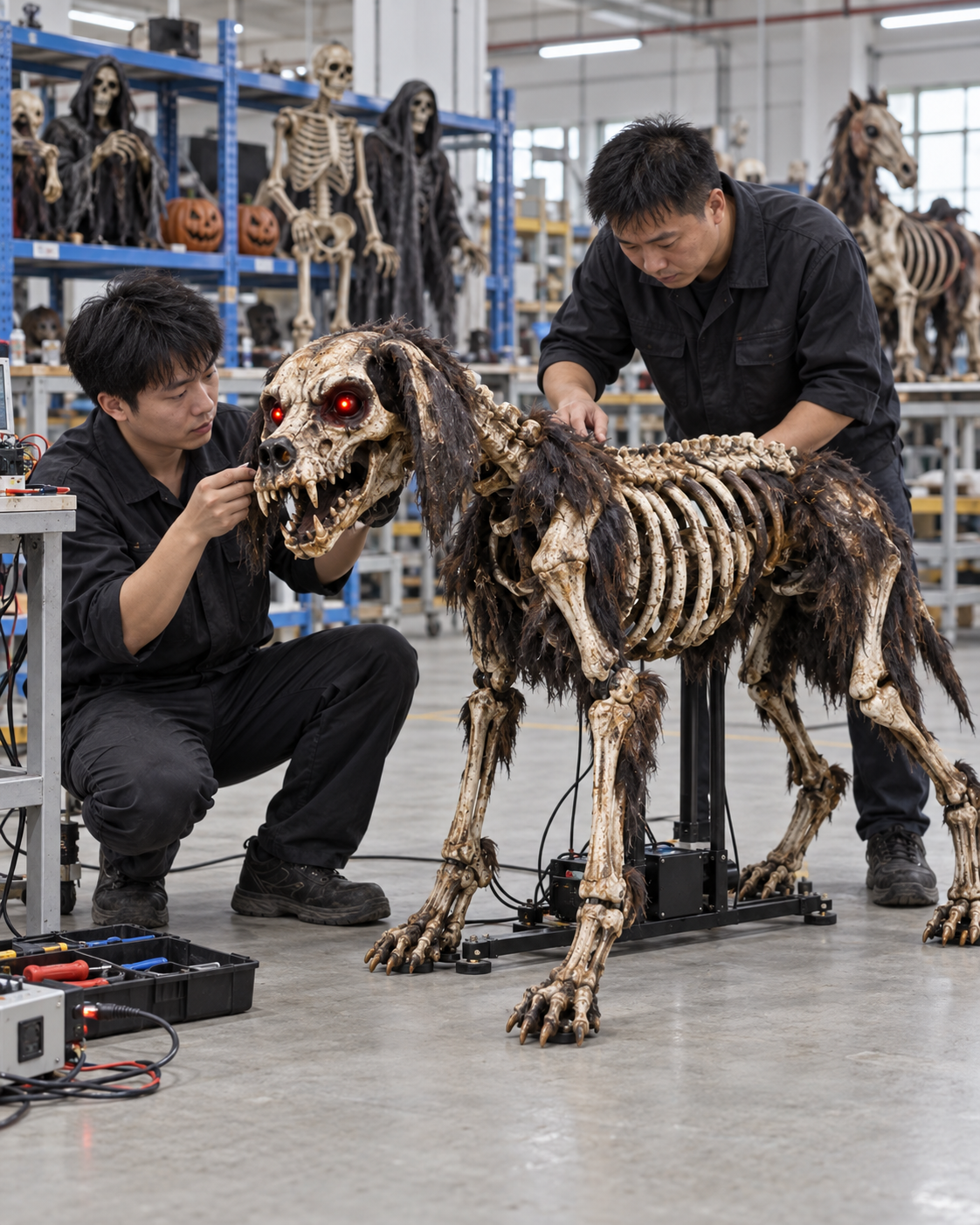
Compare total scene cost and visual role
The unit quote should separate art preparation, sample proof, tooling, application labour, protective coating, replacement rights and additional panels. A printed solution may reduce repeated graphic labour yet require a larger machine-compatible substrate; painted pieces may reduce artwork setup but need more manual time. Get actual quotations, not generic assumptions.
A hypothetical chain of stores might print a consistent logo panel and hand-paint one focal figure in each installation. A one-off haunt might hand-paint textured walls because the viewing angle changes and exact repetition is unimportant. These examples are planning scenarios, not BooAri client outcomes. They show that finish method follows the job each surface performs.
Buyer approval worksheet
For each surface, record: method, reference asset, proof type, viewing distance, lighting condition, expected variation, touch-up method and replacement unit. Name the person who can approve a deviation. Keep those decisions with the order and the artwork handoff record. When production is inspected, verify the same revision rather than a later file sent in a chat thread.
Build an approval set for every repeated graphic
Create a versioned asset folder containing the print-ready file, proof photograph, physical proof sign-off and location map. If a logo or message appears on several props, note its size and orientation at each placement. A printer can reproduce an approved file consistently, but the final impression still depends on substrate, viewing angle and light. Check one first-article piece in its actual scenic context before releasing all units. If the creative team changes the campaign line, issue a new revision instead of quietly replacing the artwork inside an old file name.
For painted surfaces, keep several reference views: close detail, full figure, work-light check and show-light check. A single hero photo can obscure where intentional distressing ends. Record fixed features such as eye colour or branded pattern separately from artistic texture that may vary. Ask the factory finisher to show one early production unit against that range. This gives quality staff an achievable standard and the buyer a basis for accepting genuine hand-finished variation.
The two routes have different rework triggers. A digital text error may require reprinting entire panels; a painted colour shift may be corrected before sealing if caught early. Define a stop point after first article so the buyer is not asked to approve dozens of completed units. The supplier should quote rework responsibility for errors against approved files and for buyer-requested changes after sign-off separately.
Inspect the finish after handling, not only after application
Touch or rub tests should reflect normal packing and installation contact, with a method agreed before the sample is damaged. Place the protected product in its actual pack, open it and inspect high-contact areas. Photograph where straps, foam pads or adjacent parts touch the finish. A print may pass colour approval but scuff during transport; a painted raised edge may flatten under a tight wrap. The correct response could be a pack change rather than a different finish method.
For reuse, compare a first installation with a second assembly after repacking. Look for scratches at joints, glue marks from temporary graphics and colour differences in replaced panels. Decide which cosmetic marks can be touched up locally and which require a factory replacement. This makes the finish choice a lifecycle decision rather than a sample-room aesthetic preference.
Decision review: make the evidence comparable
Before selecting a quotation, write a one-page decision record for choose a finish production method. Start with the customer requirement, not a supplier feature. The same installed dimensions, destination, display period and approval date should appear on every option being compared. If two offers use different product scope, record the difference as a separate alternate. Otherwise a cheap option may simply omit work that the other bidder included.
For this guide, the useful sample is paint and print proofs on actual substrates under the same show light. Ask for its revision and say what it can and cannot demonstrate. The critical inspection focus is fixed logo legibility, allowed distressing and panel-to-sculpt colour match. Set the viewing or operating condition in advance, then photograph or record the outcome. The person approving the sample should know whether a visual result, a technical function or a packing action is being accepted. One attractive image does not cover all three.
The packing question is face abrasion protection and replacement-panel identification. Measure or verify the proposed shipping unit rather than assuming an installed dimension will predict freight. At the site, the practical question is whether a visible site seam can be repaired or masked consistently. Ask the receiving and operations teams to answer it before the purchase is called complete. If they cannot answer from the supplier's proposed evidence, the project has an unresolved interface, not merely a documentation preference.
Keep a short decision log
Create columns for requirement, offered configuration, evidence, owner, approval status and unresolved risk. Mark evidence as a physical sample, drawing, supervised test, production record or professional site review. Those are not interchangeable. A factory test can validate a product function; it cannot approve unknown local conditions. Conversely, a site plan can show access but not prove the final batch matches the sample. Give each open item a person and date rather than leaving it in an email thread.
Challenge the proposal with a failure scenario
Imagine that the approved screen colour becomes unreadable on the final textured surface. Ask what the operator would first observe, what should be stopped, which record identifies the affected unit and what corrective action can be checked. This is a stress test of the proposed purchase, not a claim that the failure has happened in a BooAri project. The answer may reveal a need for a revised sample, a clearer part ID, a different pack, or a local professional decision.
One viable route to examine is changing proof, lighting or placement before repeating an entire batch. It is an option to test, not a universal prescription. Estimate its effect on price, lead time, appearance, freight and maintenance. If the alternative changes the approved specification, issue a new revision and repeat the affected checks. Do not rely on verbal assurances that the change is minor. The buyer should be able to trace why the new option was accepted.
Close the record only when the buyer, supplier and destination owner agree what will be shipped and what remains a site responsibility. At shipment inspection, compare the production item and documents with that decision record. If the product arrives later with a changed component, the record tells the team which approval must be reopened. This discipline is more useful than a vague claim that a prop is 'commercial grade' because it ties the actual purchase to observable evidence.
Final finish release question
Before batch production, ask how the supplier will detect a wrong artwork revision or drifting paint interpretation. A printed file should carry an approved identifier; a painted sample should have a physical reference and a stated variation range. Identify who can stop production when a first article fails. Without that authority, a small misunderstanding can become a whole batch that is expensive to correct.
At dispatch, check the finished item under the same agreed lights and inspect its protection inside the carton. Keep one production piece or controlled image set as a reference for later replacements. If a buyer asks for a new colour midway through production, record which units belong to which version and do not mix them in one store installation without explicit approval.
Frequently asked questions
Is printing always more consistent than hand painting?
It can support repeat graphics, but substrate, calibration, light and installation still affect appearance. A controlled print proof is necessary.
Can hand-painted distressing vary between units?
Yes, if the buyer defines an acceptable range and identifies fixed features. Variation should be intentional and agreed before the batch.
What if a logo is placed on a sculpted surface?
Review a full-size mock-up for distortion, legibility and edge treatment. A brand file on a screen is not enough.
Which finish is easier to repair?
It depends on the defect and surface. Ask for a demonstrated repair or replacement method on the actual system before deciding.
Conclusion
Specify finish by surface role and approval evidence. Paint and print are tools for different visual and operational tasks, often within one scene. Send BooAri the artwork, viewing positions, quantity, lighting notes and reuse expectations through Send Your Requirements to plan a physical proof and controlled production reference.
Further reading
Use these external resources alongside your local market, venue and professional safety requirements:
READY TO START A PROJECT?